Beyond Individual Wellness: Inside CIIS’ Integrative Health M.A.
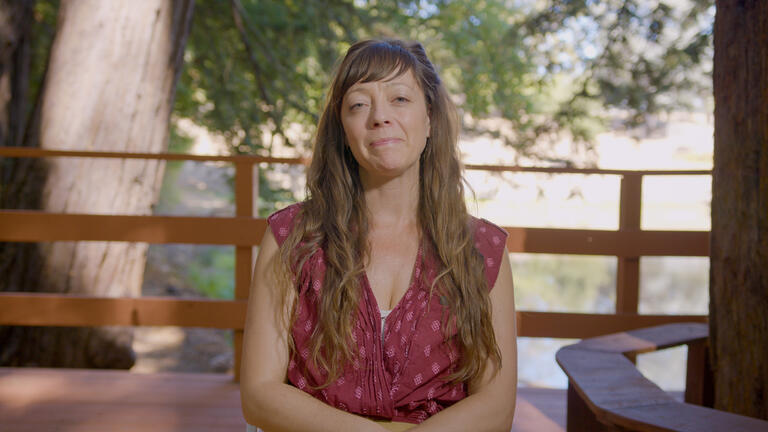
Megan Lipsett, chair of CIIS’ M.A. in Integrative Health Studies, explains how the program trains practitioners to address health as a whole-person, systems-oriented endeavor.
March 19, 2026
When Megan Lipsett first arrived at California Institute of Integral Studies (CIIS) in 2009, she came as a student. Today, she serves as an associate professor and the chair of the M.A. in Integrative Health Studies, a program that, under her guidance, has become one of the University’s most distinctive offerings in health and wellness education. The program draws students who arrive, as Lipsett puts it, “with passion” and are “seeking ways to really bring that into the world in ways that are effective.” They come from varied backgrounds — community health, coaching, social work, activism — and are united by a shared conviction that health is not simply a matter of the body.
Health as a Dynamic System
At its core, the M.A. in Integrative Health Studies asks a question that many health programs leave unexplored: What is health, really? Lipsett frames the program’s philosophy plainly. “We can’t extract health from one’s social position, our culture, or the ecosystems that sustain us,” she says. This perspective — grounded in what scholars call a biopsychosocial and systems-oriented approach — is woven into every dimension of the curriculum.
We can’t extract health from one’s social position, our culture, or the ecosystems that sustain us. Megan Lipsett, Chair and Associate Professor, Integrative Health Studies
Students learn about prevention science, health behavior change theory, and the social determinants of health. They study contemplative sciences and stress physiology alongside anatomy and physiology. And, they engage in what Lipsett calls “transformative and liberatory experiential practices” — hands-on learning that cultivates not only professional skill but personal depth.
This commitment to context sets the program apart from many health and wellness offerings, which Lipsett says often take a “decontextualized” approach: they treat health as an individual responsibility divorced from the broader social realities that shape it. CIIS deliberately rejects that model, instead addressing modern challenges like social isolation, burnout, and ecosystem degradation as interconnected phenomena.
A Hybrid Structure Built on Community
The program is delivered in a hybrid format. It begins with an academic intensive at the start of each semester, followed by roughly 15 weeks of virtual coursework. The intensives are designed to do more than fulfill curriculum requirements. They build the relational foundation on which the rest of the program depends.
Image
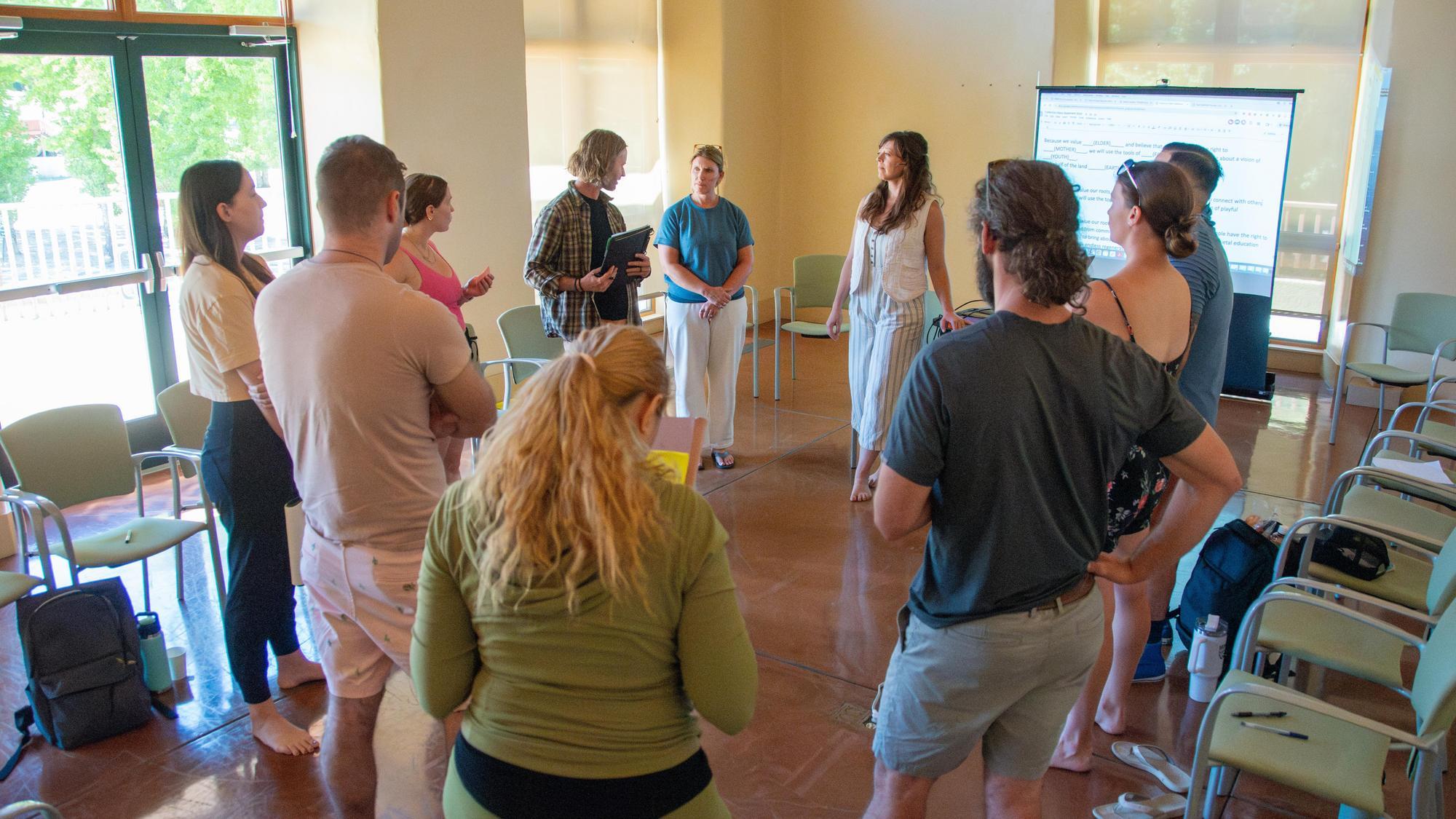
Megan Lipsett and students lay the relational foundation for a semester of learning at the Integrative Health Studies Academic Intensive, Fall 2024.
“We get to have time outside as well as inside,” Lipsett says. “It really facilitates a sense of community with one another, some restoration while you’re in these spaces, but also moving the outside world out of our way so that we can really focus on our studies.” The four- to five-day intensives include experiential practices alongside academic coursework, giving students an early encounter with the integrative methods they will eventually bring to their own work.
Three Certificates, One Degree
One of the program’s most practical distinguishing features is its embedded certificate structure. As part of their master’s degree, students earn three certificates, each carrying direct career applications:
Health and Wellness Coaching Certificate
Patient Navigator Certificate
Certificate in Guided Imagery.
Together, they give graduates both understanding and experience that single certificate-only programs cannot match.
“Our students go beyond certificate-only programs to really broaden their scope of practice and expertise in the field,” Lipsett explains. The degree itself provides the theoretical and research foundation; the certificates translate that foundation into actionable professional skills. The result, Lipsett says, is that graduates are “prepared to be leaders in their fields.”
Learning to Hold Space
Perhaps the most difficult — and most important — skill the program cultivates does not come with a certificate, and resists easy measurement. Lipsett describes it as the capacity to sit with another person’s difficulty, their hopes, their struggles, without rushing to fix anything. “To hold space without fixing,” she says, “to be there as a resource and a guide for those individuals on their own health journey.”
To hold space without fixing — to be there as a resource and a guide for those individuals on their own health journey. Megan Lipsett, Chair and Associate Professor, Integrative Health Studies
This skill emerges not only from coursework but from the program’s emphasis on what Lipsett calls “true self-care,” a practice that goes well beyond wellness trends. Students develop “a deep wisdom about what it really means to embody health and wellness and to reduce suffering,” she says. That personal grounding, the program’s philosophy holds, is inseparable from the ability to serve others with integrity.
A Faculty Built on Collaboration
The M.A. in Integrative Health Studies is taught by a faculty team whose expertise spans medicine, community health, social change, and research. Lipsett describes the group as functioning less like a collection of individual instructors and more like an interdisciplinary ensemble, one that actively seeks connections across courses and perspectives.
Image
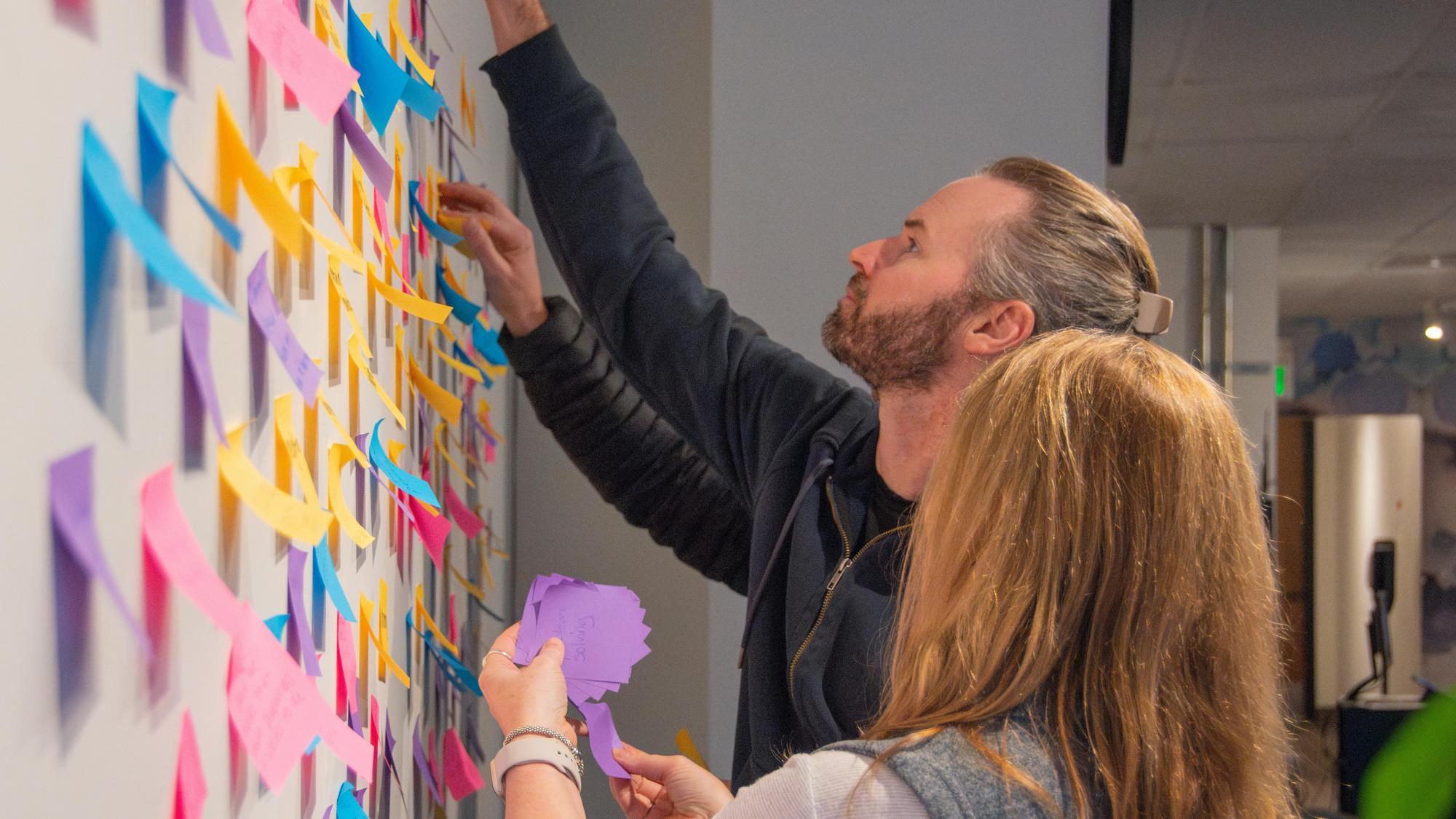
Students collaborate on a shared wall display during the Integrative Health Studies Intensive Studies Academic Intensive, Fall 2024.
“We come together in spaces like this to observe one another’s courses,” she says, “to see where we might be able to bring links into our classes.” This collaborative model means that students encounter a curriculum that is not siloed, forcing students to connect all the dots. Instead, it’s a reflection of the program’s broader conviction that learning, like health, is fundamentally interconnected.
Serving the Whole Person in the Whole World
The program also maintains close ties to CIIS' Wellness Center — an initiative Lipsett helped to found — offering students hands-on experience in health coaching and wellness program development. A network of community partners and alums, many of whom have launched nationally recognized programs and practices, further extends those opportunities into the real world.
Image
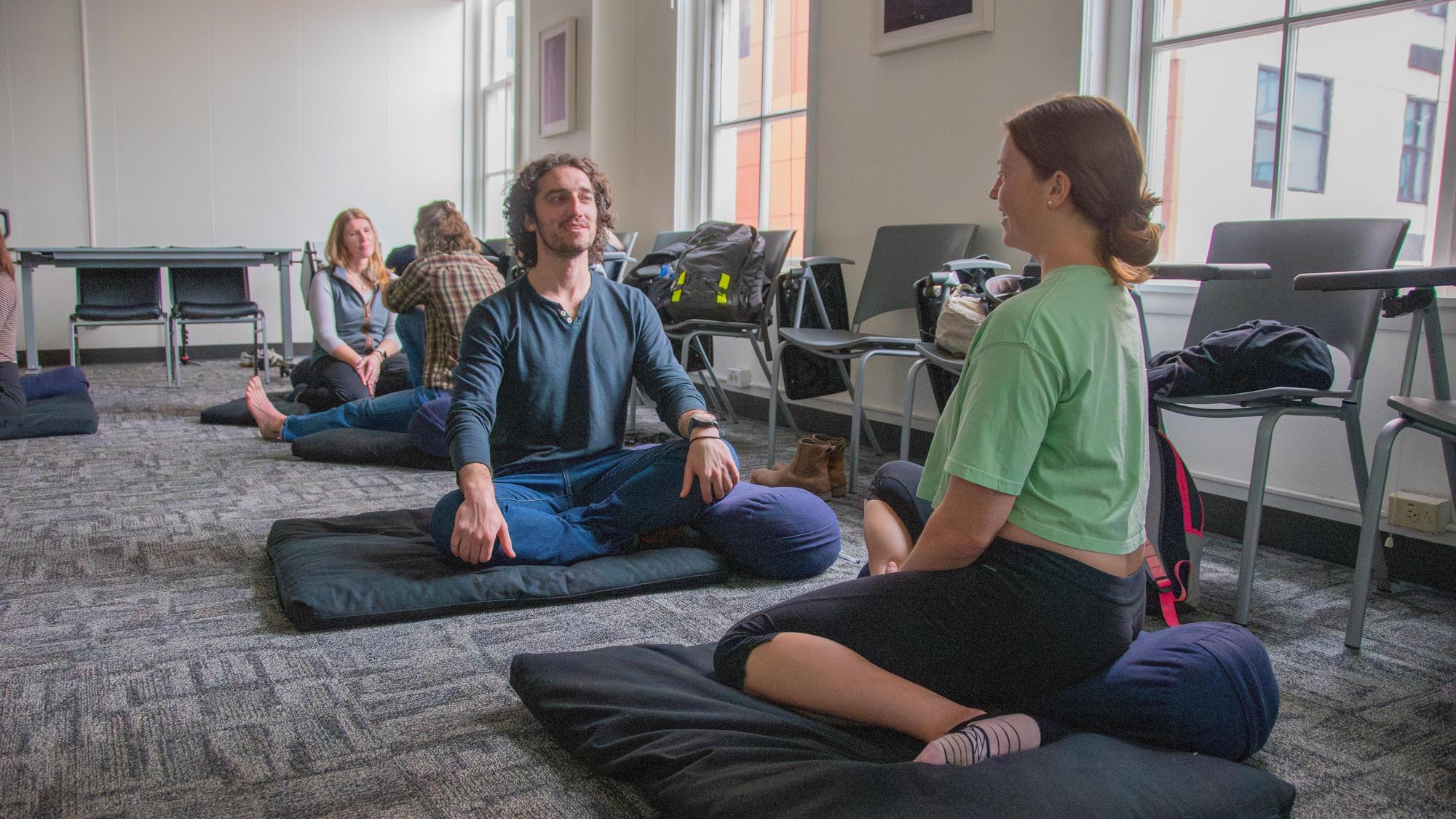
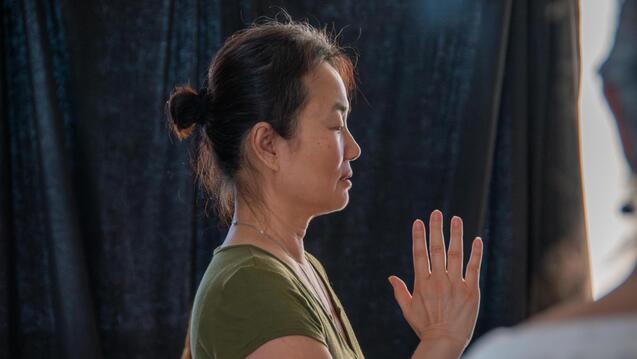
Students gather for a mindfulness session on floor mats during the Integrative Health Studies Academic Intensive, Fall 2024.
Lipsett has watched students transform through this work. They arrive passionate but sometimes unsure how to channel that passion, and through their time at CIIS, they develop both the professional tools and the personal readiness to do so. Along the way, they also build a strong foundation of scientific literacy, learning to ground their work in evidence and research. “They learn to articulate what it is that can really promote transformative practices into the world in a way that is relevant to health behavior change,” she says.
For the M.A. in Integrative Health Studies, that articulation is not an endpoint. It is a beginning, the start of a career spent working at the intersection of health, justice, and human flourishing.
Professor Jun Wang shares how CIIS’ East-West Psychology Department teaches students to unite scholarly understanding with embodied practice through Eastern, Western, and indigenous wisdom traditions.
Dr. Rene Dumetz teaches CIIS' Clinical Psychology Psy.D. program, training therapists to work with the unconscious, relationships, and holistic human experience.