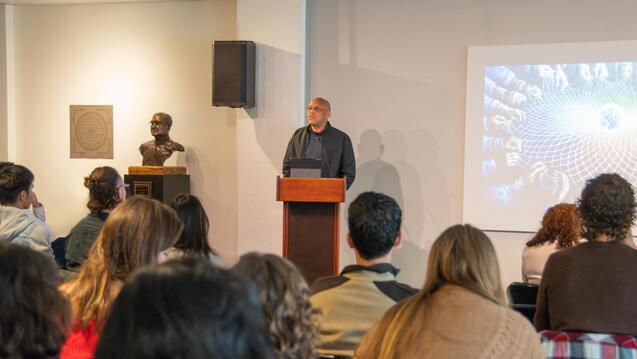
Associate Professor Chris Walling has spent his career where the body, the mind, and the spirit meet — especially if that meeting place is inside a research laboratory. As chair of the Department of Research Psychology at California Institute of Integral Studies (CIIS), Walling oversees two doctoral programs that sit at the cutting edge of their respective fields: the Ph.D. in Somatic Psychology and the Ph.D. in Integral and Transpersonal Psychology. Together, they provide a space where rigorous scholarship and lived wisdom are not separate pursuits, but one and the same.
Two Fields, One Department
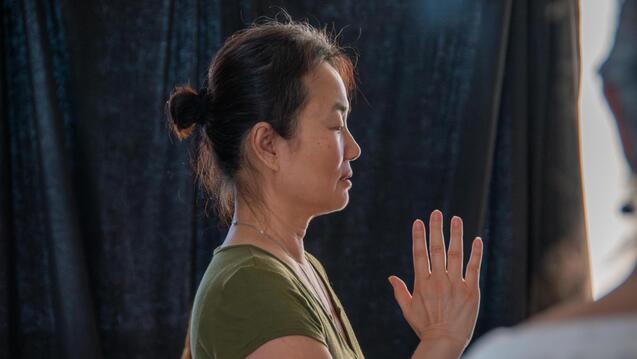
The Ph.D. in Somatic Psychology draws students fascinated by the relationship between the body and psychological experience. Clinicians and academics, along with bodyworkers, yoga teachers, and coaches come to the program seeking to deepen their understanding of embodiment, and to contribute new knowledge to a field that Walling says is rapidly evolving. “In the field of clinical psychologies and psychotherapies nowadays, everyone is aware that embodiment is the future,” he says. The program carries a distinction that few other institutions can claim: it is one of the only accredited doctoral programs in somatic psychology in the world.
The Ph.D. in Integral and Transpersonal Psychology attracts an equally committed group of scholars — those drawn to questions about consciousness, spiritual development, exceptional experiences, and human potential. Students in this program might explore anything from parapsychology to spiritual intelligence, contributing to a field that has produced scholarship at CIIS for over a decade.
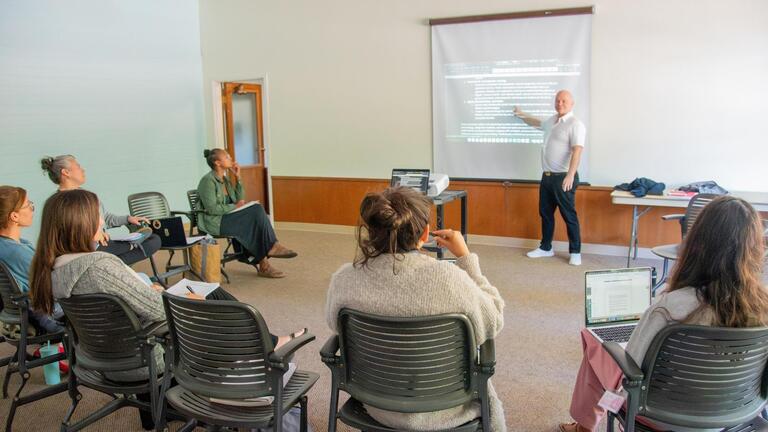
Both programs are delivered in a hybrid format. Each year begins with an in-person intensive followed by asynchronous, online coursework for the remainder of the year. Students may progress at either a full-time or part-time pace, giving them flexibility without sacrificing depth.
The Intensive Experience
Central to the department’s culture is the annual intensive. For a full week, students from both programs gather together in community. Their space is not a traditional lecture hall, but at a retreat center where the boundaries between academic and experiential learning blur deliberately.
The week includes not only coursework and seminars but also dancing, play, and the kind of sustained, unscheduled time together that academic programs rarely afford. “Our intensives are a place where lifelong relationships are made and scholarship is born,” Walling says. Many students have told him there is nothing quite like it anywhere in the world.
Our intensives are a place where lifelong relationships are made and scholarship is born.
Dr. Christopher Walling, Chair and Associate Professor, Research Psychology
Walling emphasizes that the intensive is not simply a social event or an orientation ritual. It shapes the entire arc of a student’s learning for the months of asynchronous work that follow. The connections formed during that week — with peers, with faculty, with the material itself — carry forward and deepen throughout the rest of the program.
Living the Work
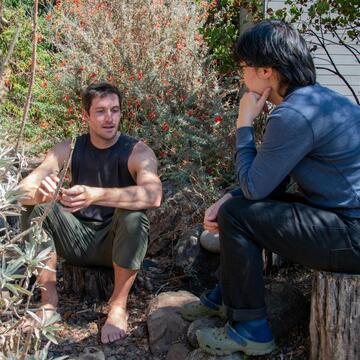
If there is a single idea that Walling returns to most often when describing his department, it is this: the scholars at CIIS are not merely studying these fields from the outside. They are living inside them.
“It’s not just abstract wisdom,” Walling says, “It’s actually being in relationship with the people who are the change makers themselves — who are the scholars whose students might be reading.”
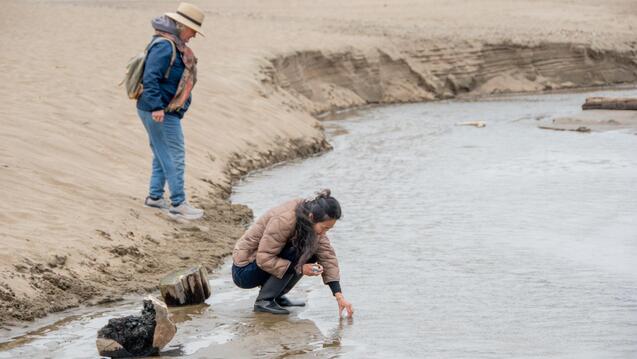
This philosophy has a direct impact on the classroom. Walling’s own research informs his teaching. His work spans clinical approaches to healing trauma, the effects of climate change on brain health and wellbeing, and the role of what he calls “spiritual fitness” in helping people navigate an increasingly complex world. Students encounter these ideas not as distant theory but as living inquiry, research that is being actively shaped by the faculty they learn alongside.
The result is what Walling describes as an intimate and generative environment. “Knowledge production and wisdom are happening in real time,” he explains — and students are part of that process from the moment they arrive.
From Students to Scholars
The impact is unmistakable. Over the years, Walling has watched students move from uncertainty to confidence, from curious professionals seeking deeper understanding to scholars who have become, in many cases, his peers.
Former students have gone on to become professors, lead trainers at internationally recognized clinical somatic psychotherapy programs, and published authors working at the intersections of transpersonal psychology, clinical practice, and coaching. Some are now his colleagues within the department itself.
At a recent intensive, one such alum — a graduate who had returned to support current students — shared how the program had helped her discover not only who she was as a person, but develop a research profile that now allows her to feel like an expert in her field.
There is a well-known saying in the academy that research is “me-search,” but Walling argues the transformation his students undergo goes considerably deeper. Throughout several years in the program, students develop not only a research vision but “a deeper understanding of who they are,” he says. The personal and the scholarly do not simply coexist in these programs. They grow together.
If there is a student who’s considering whether or not they want to contribute to research, getting a Ph.D. in this department at CIIS is a way for them to become the scholar they’ve often longed to see reflected in the mirror.
Dr. Christopher Walling, Chair and Associate Professor, Research Psychology
The Work Ahead
Walling sees the department’s two programs as positioned at a critical moment in the history of psychology. The broader field, he argues, is beginning to recognize what somatic and transpersonal psychology have long understood — that health, healing, and human potential cannot be addressed through the mind alone.
“We are a world who desperately needs to remember not just our bodies and our minds, but also our hearts and our spirits,” he says. “And our graduates serve in multiple places offering that kind of embodied wisdom.” Graduates are working in universities, hospitals, clinics, and across other sectors, carrying with them both the research credentials and the experiential depth that their training at CIIS cultivated.
For prospective students, Walling offers a straightforward invitation. “If there is a student who’s considering whether or not they want to contribute to research, getting a Ph.D. in this department at CIIS is a way for them to become the scholar they’ve often longed to see reflected in the mirror,” he says. “Because our faculty are here to support them in that vision.”