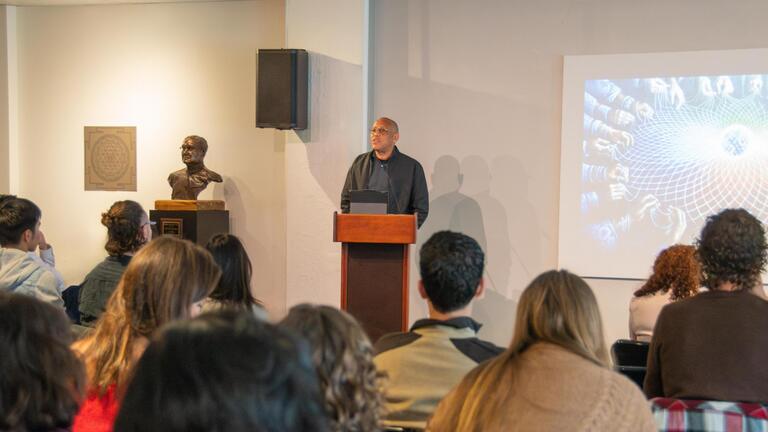
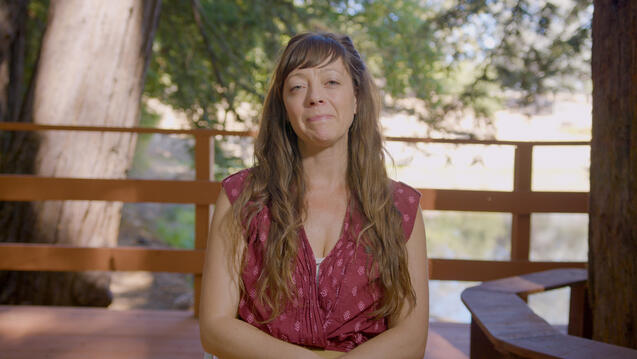
Image of Dr. Rene Dumetz addressing attendees during the Psy.D. International Alumni Conference: Notes From the Field, November 9, 2024.
Image of Dr. Rene Dumetz addressing attendees during the Psy.D. International Alumni Conference: Notes From the Field, November 9, 2024.
Faculty Interview
Training Psychotherapists in Complexity and Compassion
Dr. Rene Dumetz teaches CIIS' Clinical Psychology Psy.D. program, training therapists to work with the unconscious, relationships, and holistic human experience.
March 24, 2026
Dr. Rene Dumetz, Associate Professor of Clinical Psychology at California Institute of Integral Studies, describes his work with unmistakable passion. "We train students here to become effective psychotherapists and capable and willing and able to help others who are in need. That's our main focus and that's what we're offering is training to do that kind of work."
The full-time, in-person doctoral program takes a distinctive approach to clinical training, one that sets it apart from most psychology programs in the United States. Rather than focusing on manualized treatments and cognitive behavioral therapy, the program emphasizes psychodynamic theory, the therapeutic relationship, and a holistic view of human experience that integrates mind, body, and spirit.
Rather than manualized treatments, we really believe the most important aspect of therapy is the relationship between the therapist and the client. That relationship is the thing that brings about healing. Dr. Rene Dumetz, Associate Professor, Clinical Psychology
Three Pillars of Training
The program is built on what Dr. Dumetz describes as three essential pillars. The first centers on psychodynamic therapy or depth psychology. The second focuses on human diversity and social justice, training students to recognize, understand, and advocate for different experiences. The third encompasses the humanistic, existential, and transpersonal/spiritual dimensions of human existence.
"We're both a body, and we have a mind. We also have what we might consider a spirit, something that is not necessarily mental or thinking, but much more connected and unified with our experiences," Dr. Dumetz explains. "Who we are is highly dependent on the culture and the community and the society that we're embedded in. We are all embeduals as well as individuals, and we feel that is really important to examine, to understand, and to integrate into any kind of useful and effective psychotherapy."
Image
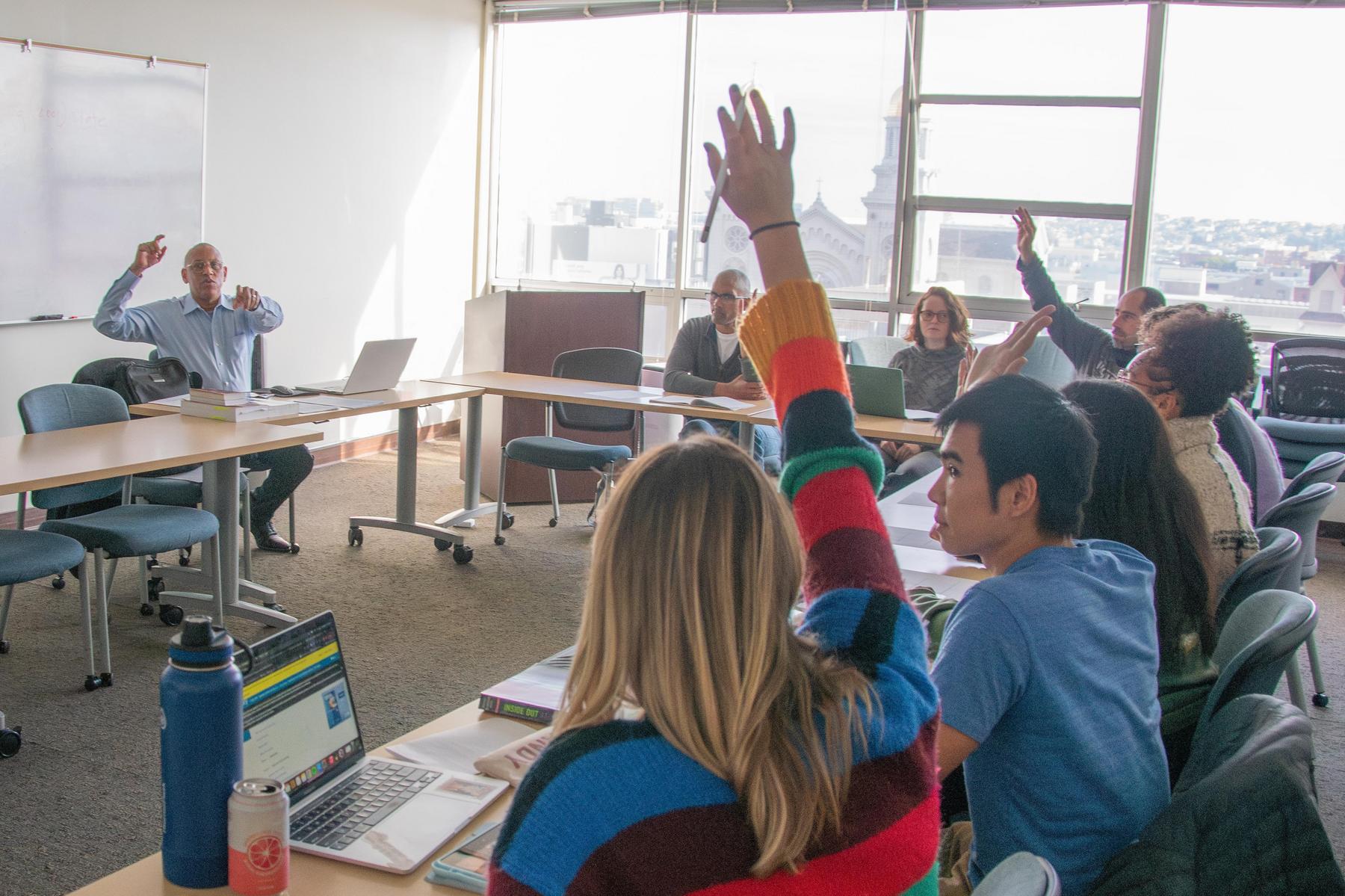
Dr. Rene Dumetz and students engage in meaningful dialogue in a Clinical Psychology classroom.
The program attracts those drawn to depth over quick fixes. "If you're interested in a more holistic approach to psychotherapy rather than a more behavioral one, then this is a kind of department that would really be meaningful for you," Dr. Dumetz notes. "We integrate both transpersonal and interpersonal ways of relating, and we address ourselves to offering a broad spectrum of human experience and then bringing it into the therapeutic room."
At the heart of the program is contemporary psychodynamic psychotherapy, which focuses on bringing unconscious aspects of self and other into awareness. Students learn to examine unconscious experiences as they emerge in the therapeutic relationship, in dreams, and in behaviors whose motivations aren't immediately obvious. But before they can work with clients' unconscious material, students must first turn inward to address their own unconscious. "Bringing that into one's awareness so that one might impact and change one's behaviors, change your choices, and also change just your everyday living and experience. To create a situation where people are happier, more fulfilled, and more aware and conscious of all the various aspects of who they are."
Curriculum Beyond Boundaries
The program offers coursework in psychodynamic theories from well-known psychologists like Freud and Jung, learning to apply different theoretical models with clients. A transpersonal psychology course integrates Eastern and Western approaches to human experience, bringing spiritual elements into the therapeutic work. Electives include psychedelic-assisted psychotherapy, somatic psychotherapy, Jungian psychotherapy, and trauma therapy — offerings that reflect the program's commitment to addressing the full spectrum of human experience and contemporary developments in the field. "All of these models are basically looking at human experience, but through different lenses from different perspectives," Dr. Dumetz notes.
Image
Professor Lani Chow, second from left, joined by fellow panelists during the Psy.D. International Alumni Conference: Notes From the Field, November 4, 2023.
This broad range of courses is brought together by a deeply committed group of faculty and instructors, all of whom share a passion for the subject matter and for teaching. "The faculty, I would say, is a group of people who are really caring, who are very loving. We actually get along really well with each other," he shares. "For me, it's been the most welcoming and helpful and supportive group of people I've ever worked with, and we work together constantly to make sure that students have the kind of environment where they can learn and train and develop and grow."
The Transformation Process
The training is designed to challenge students on multiple levels. "Over the course of the program, I think there is tremendous transformation that occurs in all our students," Dr. Dumetz observes. Students face intellectual, somatic, and emotional challenges that push them to examine their internal experiences and gain greater awareness of their relationships and cultural positioning. "This learning about their own internal and external experiences is actually, I think, a critical part of the program and it's essential to the training that we provide them," he says.
A big part of the work is students doing this internal work, understanding themselves better in order that they might understand others better. Dr. Rene Dumetz, Associate Professor, Clinical Psychology
The program trains students in three core areas: understanding and applying theoretical models, conducting psychological research, and relating effectively to people from diverse backgrounds in clinical settings. "There's so many differences in the world, and so we try to help students to recognize, understand, and respect these differences, and then to also be able to work with that within clinical situations," Dr. Dumetz explains.
Graduates have opportunities to pursue varied career paths within psychology. Many establish private practices as individual psychotherapists, and others work in clinical settings as administrators and psychologists in community mental health. Some become researchers examining psychology and human experience, while others teach in master's and doctoral programs. Consultation work — both with psychologists in training and with organizations seeking to improve workplace culture — represents another option.
Image
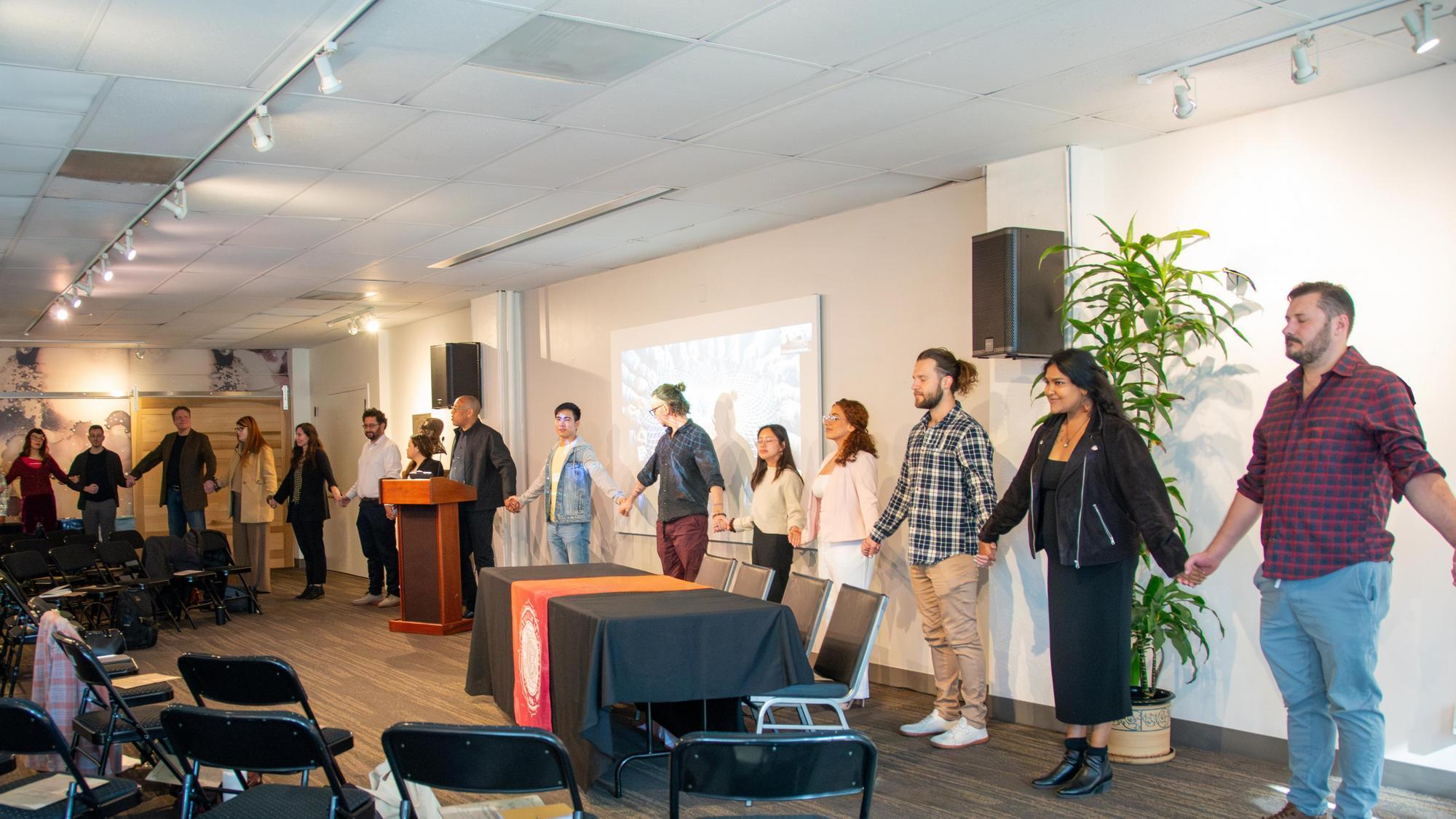
Faculty, students and alumni gather at the Psy.D. International Alumni Conference: Notes from the Field, November 9, 2023.
For prospective students drawn to this approach or any of these career fields, Dr. Dumetz offers an invitation: "If you are very much interested in the human experience, but in a very intimate and personal way, I think that this is a department that you should be a part of," he says. "We're passionate about humanity and community and compassion. These are things that are important for not just being a therapist, but for being a human."
We're passionate about humanity and community and compassion. These are things that are important for not just being a therapist, but for being a human. Dr. Rene Dumetz, Associate Professor, Clinical Psychology
Professor Jun Wang shares how CIIS’ East-West Psychology Department teaches students to unite scholarly understanding with embodied practice through Eastern, Western, and indigenous wisdom traditions.
Megan Lipsett, chair of CIIS’ M.A. in Integrative Health Studies, explains how the program trains practitioners to address health as a whole-person, systems-oriented endeavor.