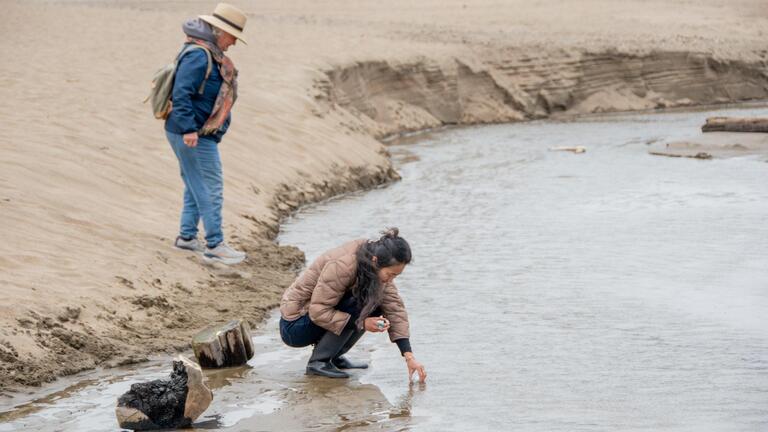
CIIS students joined a watershed witness tour tracing San Francisco's hidden waterways alongside a circle of dedicated water protectors.
CIIS students joined a watershed witness tour tracing San Francisco's hidden waterways alongside a circle of dedicated water protectors.
Faculty Interview
Earth Justice, Ancestral Roots, and the Ecological Self
Dr. Jeanine Canty on Earth Justice, Ancestral Roots, and the Ecological Self
April 21, 2026
When Dr. Jeanine Canty says, "Happy Earth Justice Day," she means it as both a greeting and a reorientation — an affirmation that ecological care and social justice are not two separate callings, but one.
A Transformative Leadership faculty member at CIIS and author of Ecological and Social Healing: Multicultural Women's Voices, Dr. Canty has spent her career weaving together eco- psychology, depth psychology, social justice, and contemplative practice. In a conversation with Sunflower B. Rose for the Division of Community Engagement and Belonging, she traced the roots of Earth Justice Day, the long history connecting BIPOC communities to the land, and what it might look like to bring more ecological consciousness into everyday life.
Sunflower B. Rose: I really love what we were talking about with Earth Justice Day. Can you share more about where it came from for you?
Dr. Jeanine Canty: Yeah. Some people say "Happy Earth Day," and some of us will say "Happy Earth Justice Day." I come from a generation that was born just after the first Earth Day in the early 1970s. At the same time, we were the people who perhaps benefited the most from the civil rights movement — there was so much momentum around seeing people that looked like us, and so many strategies to raise children in ways that were less racist, less ableist, less gendered.
The focus was really on Earth, health, and wellness. I know a lot of that has been pulled back a little in our present times, and yet at the same time it's really on fire — and that's why there is so much resistance to some of the things that have already been seeded, sprouted, and are blooming.
Earth Justice Day is about recognizing that we don't want to look at ecological issues separate from issues of justice. So much of the work around Earth Day involves looking at how so many beings within Earth — including the water, so many species, plants — are suffering. And similarly, so many people are suffering, and they're not two separate phenomena. They're deeply interconnected.
It's a bit like Women's History Month or Black History Month — we have 28 Days of Blackness and all these different days or months. For me, Earth Day should be every day. We should just be waking up and feeling grateful that we are here as sentient beings on a beautiful planet. We have so much access to life, which isn't guaranteed. So — Happy Earth Day.
Sunflower B. Rose: Happy Earth Justice Day! I appreciate what you mentioned about the communal aspect that goes along with our natural environment — both socially and ecologically. It feels like there is so much need to be in conversation and connection with one another to ensure that we're all nurturing each other and ourselves. It feels like that's the only way we're actually going to see progress and growth — through the collective.
I'm curious about how you're taking this eco-justice framework and bringing it into your classroom and your academic work. You're presenting at Bioneers this year, which is super exciting. How are you sharing this knowledge?
Where do I live? What's the story of the land I'm living within? Where does the water come from? Who are the water systems? Who are the key indicator species? Who are the ancestors of this land — both the First Nations peoples and all the people throughout history who have been here? Jeanine Canty, Professor in the Department of Transformative Inquiry
Dr. Jeanine Canty: In any class I teach, any book or article I'm writing, any talk I'm giving, I try to make sure that I include both ecological and social justice issues, because they go hand in hand — they share the same root causes. I feel so strongly about that.
The courses I teach at CIIS give me the privilege of teaching in a very intersectional way — I don't have to limit myself to just one lens. This summer I'm teaching an elective course called Finding the Extraordinary Within the Ordinary: For the Love of All Sentient Beings. It's the second time I've taught it, and it weaves together eco psychology, depth psychology, social justice, Buddhism, and contemplative practice, including getting outside in nature. Those things pair together so beautifully.
At Bioneers, my colleague and fellow CIIS faculty member Dr. Sara Salazar and I are going to lead an interactive session about connecting to place and reanimating our ancestral wisdom in connection to the places where we live. The two of us, along with Dr. Alcott and a number of other femmes, wrote a book called Ecological and Social Healing: Multicultural Women's Voices. The second edition came out within the last year or so, and we're drawing from that knowledge while also staying grounded in what's here and present.
Going back to the Earth Justice framing — it's important to note, though sometimes hard to unpack because there's so much here, that when we hear "Earth Day" and "environmentalist," we might automatically picture a white person out in some pristine wilderness. Someone who doesn't look like you or me — "oh, that's those people."
Yet we forget that often it's BIPOC folks, working class and poor communities, who may have had the most direct lineage and experience with nature. If we look at the history of being separated from land, the journey through colonization — whatever the particular story is — has at its root a separation from nature and from ancestral lineage. So many of us are working to reclaim that.
There are stereotypes that if you look a certain way, you should be more concerned with issues of racism, and if you look another way, you should be more concerned with environmental issues. But look at any large-scale pattern of racism within the United States — a theorist named Frederick Yeoh uses the term "caste-like minorities" to describe groups that didn't choose to come to the U.S., such as indigenous and Native American peoples, Black people whose lineage traces to the African diaspora and enslavement, Chicana populations, and some Asian populations. If you examine any large-scale pattern of racism affecting these groups, it is always about the acquisition of natural resources. It wasn't simply that one group of people disliked another — it was enormously profitable.
Going back to First Nations peoples: when Europeans came to North America or the Americas more broadly, there was this concept of terra nullius — the idea of open, empty space — which undergirded the doctrine of discovery. The land was framed as open and empty, even though it was fully populated by 500 nations across the continent. First Nations peoples were divested of the lands they inhabited because terra nullius held that you could only claim ownership of land if you were documenting a profit from it. If you were working from a framework of reciprocity rather than extraction, that wasn't considered "real" economic use — and so it became a legal basis to dispossess people and acquire natural resources.
The same is true of our African American ancestors who were enslaved. They were brought here to work the land as free labor — again, the oppression of people and the Earth were one and the same. The same holds for so many Latino and Chicano communities, who were either already here in indigenous form or brought in and pushed out at different times to do work that was, again, about working the land for profit at little to no wages.
And for some Asian American groups — something many people don't realize — the ships that had been used to transport enslaved Africans were, after the Emancipation Proclamation, often repurposed to bring Chinese and other Asian populations here to work as free or very low-paid labor in California and across the U.S. Again, to work the land and extract profit.
So when we look at environmental justice, we see that it is people of color, working class and poor communities, LGBTQ populations, people with varying abilities, women, and children who are most affected by environmental harm. These are communities with less political and economic power to fight what's happening within their own communities. So yes — we should all be deeply concerned about ecological issues. We should all be environmentalists.
Sunflower B. Rose: That's making me think about the number of people impacted by giant data centers placed near their homes, the pollution pumped into the air as factories and large facilities are built in small rural areas — as if no one lives there, or as if the people there don't matter. And Flint still doesn't have clean water. We're reaching a point where water scarcity is becoming a genuine crisis.
Image
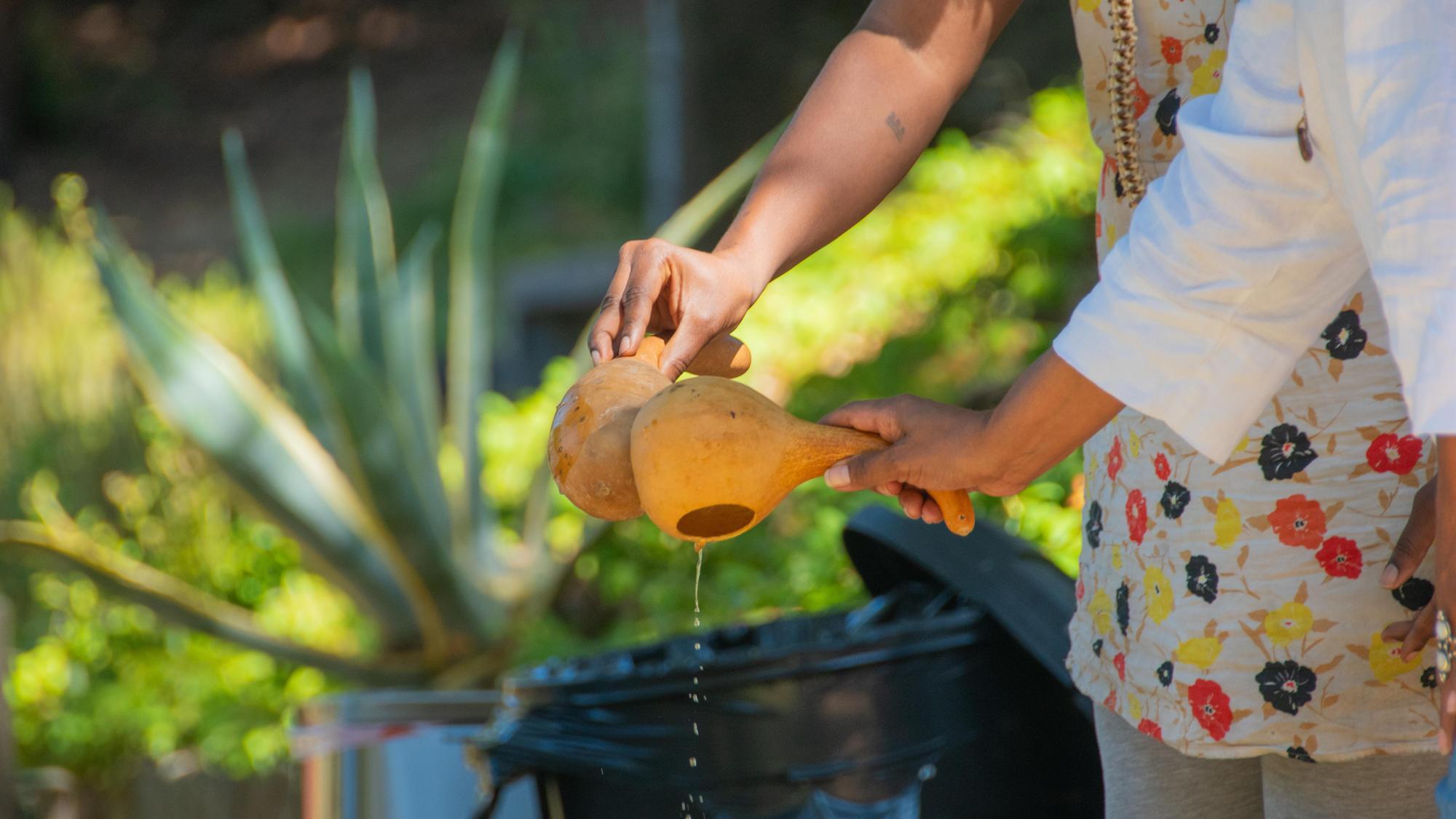
Healing Clinic Collective Mentors and CIIS Student Fellows bring in their ancestral practices as part of the Integrated Wellness Fellowship.
I'm curious — since Earth Day, as you said, shouldn't necessarily just be one day, much like Black History Month is more than a month and Women's History Month is more than a month — these markers help give us a collective, conscious moment to tap into these ideas. But what are some ways we can carry eco-justice and environmental justice into our everyday lives? How should we be paying attention to our own communities, and how can we engage, even on small levels?
Dr. Jeanine M. Canty: That's a great question. One idea I love to introduce — from both eco psychology and deep ecology — is the concept of the ecological self. It's really more a practice than just a term. It's about recognizing what our relationship with nature actually is. We wouldn't even be alive without it — we're breathing air, drinking water, all of these things. So, it's about situating ourselves and remembering: I'm an animal, in a really good way. I'm a deeply biological being.
Where do I live? What's the story of the land I'm living within? Where does the water come from? Who are the water systems? Who are the key indicator species? Who are the ancestors of this land — both the First Nations peoples and all the people throughout history who have been here? One of my mentors, Karl-Anthony, talks about what he calls the "multicultural self" — how so many of us keep learning the same overarching stories, but we don't know the smaller, richer stories of this place: who has been here throughout history, who our neighbors are, what the stories of the people in our community are. Really learning that.
And then: what are the natural resources of this place, including the human animals who live here? How do I become the healthiest version of myself — through healthy food, clean water, engagement? If those things aren't available to me, how do I work to ensure access for other members of my community? And then rippling outward — to neighboring communities, to the state, the national, the global — starting with our own bioregion.
One of the best ways to begin is simply making sure we spend time outside. No matter where we live, there's probably somewhere to walk, sunlight to stand or sit in, birds and trees, the sky. We have community gardens, public parks, so many options. Many of us could spend all day and night in our digital lives without ever going outside. When we do that, we divest ourselves of something essential to our souls.
Sunflower B. Rose: I really appreciate you taking this time to chat with me. I love to end all my interviews the same way: if you could stand on a soapbox and say anything to our community, what would it be?
Dr. Jeanine M. Canty: Get outside, be kind to one another, be creative, and be curious.
About Jeanine Canty
Image
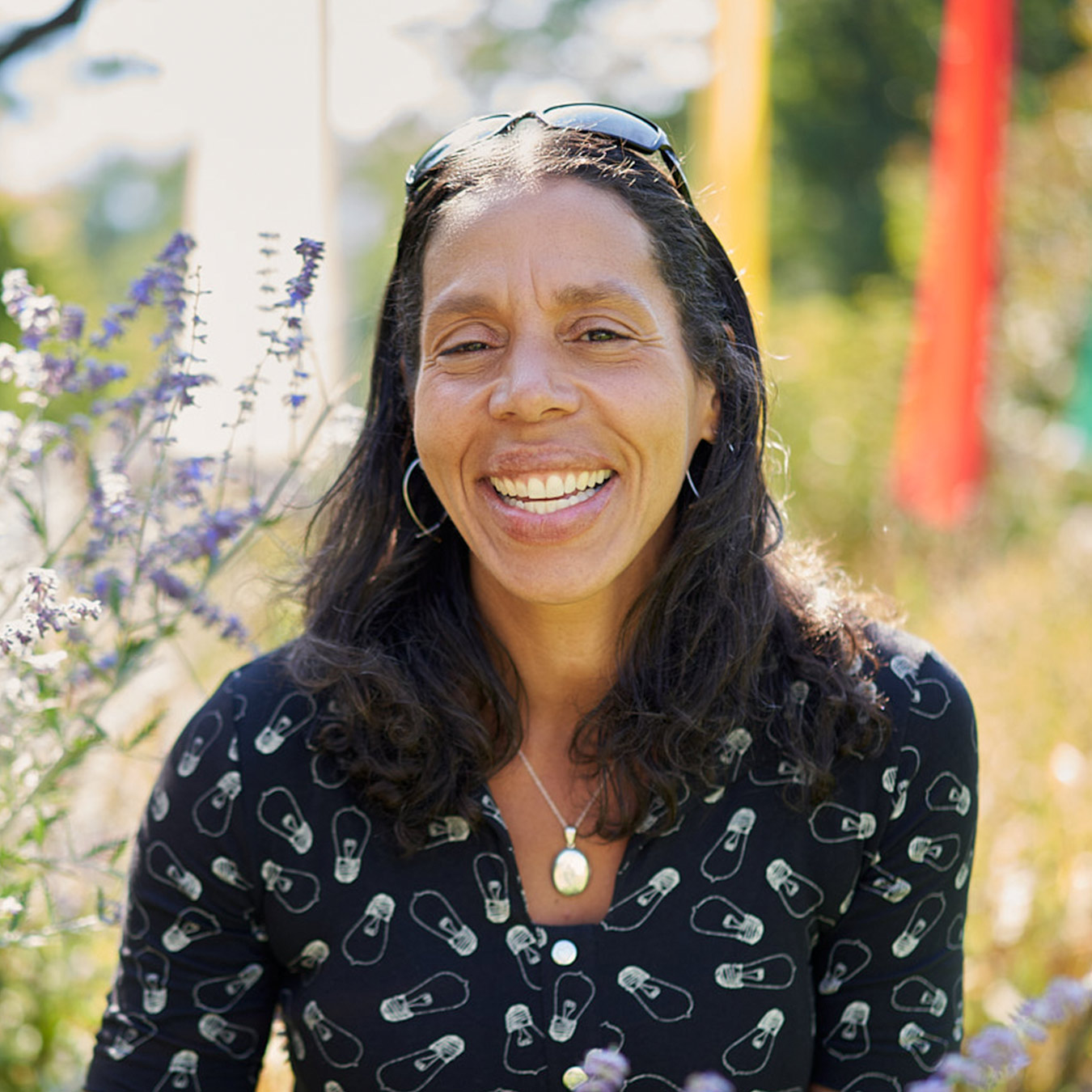
Jeanine M. Canty, Ph.D., is a professor of Transformative Studies at CIIS in San Francisco, telecommuting from Boulder, CO. A lover of nature, justice, and contemplative practice, her teaching intersects issues of social and ecological justice, ecopsychology, and the process of worldview expansion and change. She is both editor and a contributor to the book Ecological and Social Healing: Multicultural Women’s Voices and Globalism and Localization: Emergent Approaches to Ecological and Social Crises, as well as author of the book Returning the Self to Nature: Undoing Our Collective Narcissism and Healing Our Planet.
Professor Jun Wang shares how CIIS’ East-West Psychology Department teaches students to unite scholarly understanding with embodied practice through Eastern, Western, and indigenous wisdom traditions.
Dr. Rene Dumetz teaches CIIS' Clinical Psychology Psy.D. program, training therapists to work with the unconscious, relationships, and holistic human experience.
Megan Lipsett, chair of CIIS’ M.A. in Integrative Health Studies, explains how the program trains practitioners to address health as a whole-person, systems-oriented endeavor.