
Faculty Interview
Dr. Jeanine Canty on Earth Justice, Ancestral Roots, and the Ecological Self
What are you looking for?
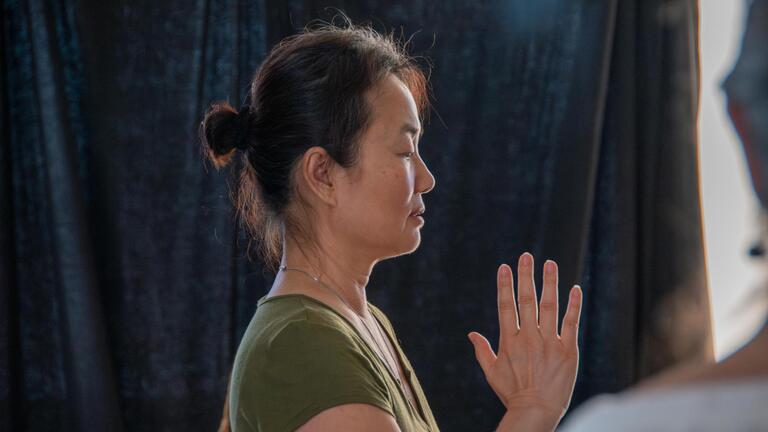
Professor Jun Wang shares how CIIS’ East-West Psychology Department teaches students to unite scholarly understanding with embodied practice through Eastern, Western, and indigenous wisdom traditions.
In Jun Wang’s classes at California Institute of Integral Studies (CIIS), students do not learn Chinese philosophy. They experience it. By practicing Taiji Quan, qigong, and sitting in meditation, they build the foundations for understanding. Many of her courses culminate in end-of-semester presentations where students share their work creatively — accompanied by poetry, music, and tea or food — in the spirit of what Wang calls a yaji, or "elegant gathering" in which scholar-artists come together to share work through the arts. The point, Wang explains, is not to separate learning from living. "Knowing and doing," she says, "is inseparable."
Wang has been teaching at CIIS since 2016. A core faculty member in the Department of East-West Psychology, she brings two doctorates to her work, one in traditional Chinese medicine from China and a Ph.D. in cultural anthropology from the United States. Her courses, which include Chinese Philosophies and Psychology, the Dao of Life Cultivation, and Chan Buddhism, are taught across all three programs the department offers: the M.A. in East-West Psychology, the M.A. with a concentration in Asian Contemplative and Transcultural Studies, and the Ph.D. in East-West Psychology.
Doing is unlimited practice, unlimited ways of understanding the world. Often only after we do, we understand the meaning of the action.
Jun Wang, Core Faculty, Department of East-West Psychology
What drew Wang to CIIS a decade ago was the department’s commitment to the scholar-practitioner model. The model, she explains, represents “an integral understanding of education,” one in which knowledge and enacting that knowledge are essential. Can someone be a great builder, having never wielded a hammer? Can someone truly know the flavor of a dish, having only read the menu carefully but never tasted it? The point is not to condemn or elevate knowing or doing; it’s to see them both as co-equal and mutually informing.
“I think my background and my experiential professional experience has been cross-cultural and interdisciplinary,” Wang says, “and I think this is valued at East-West Psychology and CIIS in general.” She describes teaching as being “at the heart” of her work — not separate from her practice of acupuncture, tai chi quan, and guqin music, but continuous with it. “I live what I teach,” she says.
In Wang’s classes, students are often asked a question: “Knowing and doing — which one comes first?” The question, she says, brings “vibrant conversation.” Some students argue that knowing must precede doing. Others insist that doing comes first, and understanding follows.
Wang confirms that both are valid ways of knowing and that one leads to the other in a circular manner, but points out the tendency to overvalue knowing over doing, which can lead to superficial thinking and unnecessary mental confusion and exhaustion. "Actually, in life, doing usually comes first," she says. "Doing is unlimited knowing practice, unlimited ways of understanding the world. Often only after we do, we understand the meaning of the action." This is not to dismiss intellectual understanding, but to recognize its limits.
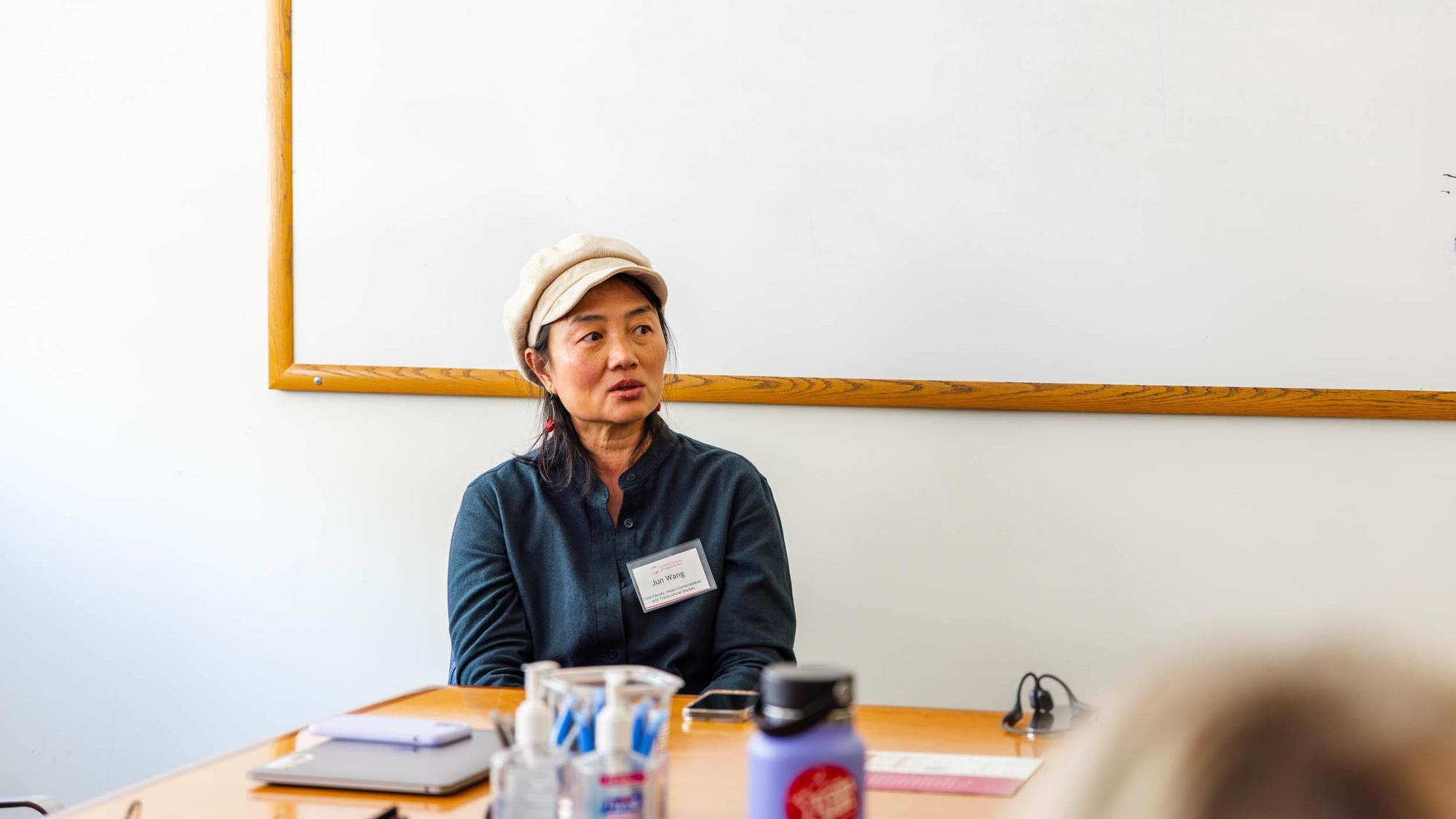
Students, she observes, may understand the theory perfectly, but fail to put it into practice. They bring this to her with curiosity, wondering why knowledge does not translate as well as they think it should into life. “That’s a sign of not integrating knowing and doing,” she says.
The remedy is to start small with whatever you have and enjoy to do, such as one minute of meditation or five minutes of tai chi walk. “It’s a starting point, and although it’s a very small step, when you continue to do it, it will grow into something more significant.”
This philosophy shows up in how she teaches meditation. The practice on the mat, she explains, is training. What matters is what happens off the mat: whether students can remain present, mindful of what they say, do, and think in daily life. “If we are not present, life becomes fragmented,” she says. “The present is the only moment that is happening in our life. The past is already gone, and the future hasn’t arrived yet. If we worry about the future or regret the past, we are not living in the present, and we miss life itself.”
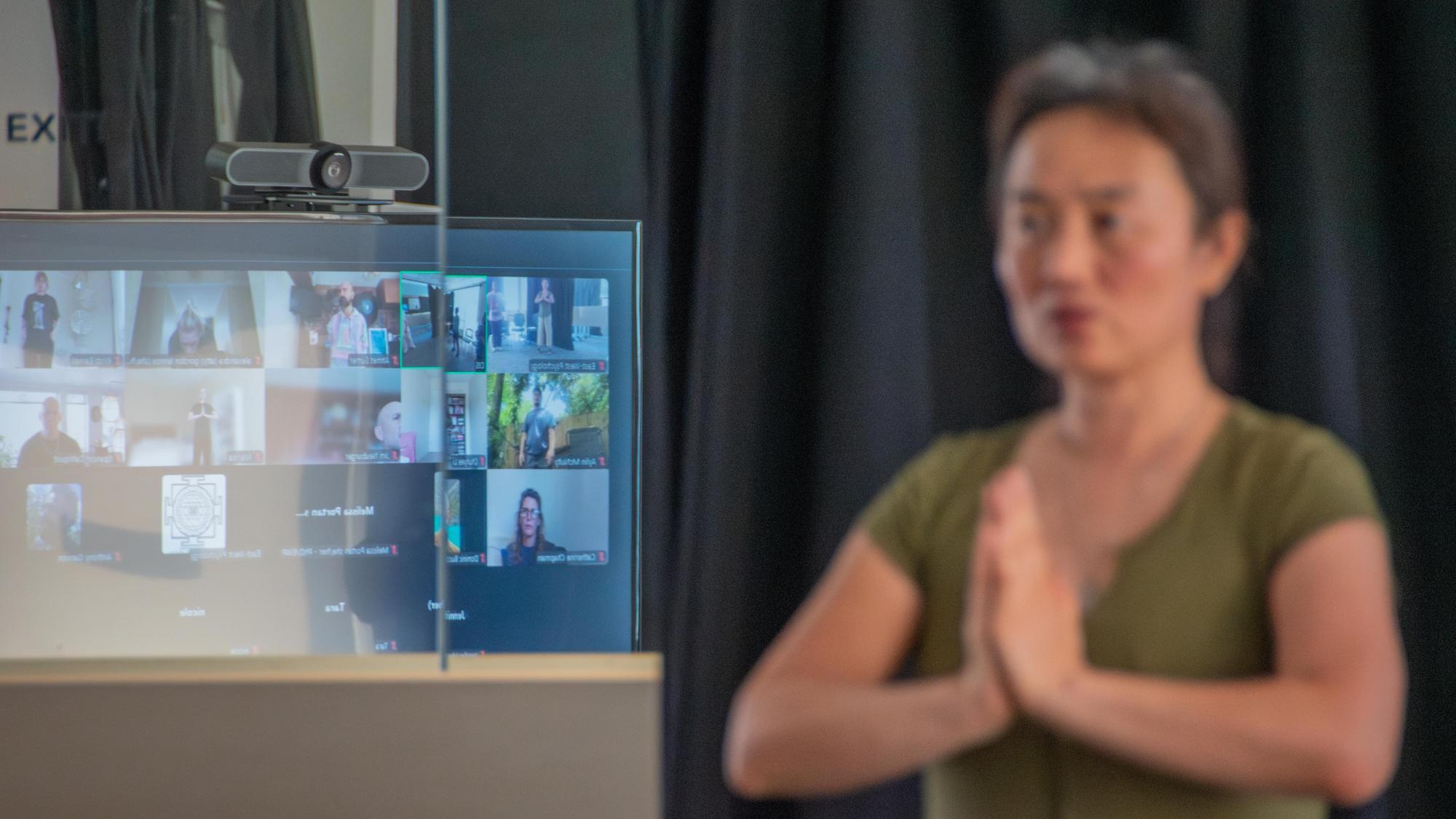
The present is the only moment that is happening in our life. If we worry about the future or regret the past, we don’t live in the present, and then we miss life.
Jun Wang, Core Faculty, Department of East-West Psychology
In her courses, students practice breathing techniques, tai chi movements, and qigong. They experience what Wang describes as “the quietness of their mind and body,” and realize they can cultivate “stillness within movement.” That realization — the unity of body and mind, the full presence of being — is what she calls “an experience of wholeness.”
Over the past decade, Wang has observed students transform intellectually, personally, and spiritually. Many graduates of the M.A. continue into the Ph.D. program, remaining in the East-West Psychology community for years. “I feel like most of our students experience the healing effects just by taking classes, being in the community,” she says. They feel accepted as they are and gently encounter a more authentic self.
What students tell her, repeatedly, is that they could not find the kinds of inquiry and conversation offered at East-West Psychology anywhere else. The department offers a unique learning environment where classrooms are small and students from around the world gather to study together through both intellectual pursuit and psycho-spiritual growth and transformation.
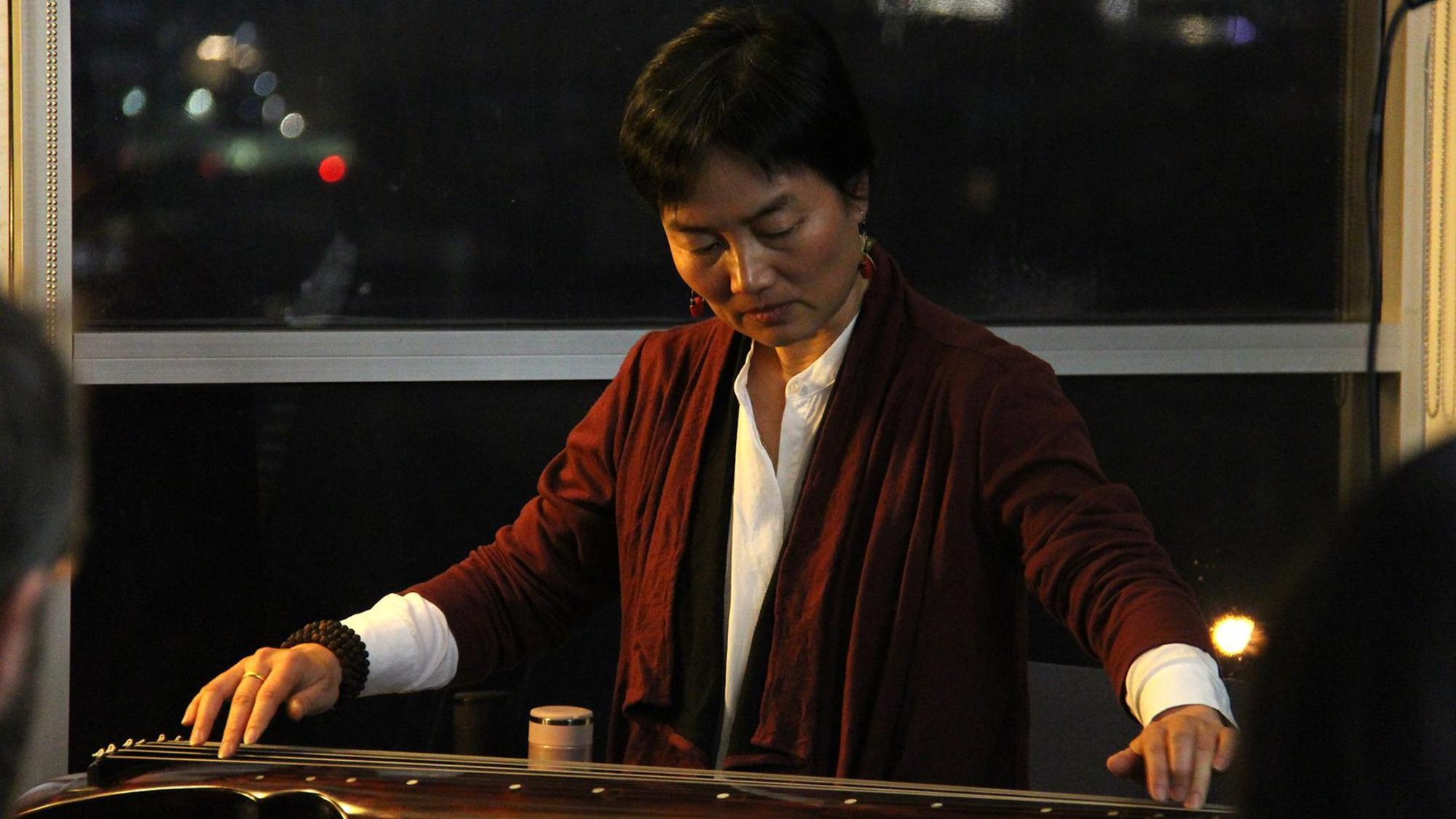
The Department of East-West Psychology is structured around what Wang describes as four quadrants: Western, Eastern, earth-based, and world psychology. The M.A. in East-West Psychology allows students to specialize in any of these areas. The M.A. with a concentration in Asian Contemplative and Transcultural Studies (ACTS) offers a more focused lens on Asian contemplative and spiritual psychology traditions.
What unites the programs, Wang says, is their engagement with “non-conventional psychology” — approaches to human experience that explore consciousness, transformation, and self-discovery. The department draws students from diverse backgrounds: mental health practitioners, healers, leaders in various fields. What they share, she notes, is an interest in “understanding the expansive nature of the psyche.”
For Wang, CIIS is “a very unique and special place.” And the students who leave the program, she hopes, carry with them not only new knowledge but a new way of being — one in which knowing and doing, theory and practice, are clasped together, hand in hand.

Exploring the convergence of Eastern, Western, and Indigenous psychologies and spiritualities
Dr. Jeanine Canty on Earth Justice, Ancestral Roots, and the Ecological Self
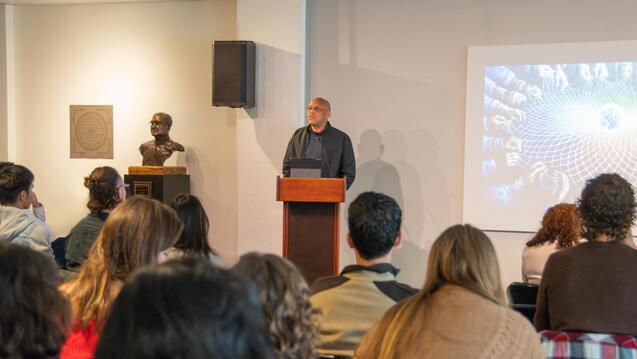
Dr. Rene Dumetz teaches CIIS' Clinical Psychology Psy.D. program, training therapists to work with the unconscious, relationships, and holistic human experience.
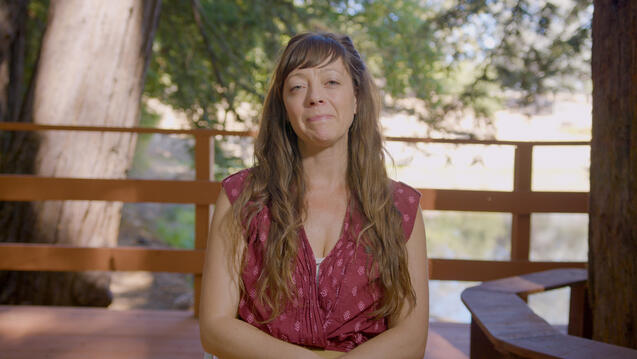
Megan Lipsett, chair of CIIS’ M.A. in Integrative Health Studies, explains how the program trains practitioners to address health as a whole-person, systems-oriented endeavor.