How Expressive Arts Coaching Deepens the Traditional Life Coaching Process
Discover how these approaches differ and why the arts can unlock new pathways for growth and self-discovery.
June 30, 2026
Coaching often starts with conversation, but what happens when words are not enough? Expressive arts coaching answers by expanding the traditional model, recognizing that the process is as much of a sensory experience as it is an intellectual one. In this way, coaching becomes a creative collaboration, where expression contributes to liberation. By inviting visual and digital arts, music, dance, and movement into the dialogue of transformation, it deepens this collaboration further. It is not just about what you say; it is about what you create in the process of change.
Where traditional life coaching helps individuals set and achieve specific goals, expressive arts-based coaching opens the doors to greater clarity, self-awareness, and emotional and social intelligence.
Deepening the Coaching Process
Traditional life coaching often focuses on defining goals, creating a plan for the present and future, and setting attainable benchmarks for growth. For many, the structured approach of traditional coaching provides consistency and actionable steps, offering a strong foundation for change. But for others, logic and planning alone may feel limiting, as if transformation has to be wrapped up in a tidy bow. Expressive arts coaching builds on that foundation, inviting the emotional and creative dimensions of growth that extend beyond words into the process.
Traditional Life Coaching Process
How Expressive Arts Deepens It
Building a safe and supportive environment where the client feels comfortable sharing their challenges and goals
Creating a space that invites imagination and expression
Identifying goals and a vision for what the client wants to achieve
Using visual or sensory exploration to tap into the client’s thoughts and discover goals and dreams
Assessing internal and external obstacles that might be interfering with the client’s progress
Engaging in an artistic process (drawing, music, writing, movement) to surface patterns that might not be verbal
Exploring strategies and solutions to overcome said obstacles
Interacting with the creative expression to identify new perspectives and possibilities
Developing a step-by-step action plan with clear and achievable steps
Translating creative insights into meaningful next steps
Implementing the plan and providing ongoing support and accountability
Applying insights from the creative process into daily life
Reflecting and reviewing the client’s progress and adjusting the plan accordingly
Returning to the creative practices to reassess growth and evolve the client’s direction
The Art of Expression
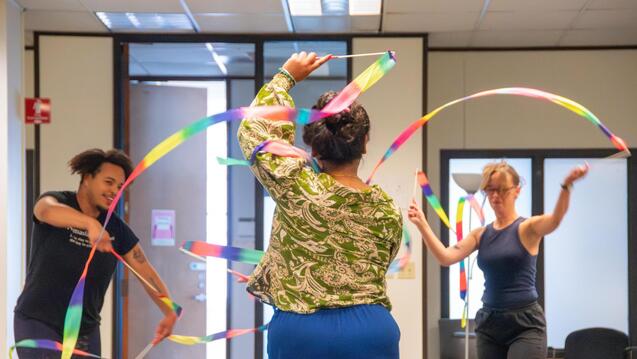
Expressive arts coaching does not rely on words and logic alone. It welcomes individuals to explore through different media. A chord progression can express what can’t be spoken. A gesture can reveal a feeling that was waiting to be shared. In this space, the creative process is less about analyzing and more about experiencing. Individuals are encouraged to explore feelings and possibilities through artistic expression, often allowing for a deeper, clearer sense of what transformation means for them.
Image
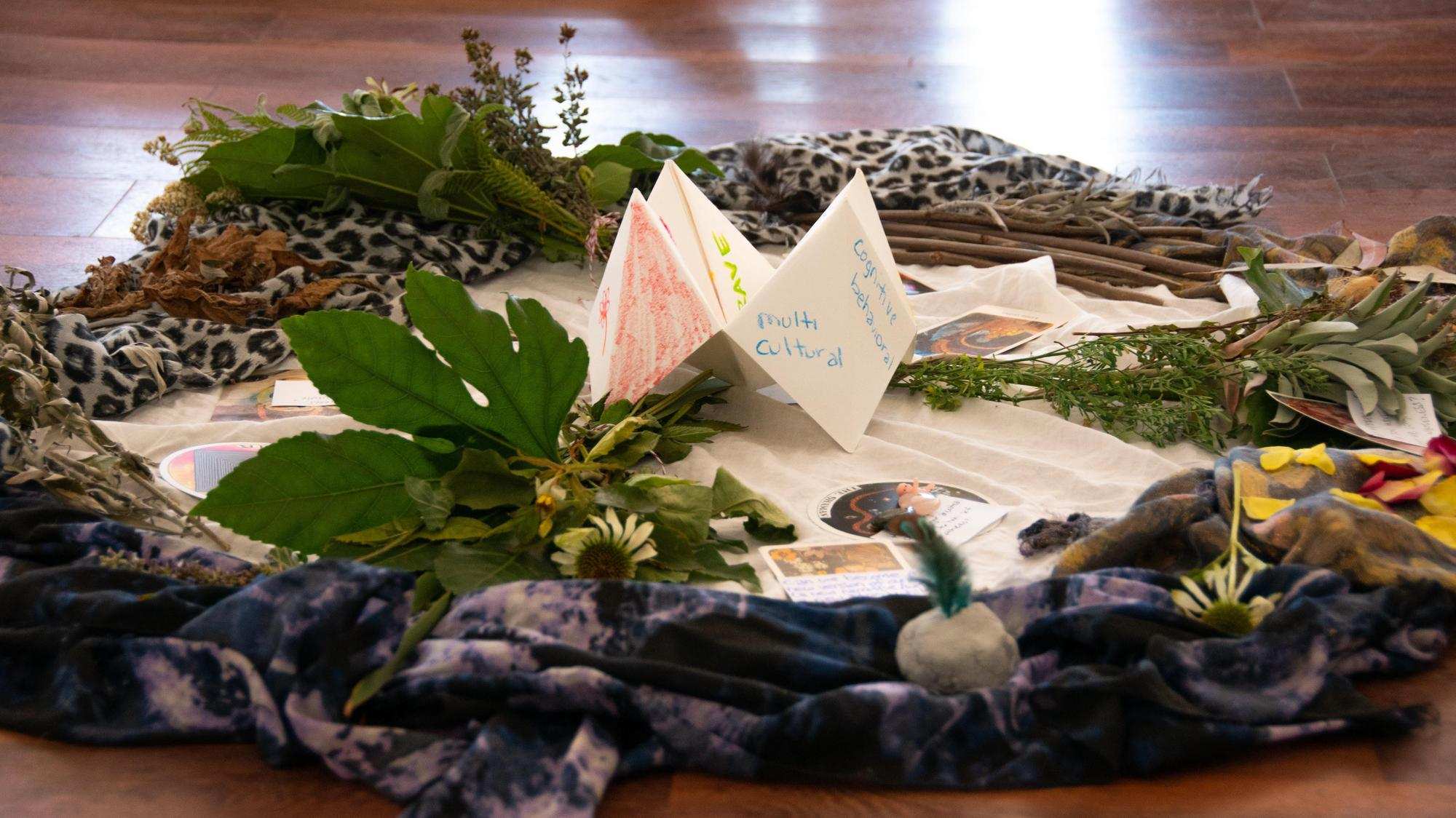
A creative practice space for expressive arts students.
Expressive arts coaching reminds us that growth is not about merely defining goals. It is about discovering those goals through creation and building confidence through expression.
How CIIS Prepares Future Expressive Arts Coaches
At California Institute of Integral Studies (CIIS), the M.A. in Expressive Arts Coaching & Community Building program encourages students to use the power of expressive arts to foster resilience, connection, and positive change in individuals, groups, and diverse communities.
This four-semester, fully online program combines academic rigor with experiential learning, integrating the arts with relational-cultural theory, narrative and collaborative practices, and liberation psychology. Students learn how to apply these principles to guide others through creative exploration to foster self-discovery, growth, and connection.
Image
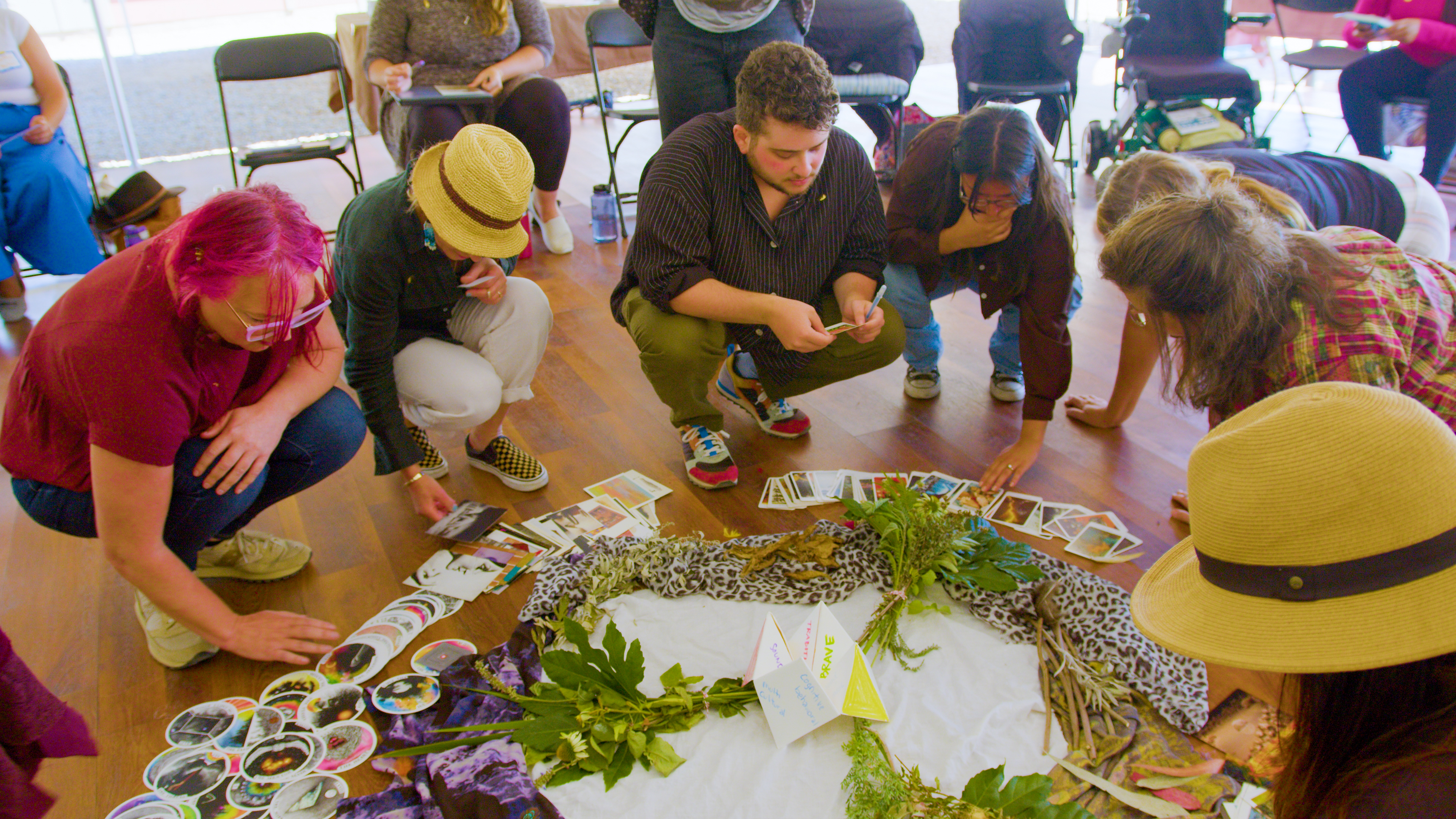
Students engaging in an activity.
Graduates leave prepared to not only coach individuals but to build communities of transformation where creativity becomes a tool for change. At CIIS, coaching is an art form that helps people feel and create their path forward.
As the field of coaching continues to evolve, the integration of the arts provides a powerful expansion of what growth can look like. Rather than choosing between structure and creativity, expressive arts coaching combines both, offering individuals the opportunity to move toward change with imagination and clarity. CIIS prepares future coaches to support clients in setting goals while also encouraging transformative possibilities.
After 15 years in corporate diversity work, Indigo ’26, ’27 pursues both a B.A. and M.A. at CIIS while discovering what it means to show up authentically in community.
Transpersonal psychology explores the full spectrum of human consciousness — spiritual, mystical, and transformative experience included — with empirical rigor, cultural humility, and a commitment to what actually helps people.