

Campus News
Beloved Community is built with ongoing practices that bring it fully to life.
What are you looking for?

Sex therapy sits at the intersection of clinical skill and human intimacy. Here's what training looks like and how the path unfolds.
Sexuality is one of the most common reasons clients come to therapy, and one of the areas clinicians are least often trained to address. Graduate programs in counseling, marriage and family therapy, and clinical social work rarely require coursework in human sexuality. For therapists who want to work with sexual concerns — not as an occasional topic, but as a clinical focus — additional training is the bridge between general practice and specialized work.
Becoming a sex therapist means achieving both clinical licensure and specialized education in sexuality. This can feel daunting, so below we lay out common approaches and steps along the pathway to help anyone exploring this journey.
Sex therapists are licensed mental health professionals who treat sexual concerns through talk therapy. They work with individuals and couples whose presenting concerns span a wide range: clients come with sexual pain, mismatched desire, compulsive sexual behaviors, the impact of illness or disability on intimacy, questions of identity, and the layered effects of shame — cultural, religious, or relational. The work requires both clinical rigor and the ability to hold deeply personal material without judgment. This work is verbal and relational; sex therapists do not engage in physical contact with clients.
Clients arrive from every demographic and configuration of relationship. A sex therapist might see a couple in their sixties navigating sexuality after prostate surgery in the morning and a young adult exploring kink identity in the afternoon. The breadth is part of why the training is rigorous.
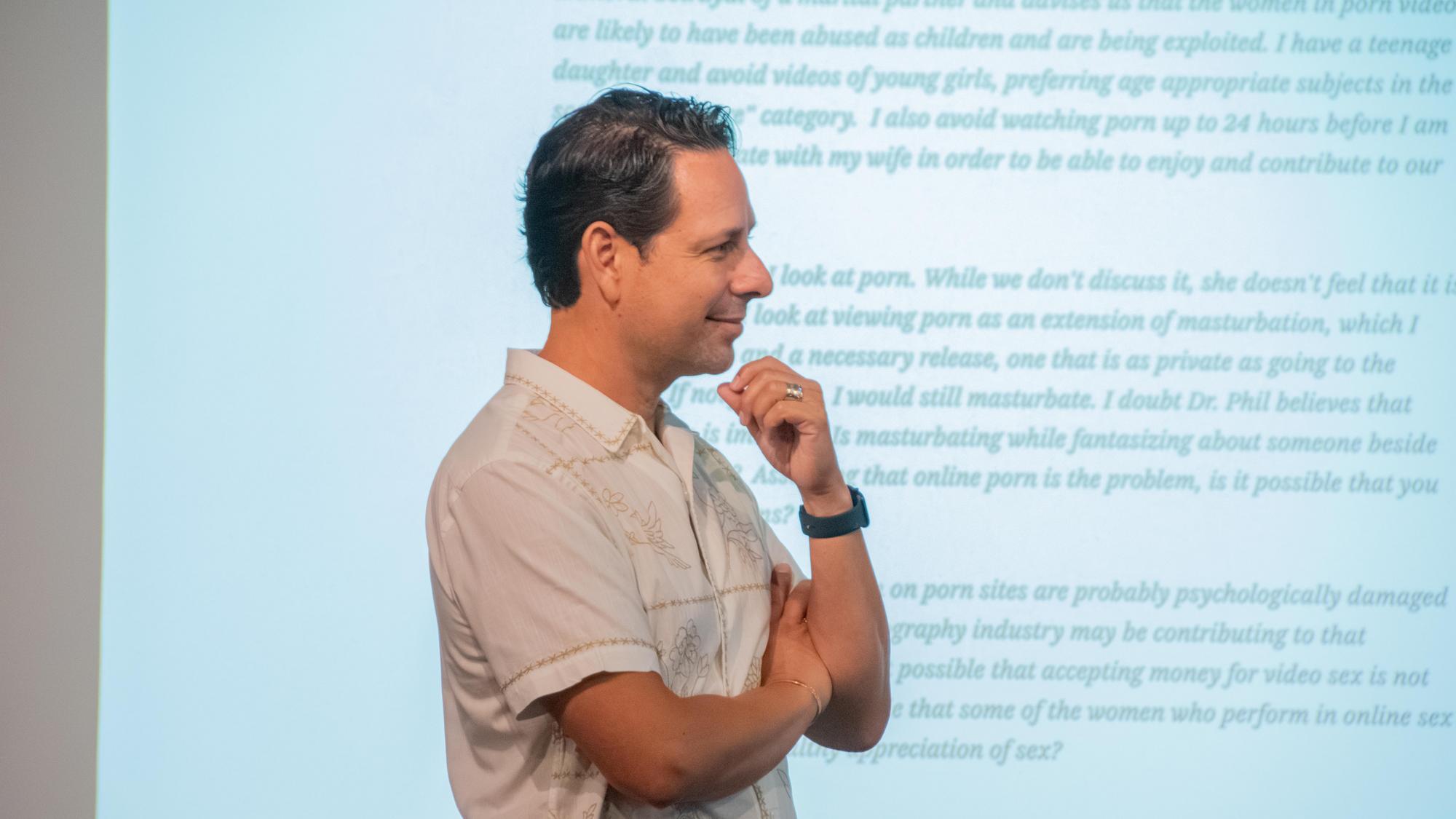
Before specializing in sex therapy, you need to be a licensed mental health clinician. In most U.S. states, that means a master's or doctoral degree in marriage and family therapy, clinical social work, counseling, or psychology, followed by supervised practice hours and a state licensing exam. Common credentials include LMFT, LCSW, LPCC, LPC, Psy.D., and Ph.D. in clinical or counseling psychology.
The licensure step is the longest part of the journey — typically about three years for a master’s level degree, and about five to eight years for a doctoral degree, and then multiple years of supervised work in the field after graduation. Specialized training in sex therapy is sometimes available within individual programs, but for comprehensive education and experience, practitioners will often want to add AASECT certification on top of their degree and licensure.
Allied professionals can also benefit from AASECT-approved certificate training, though they are not eligible to pursue AASECT certification.
The American Association of Sexuality Educators, Counselors and Therapists, known as AASECT, is the primary credentialing body for sex therapists in the United States. AASECT certification is voluntary, but most clinicians who specialize in sexuality pursue it. The credential signals to clients, referring providers, and insurance panels that a clinician has met a national standard.
AASECT certification has two main requirements:
The supervision hours are accrued while seeing clients on sexuality cases, after education is underway or complete.
The essential quality for growth as a therapist is continually embodying one's own therapeutic stance.
Walter Sipe, M.D., Instructor, Sex Therapy Certificate
Not all sex therapy programs are AASECT-approved, and the 165 educational hours have to come from approved sources. When evaluating a certificate, a few things matter:
The strongest programs address sexuality not as a single topic but as a landscape of intersecting issues — covering areas like desire and arousal, sexual trauma, diversity and identity across cultural contexts and relationship structures. Look for a curriculum that moves beyond foundational definitions into the clinical application of these topics, and that brings in faculty with distinct specialties rather than a single generalist perspective.
California Institute of Integral Studies (CIIS) offers a Sex Therapy Certificate that meets the full 165-hour AASECT requirement, with 75 synchronous and 90 asynchronous credit hours. Cohorts are kept to 20 to 30 students so that the group itself becomes part of the learning.
Walter Sipe, M.D., who teaches in the program, frames the training this way: "Far more than accumulating information or mastering specific therapeutic techniques, I believe the essential quality for growth as a therapist is continually embodying one's own therapeutic stance. With regard to working with sexual issues, this includes the capacity to hold paradox and approaching our clients' and patients' — and our own — sexual journey with curiosity and humility."
Alums often describe the certificate as the piece that was missing from their graduate training. Lissa Garcia, who completed the program in 2024, put it this way: "This program satisfied the education I was craving during my master's counseling program. I feel better prepared and excited to support clients in their continuous journey towards sexual healing."

Most AASECT-certified sex therapists work in private practice. Specialization tends to open referral networks: physicians, OB-GYNs, urologists, and other therapists refer clients who need sexuality-focused care. Some clinicians focus on specific populations — LGBTQIA+ clients, trauma survivors, people exploring non-monogamy — while others maintain a generalist sex therapy practice.
The credential also opens doors to supervision, teaching, writing, and expert consultation. After several years of certified practice, sex therapists can pursue the additional AASECT credential to become certified supervisors themselves, which helps address a persistent shortage of qualified supervisors in the field.
Zoe Sipe, who also teaches in the CIIS program, points to where the field is heading: "The CIIS program represents the much needed direction toward integrating sex therapy as a natural part of the therapeutic experience. Our students' commitment to providing transformative care in the many domains of sexuality is truly inspiring."
If you are early in your clinical training, the most useful thing is to make space for sexuality in your coursework wherever it exists — elective seminars, continuing education workshops, supervision groups that take sexual content seriously. If you are already licensed, an AASECT-approved certificate program is the next concrete step.
Beloved Community is built with ongoing practices that bring it fully to life.
CIIS' Center for Psychedelic Therapies and Research celebrated its tenth anniversary with the people who built it and announced a new endowed scholarship.
CIIS' Blue Sky Leaders program is built around a wager: that visionary leadership can be done with care, complexity, and contemplative depth.