Being Addressed by the World: A Ph.D. in the More-Than-Human
A doctoral student in CIIS’ Ecology, Spirituality, and Religion program explores how phenomenology, empathy, and place-based practice reshape ecological understanding.
August 11, 2026
In Spartanburg, South Carolina, a doctoral student at California Institute of Integral Studies (CIIS) is spending time sitting with trees. This is not metaphorical. For Sam Harrelson, who is pursuing a Ph.D. in Ecology, Spirituality, and Religion, scholarship means developing a profound and patient connection with nature. The work is both scholarly and existential, a way of asking how human beings might learn to attend more carefully to the more-than-human world.
Image
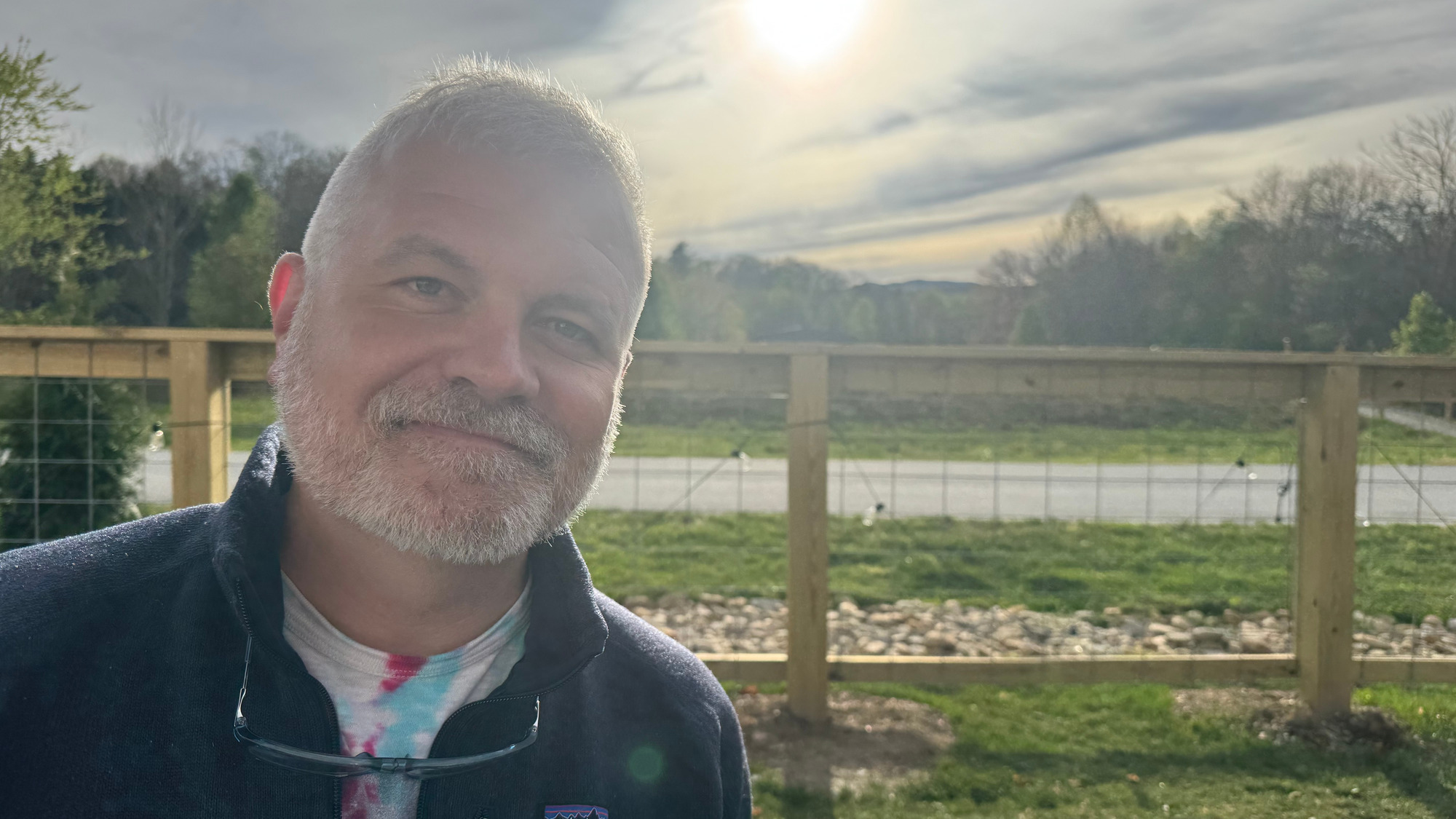
Sam Harrelson in Pisgah National Forest, located in the Blue Ridge Mountains near Brevard, NC.
The program resists premature synthesis. There is space to think slowly, to sit with tension, and to allow questions to mature over time. Sam Harrelson, Ph.D. '27, Ecology, Spirituality, and Religion
Harrelson, an ordained minister and longtime teacher, describes his research as sitting at the intersection of phenomenology, ecological theology, and process thought. The focus is less on producing quick answers than on cultivating what he calls “practices of attention, empathy, and responsibility.” These are forms of engagement that resist abstraction and remain accountable to lived ecological experience.
The decision to pursue doctoral work at CIIS was, in part, a matter of finding a program that takes “lived experience, relationality, and the life of the world seriously as sites of knowledge,” he explains. The Ecology, Spirituality, and Religion program offered what he describes as a rare space that met those intersecting needs. Equally important was the program’s commitment to scholarship that remains “accountable to place, history, and embodiment.” He was seeking a community where intellectual rigor and existential depth could coexist.
Several courses and faculty have shaped Harrelson’s thinking. Jack Bagby's Metaphysics of Integral Ecology has been especially formative; it is the seminar where Harrelson drafted "Ecological Intentionality and the Metaphysics of Living Form," now at the center of his comprehensive exams. Courses with Matt Segall, Sean Kelly, Laura Pustarfi, Elizabeth Allison, Chantal Forbes, and Jake Sherman rounded out this thinking, bringing process thought, integral ecology, vegetal life, ecological justice, decolonial and interspecies perspectives, and Christian metaphysics into the same conversation.
Particularly influential has been sustained engagement with the work of Edith Stein, the phenomenologist and Carmelite martyr whose writing on empathy has become central to his research. “Edith Stein’s understanding of empathy,” he explains, is not simply a concept but “a disciplined way of being addressed by others while honoring difference.”
Image
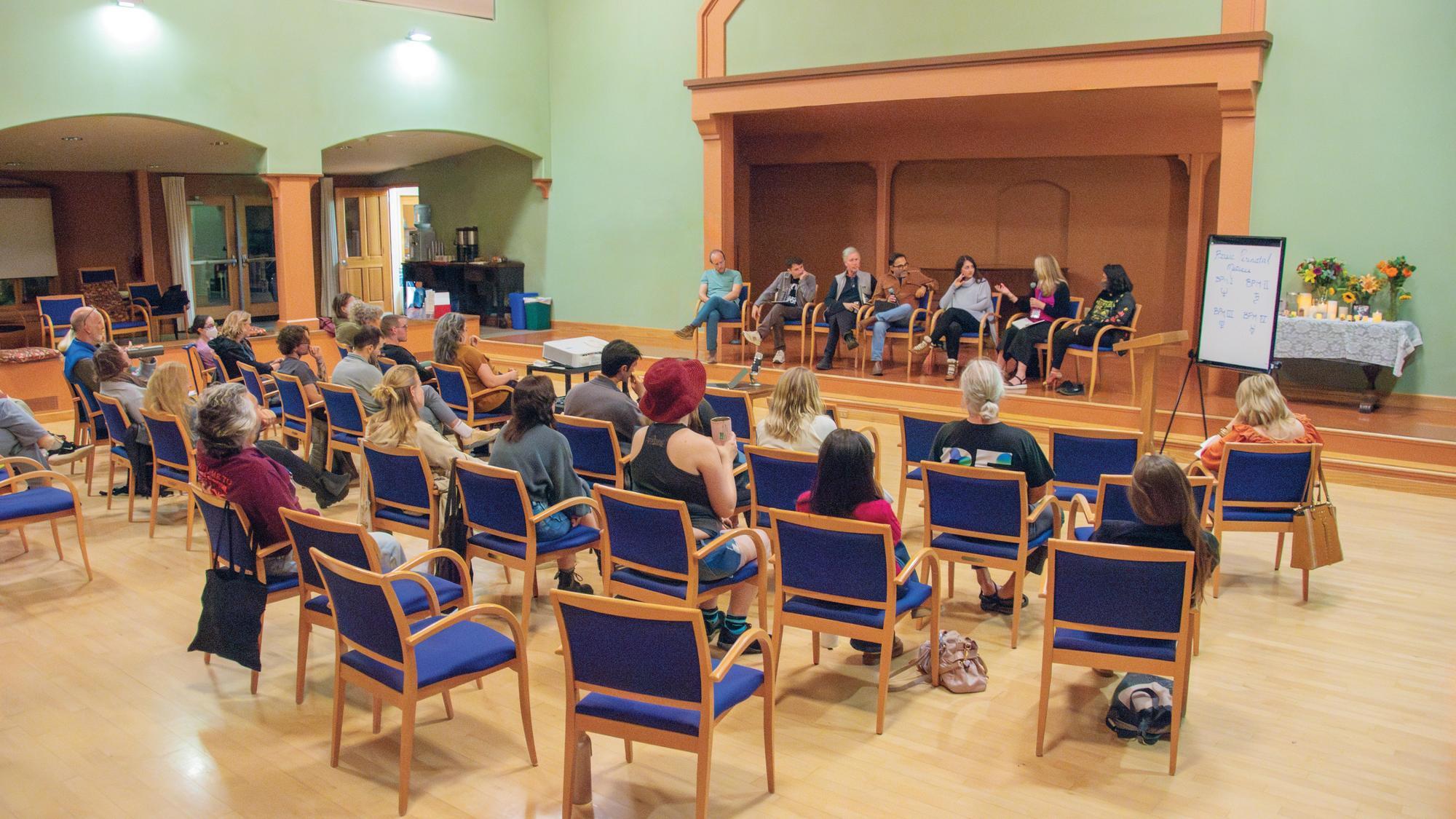
Faculty and students from the Ecology, Spirituality, and Religion program and the Philosophy, Cosmology, and Consciousness program gather at the joint retreat in Healdsburg, CA, 2024.
If there is one thing Harrelson wishes he had known at the start of his doctoral work, it is this: trust the pace of the work. “CIIS rewards patience, sustained attention, and allowing questions to unfold rather than forcing early coherence,” he reflects. That can feel disorienting at first, especially for students coming from more linear academic paths. But the program, Harrelson has found, is about more than a single path with a single goal. Instead, there is space to think slowly, to sit with tension, and to allow questions the chance to mature over time. Combined with serious engagement with phenomenology, process thought, and decolonial perspectives, the approach has made CIIS feel “less like a credentialing path and more like a formative intellectual and ethical community.”
Looking ahead, he hopes to carry this work into teaching, writing, and public-facing scholarship that remains grounded in place, history, and lived experience. The vision, he clarifies, is not to produce quick answers but to “cultivate practices of attention, empathy, and responsibility that can sustain communities amid ecological and spiritual uncertainty.” And what will guide him and sustain him through this uncertainty? “My north star is a form of scholarship and teaching that helps people learn how to attend more carefully to one another and to the more-than-human world.”
Ecological understanding is not only conceptual but cultivated, and scholarship can emerge from patience, repetition, and being addressed by the world rather than mastering it. Sam Harrelson, Ph.D. '27, Ecology, Spirituality, and Religion
Equally transformative have been assignments that asked for sustained, place-based attention — field journaling, sitting with trees, tracing how perception changes over time. One recurring practice makes this tangible. Most mornings, Harrelson sits beside a black walnut tree in his backyard, trying to notice what the tree is doing before reaching for what he already knows about its leaf structure or root systems. He tries to give himself time not only to address the tree but to be addressed by it, letting the tree, as he puts it, "present itself before I explain it". These practices confirmed that “ecological understanding is not only conceptual but cultivated,” Harrelson says, “and that scholarship can emerge from patience, repetition, and being addressed by the world rather than mastering it.”
One project that has emerged directly from Harrelson’s work at CIIS is a long-term, place-based inquiry he calls ecological intentionality. The project explores how attention, empathy, and responsiveness operate beyond strictly human consciousness. Practically, the work takes shape through sustained field journaling and listening practices with local ecologies — especially trees — alongside historical and theological research. The project has informed conference papers and ongoing writing, and it continues to shape how Harrelson thinks about “scholarship as a form of cultivated attentiveness rather than abstraction from place.”
Image
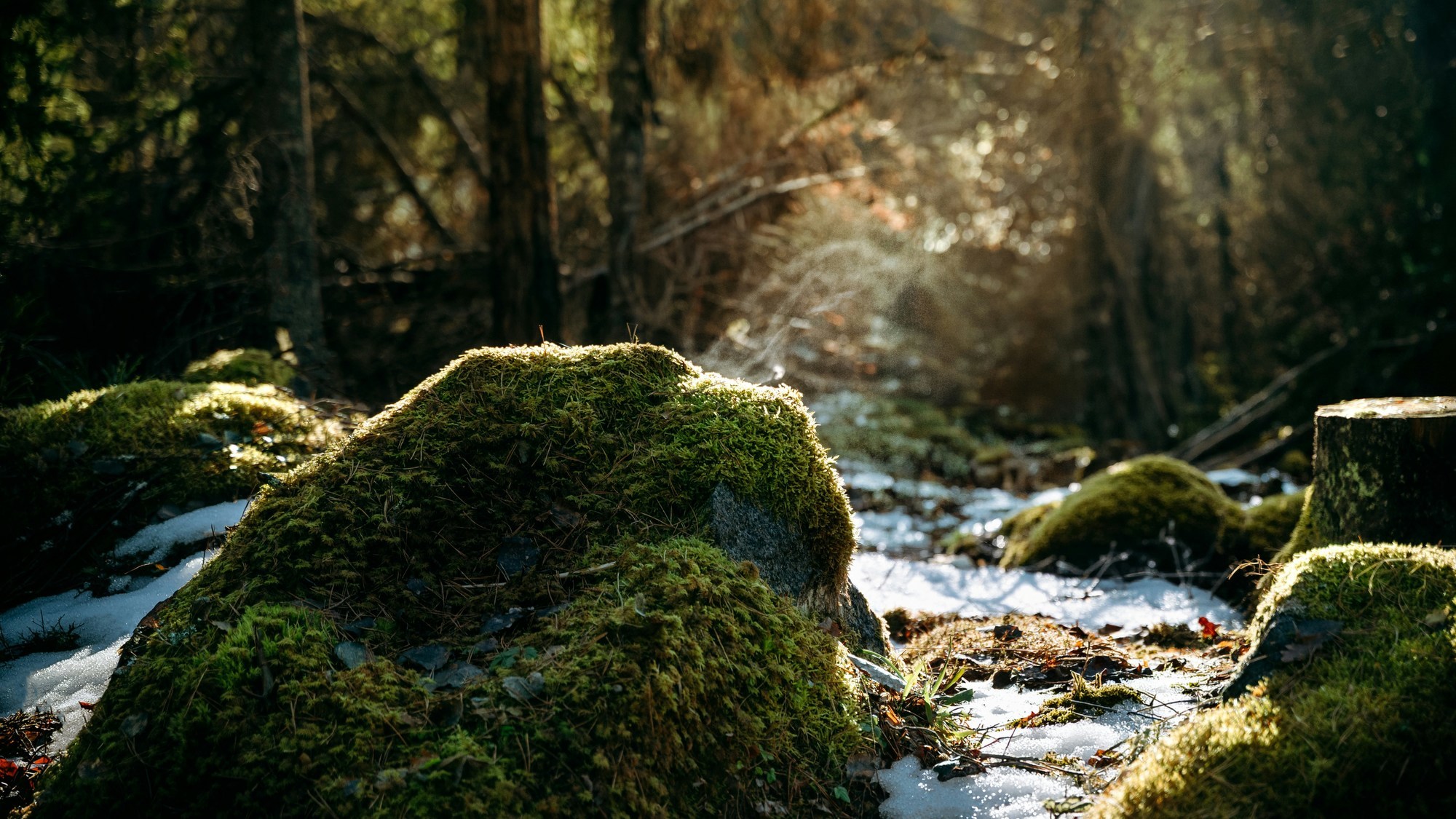
Sunlight streaming through a mossy forest floor with snow.
That project has also traveled beyond CIIS. Harrelson presented "Roots of Cruciform Consciousness: Returning to the Ground of Ecological Intentionality" at the Yale Graduate Conference in Religion and Ecology at Yale Divinity School. He used the image of roots, he explains, "both literally and philosophically, as the hidden, living structures that hold ecological communities together, and as a way of thinking about how human consciousness is grounded in relation before it ever becomes abstract thought." Presenting this work at his former divinity school, he says, was a meaningful chance to bring his earlier theological formation into conversation with his current doctoral research.
That same attentiveness has taken on practical stakes close to home. Harrelson has also been writing about the rapid buildout of AI data centers in Spartanburg County, part of a growing corridor between Charlotte and Atlanta, asking what it means that technologies promising to save us time and attention are built on local water, land, and electricity that most of us never have to see.
When asked what feels distinct about the Ecology, Spirituality, and Religion program, he points to its willingness to get close to the world. Rather than treating ecology, spirituality, or religion as objects to be analyzed from a distance, the program invites students to remain “accountable to experience, place, and relationship as integral to scholarship.”
Harrelson’s doctoral work is conducted entirely online, which allows him to remain grounded in the South Carolina ecologies that form the basis of his fieldwork. The online format also supports what he describes as “thoughtful pacing.” Conversations unfold over time; reflection deepens between sessions; and relationships develop through sustained dialogue rather than constant presence. For work that depends on attention, journaling, and place-based study, online learning has not simply been convenient — it has been generative.
My north star is a form of scholarship and teaching that helps people learn how to attend more carefully to one another and to the more-than-human world. Sam Harrelson, Ph.D. '27, Ecology, Spirituality, and Religion
Associate Professor Sara Salazar shares how CIIS’ B.A. in Interdisciplinary Studies creates space for students who have started and stopped their degrees to finally complete on their own terms.