Rigorous, Not Recreational: Inside the First Bachelor of Science in Psychedelic Studies
CIIS' first class of Psychedelic Studies graduates completed a program built on a conviction: that a booming field needs rigorously trained leaders.
July 30, 2026
In August, twenty-six CIIS students became the first graduates of the nation’s first Bachelor of Science in Psychedelic Studies, completing the inaugural year of a program launched on the conviction that psychedelics had moved from the margins into the mainstream, and that the field needed rigorously trained leaders to match.
The program — a three-semester transdisciplinary immersion in all things psychedelic — drew students from all walks of life: career-changers from the tech industry, bodyworkers, first responders, veterans. This diverse yet cohesive cohort challenged themselves and one another, says Program Chair Dr. Anne Huffman. Many came to the program after their own healing experiences with psychedelics, wanting to back this personal knowledge with academic insight so that they could educate and advocate for others.
“When we envisioned this program, it was in the hope that we would bring people in who wanted to be changemakers and leaders. I'm grateful that these students found us,” Huffman says.
Inside the Curriculum
The inaugural class in Psychedelic Studies learned together as a cohort, uniting their previous professional and lived experience with established and emerging research on psychedelic-assisted therapies. They also study the sociopolitical implications of developments in the field, as well as ethical dimensions.
“We're giving students a broad foundational theoretical grounding in psychedelic studies, looking critically at the latest research and talking about grey areas in the field,” says Huffman. This includes being mindful of the West’s tendency to co-opt indigenous psychedelic knowledge, stripping its religious and ceremonial aspects in pursuit of recreational pleasure.
To that end, faculty invited indigenous shamans to visit the cohort’s online classes and present on their lineages, explaining their histories while delimiting the boundaries of what’s kept inside and outside their communities. The speakers came during students’ first semester, laying the groundwork for non-appropriative approaches that respect the deep history and learning of these medical traditions. “That was really a class around being mindful that we don't do harm,” says Huffman.
Image
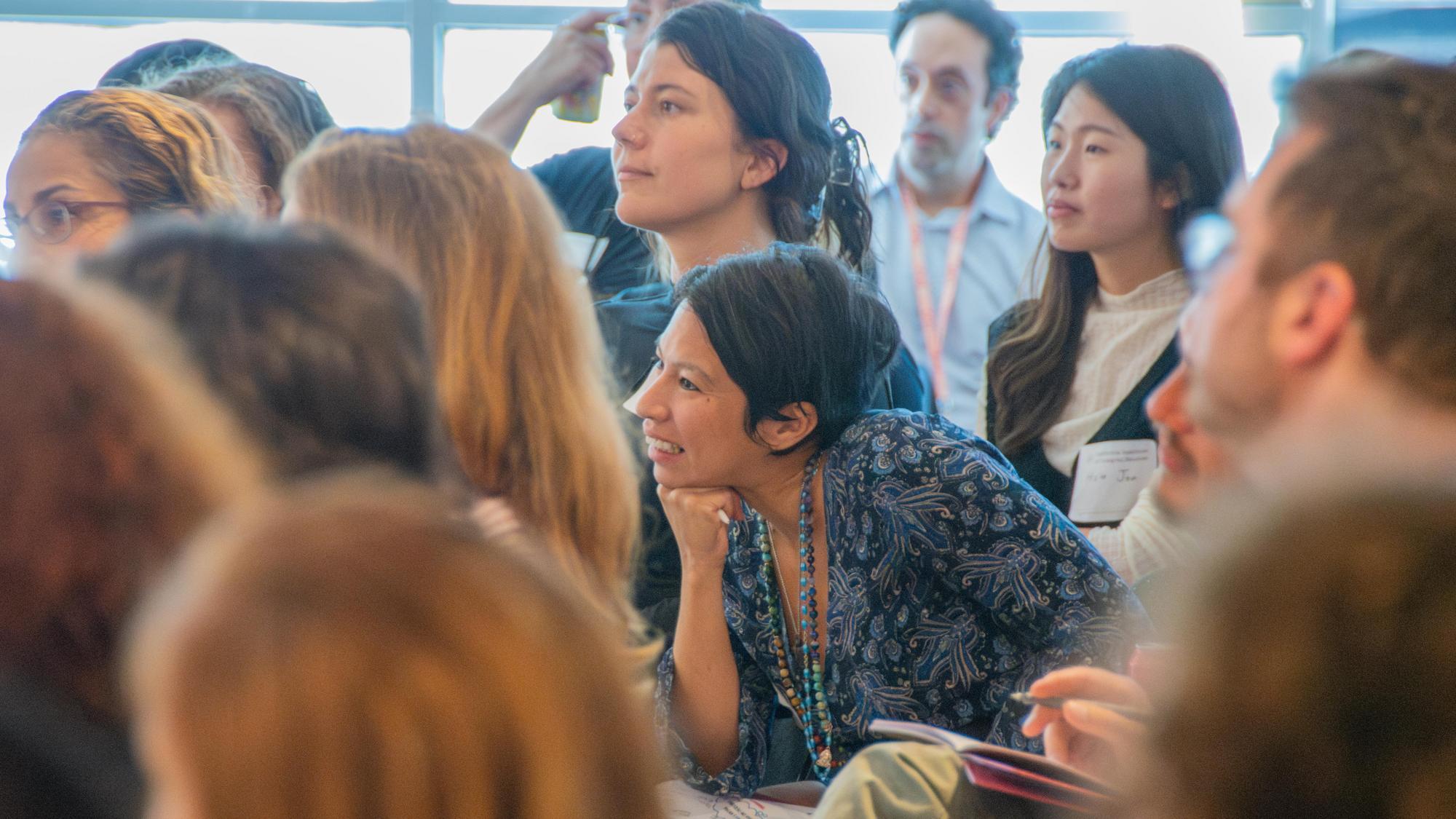
New students gathered for orientation on the CIIS campus.
The rest of the degree built on these foundations of careful and deliberate understanding. “I don’t want people to think that this is the shiny, happy people degree,” she added. “We are not sitting on the hill sipping psilocybin tea and singing kumbaya. It's a Bachelor of Science degree. You’re taking classes in neurobiology, psychopharmacology, law and ethics, indigenous wisdoms, altered states of consciousness, activism — and you are executing your own research. We keep you busy.”
The cohort’s capstone research projects spanned a range of timely topics, including psychedelics and PTSD and psychedelic-assisted therapy in conflict zones like Ukraine and Gaza. “We have a number of veterans, and I think that's critically important now when VA funding is being cut. What are alternative, accessible healing pathways?” Huffman pondered. Students also researched interactions between psychedelics and GLP-1s, psychedelic-assisted therapy for postpartum depression, ecotourism around ayahuasca ceremonies, and legislative reform.
Not an Ending, but a Starting Point
Huffman reflected on the program’s successful first year with gratitude — that CIIS took the risk of establishing an undergraduate degree in Psychedelic Studies — and confidence in the future. “We are at the cutting edge of the field, at such a great intersection of time, place, and community,” she says. “Despite all the current disruptions to higher ed, we have students who are hungering to do this program.”
Following graduation, several cohort members plan to pursue clinical graduate study so that they can eventually provide psychedelic-assisted therapy themselves. Others want to advocate for humane and accessible therapies and healthcare, or to do community outreach and education. “The students are aware that they are the future of this field,” says Huffman. “So whatever direction they choose, they’re going to make a difference.”