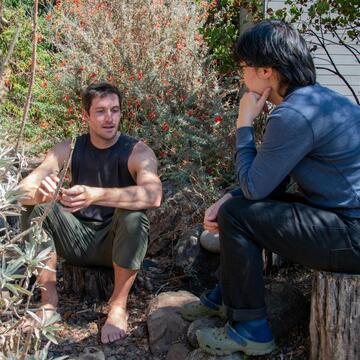
Alka Arora, Jeanine M. Canty, and Sara H. Salazar: Multicultural Women’s Voices on Ecological and Social Healing
It is possible to heal ourselves and our planet if we are open to the power of integrating multiple and often conflicting views. In their lives and work, authors and CIIS faculty members Alka Arora, Jeanine M. Canty, and Sara H. Salazar demonstrate this power and possibility.
In this episode, we are joined by these three inspirational scholars for a conversation exploring their personal and professional experiences straddling social and ecological issues and how navigating these edges has surfaced new models and practices for collective healing.
This episode was recorded during a live online event on October 1st, 2025. A transcript is available below.
You can watch a recording of this episode and many more episodes on the CIIS Public Programs YouTube Channel.
Tags:
Transcript
Click to Show/Hide
Our transcripts are generated using a combination of speech recognition software and human editors. We do our best to achieve accuracy, but they may contain errors. If it is an option for you, we strongly encourage you to listen to the podcast audio, which includes additional emotion and emphasis not conveyed through transcription.
Jeanine Canty: Thank you everyone so much for coming this evening. And thank you to CIIS and CIIS public programs. It's just such an honor to be in dialogue. And I want to especially thank Sara and Alka, of course, and all the contributors to our book. And I do want to start off with kind of a tender honoring and thank you. One of our contributors to this book is the iconic, renowned eco-feminist Susan Griffin, who passed away yesterday. So pretty sad. She was in her 80s and just such a lovely being, brilliant. And so last night I was just reading, I decided to reread her essay. And if you've never read Susan Griffin, she has, I think, 21 books. So read one of those. But in her essay, she just had this really sweet little story. And I thought I would just start with a bit of it. I really envisioned her passing in this image. So she said, “One of my earliest and most indelible memories is of standing in a field near a house in the San Fernando Valley, which was not yet in those days, the late 40s, entirely covered with tract houses and shopping malls. Just five years old, I found myself alone, two blocks from home and slightly frightened, though too enthralled with the way the wind swept through the tall green grass that surrounded me on every side to be captured by the fear.” So yeah, just envisioning Susan surrounded by those waving, windswept tall grasses on her current journey. And I'd also like to start with just reading the invocation from our book. “To all the women and femmes of color who feel heartbreak for Earth and all her beings and are enchanted by visions of new possibilities. You are seen and loved. May the muck of these times usher in the resurgence of the feminine. To all of the ancestors, deities and elementals invoked within these pages, your presence was felt throughout this book's creation. To Mother Earth and all her beings, thank you for your forceful rumblings and fierce love while we reconnect in right relationship.” Okay, so for this evening, we're going to get into some dialogue. And first I'm going to do a little framing of our work. You probably all know right now that it's about this book, Ecological and Social Healing, Multicultural Women's Voices, and it's a second expanded edition. And I was so excited that both Sara and Alka agreed to be in this new version and we've got lots of new contributors and it spans four generations of folks from their 30s through their 80s. Both women of color and some Anglo contributors as well and we all hold multiple positionalities. And the book really comes out of our intersections between working with both social and ecological issues through our experiences of our race and other gender, obviously, and other positionalities. And I'll just read a little bit of the introduction. It's birthed out of the conditions we're each born into and it moves beyond the breakdowns and criticisms of these conditions, going into the healing and emerging insights. The work here honors the uniqueness of our circumstances and gives voice and freedom to the new patterns and wisdom that come from living on the edges, these edges between ecological and social histories. And so throughout this creation, we really focused on this sub-theme of edges of transformation and really looking at like, what's blooming with our collection here. And so back to the intro, this theme has many lenses. Permaculture often claims that everything interesting happens at the edges between ecosystems. Transformative learning acknowledges that our worldviews change through having experiences that confront our identities and force us to make meaning. And edges also represent crossing into liminal spaces, stepping into the mystery of nature, spirit, and our psyches, not knowing what we may encounter. And edges, they're often hard, whether in sensory sharpness or through the psychological fear of transitioning into a different reality. Nor are edges seamless transitions. They do not embody the conventional sense of wholeness. Edges are often formed when something breaks, such as a rock formation or a held sense of personal and collective identity. And so as we are moving to restore our relationship with nature, including one another in an extremely diverse, globally connected planet, often the knowledge we need is held by those that are crossing boundaries between fixed viewpoints, restoring relationships with place, holding multiple ways of being, and reintegrating feminine wisdom. And so we currently have generations of people who straddle multiple edges, varied identities that consist of unique combinations of the indigenous and multicultural, the colonized and colonizer, the displaced, and the reclaimer. And our authors, we represent the joining of multiple communities, histories, and identities. Okay, so I'm going to ask Alka and then Sara. We started working on this collection in the late 2020, late 2023, and we finished our pieces long before our most recent US election. And so, Alka, in your perspective, how has our current reality affected the relevance of our work here?
Alka Arora: Such a great question, Jeanine, because of course that's what's in everybody's minds these days as we kind of watch the horrors that we're seeing unfolding in the news every single day. I think my answer to that is somewhat multilayered. I mean, I think on the one hand, we've seen our current administration roll back a number of environmental regulations that have been very hard won over the years. Things like protecting endangered species, putting limits on oil and other extractive companies. You know, in particular, concern for my work in animal ethics, just earlier this year in July, the Trump administration filed a lawsuit against California because of the state's egg laws, which said that all eggs sold within California must come from cage-free hens. And the Department of Justice has alleged that these regulations are actually, you know, hiking up egg prices nationwide. So there's this like conflict that's being between profit and, you know, increasing the welfare of animals and other parts of non-human life. Now, on the other hand, right, I see the issues that we're addressing in this collection as going much, much deeper than what's happening in the current election cycle. Our disconnection from an exploitation of nature and animals has been around long before our current regime and would still be there if the other party had won. Though there might have been, you know, some, there's some modifications, some minor limits. Okay, there needs to be out of cages, but the chickens can still be crowded, right? So these are like somewhat minor tweaks in some ways that I see. And I'm not saying that these things aren't important, right? But I think that the kind of work that your collection really speaks to, is a much, much deeper transformation of consciousness that goes beyond what either main political party is able to offer, right? So I think like we need to have kind of a both-and approach. Yes, we can resist, you know, what's being done to roll back these protections, but recognize that really the work of transformation is going to be happening outside of, you know, just who's the current, you know, politician beholden to extractive multinational corporations and power. And how that's going to change at the top, at the levels of greater power is when the change happens more at the individual and community level, which I really see, you know, all the authors in this collection talking about is individuals, communities reconnecting to their spirits, to their ancestral lineages, to each other, to the world outside of our computers as much as we love our computers, right? And so I think that our work is, is always been urgent and it continues to be urgent. And I think if anything, you know, we might want to sort of employ the current concern that's bubbling up among many aspects of the population, particularly the youth, for what's happening to our planet to really, you know, plant seeds of deeper transformation so that, you know, the pendulum will swing much further than we might ever have thought it could the other way. Yeah.
Jeanine Canty: Yeah, thanks so much, Alka. Yeah, kind of taking that all in. Sara, what are your thoughts on this? You know, how do you see the relevance of our work here in terms of, since the election?
Sara Salazar: Yeah, thank you, Jeanine. Thanks for that question also. It, you know, when we were writing the book, I thought, man, this is such a wonderful time to be delving deeply into these topics. And now as we sit here, I think, wow, that this book could not have come at a better time in history because this is really marking a particular moment, not for just us, the United States, but globally. And I think what's really important about this book is that it really centers the voices of many people who've been in the margins, right, for generations. And so I think that's very exciting about this book. My particular chapter, as you know, was on Xicano mothering, intergenerational connections, land, food. And, you know, of course, you know, Ken has also said we could go down the list of all the things that are happening currently. But I think, you know, with relationship to my chapter, I think the loss of reproductive rights among women, which has really created fear of being pregnant, getting pregnant, the fear of miscarriage, fear of birthing. And, you know, because of the forced displacements that are happening within the Xicano community and other BIPOC communities, the fear of being separated from our children is very real in many of our communities. And so it's not, it's happening right now. And I think that that fear, right, is powerful. And so I think that this book, you know, really helps to situate and speak to our experiences, as many of us are from the margins. And I think it also speaks to this idea of forced displacement from our land, from our communities, from our family members, in addition, you know, to forced displacement from our children. And so this, I think, this helps these communities, helps my community, right, speak into that, right, speak power into these places in which many of our rights have been taken away, right, and continue to be as we speak. So I think that's, you know, just a couple of the ways in which this book is so relevant right now.
Jeanine: Yeah, thanks so much, Sarah.
Alka: Jeanine, I wonder how you would answer this question, you know, having been the one to, you know, solicit contributions and, you know, curate this and what are your thoughts about its relevance right now?
Jeanine: Yeah, yeah. Well, it's interesting because the first edition came out really in 2016. It's got a 2017 publication date. And then when our publisher approached about doing this one, I said, you know, it was ahead of your time before, but now it's so your time. But listening to both of you, I totally echo what you say, that it's so important for now and also carrying us through this time. There's been so many kind of moments this year where I've actually just picked up the book or, you know, what was that thing from so-and-so's chapter? Because it really brings so much kind of tooling, inspiration, visions. I agree with what Alka was saying and kind of that the rug was being, was kind of just pulled up from us, but in a, like a quicker manner. But it was still, you know, things were falling apart globally and definitely nationally. So really recognizing that and reading the book and some of the inspirations that come up for me. I'm definitely doubling down on the ways that we practice, the ways we create community and sparking collective healing. My favorite phrases from the book that I'm always going back to in terms of that, and some of these are yours, are terms like aquaphilia, attention liberation, autochthonic intimacy, autotopography, sorry if I pronounced that wrong, Sara.
Sara: You got it.
Jeanine: Blue spaces, disorienting dilemmas, getting dirty, haptic cognition, kairos time, insanity, living kind, playful fabulista, soft fascination, yin yang. And so it's, for me creating like so many possibilities and also just realities. And in my chapter, I focus so much around transformational learning and paradigms. And right now it feels like that's something that we all need to be doubling down or, at least I do, in terms of there's so many kind of fixed worldviews, fear. And we need to work with humanity around the pliability of our worldviews and really tool up with that, with a lot of love and ferocity. Yeah. Okay. So, well, Alka, I'm going to ask you, your chapter is called Living Kind, a Spiritual and Political Journey, and it centers around your work with integral feminist vegan pedagogy. And so could you frame what this is and also read perhaps a section from your chapter?
Alka: Yeah, absolutely. Thank you. So I first want to give props to the African activist Taliba Ogubala, whose work I found in the work of womanist Layli Maparyan, who coined the term Livingkind as one word. Right. So she talks about in the way of like moving from not just humankind, but living kind, all living beings. And so my title, I love word plays a little bit of a play on words, living kindly, two words, as well as like moving from, you know, I think the big feminist move was moving from the idea of mankind to humankind. Right. There's not just one type of human that needs to be at the center. And this work that one of the things that I'm really passionate about is shifting all our social justice work to moving beyond just the human realm to embrace all of living kind. And I think for me, this is a deeply spiritual as well as political process. Because our spiritual traditions, many of them do emphasize the interconnectedness of all life. And in my chapter, I have very personal pieces in there talking about growing up as a sensitive child and really being attuned to when I would hear about the suffering of animals and then coming into consciousness as a teenager about the horrors of factory farms and how so much of that sensitivity in industrial cultures.. and I mean, many cultures in many ways it's sort of conditioned out of us as this is just the way that it is. There's so many human issues. How can we even dare to consider the non-human animal realm? And so I want to now tease apart those different words in the phrase integral feminist vegan pedagogy because it's somewhat academic to a certain extent. The term integral at CIIS and elsewhere is really about recognizing the connection between different aspects like mind and body and body and spirit and challenging the sort of false binaries or splits between these. Right. And so for me, integral is also about the connections between the human and the animal as well as the feminist and the vegan. And I talk about my integration of those two parts of me within the chapter. But I want to talk specifically about some of the connections between issues of human social justice and animal justice. And what I talk about in my chapter is this concept that, you know, many people have heard the phrase hurt people hurt people. Right. And what I wrote was that hurting animals hurts people. And there's been research that indicates that slaughterhouse workers, many of them experienced something called perpetration induced traumatic stress, which is a form of PTSD experienced by those who have been involved in causing harm to others. And of course, there's many issues in food production, lots of exploitation, even in the plant sector. But this is a particularly egregious form of ways in which human exploitation or human suffering is tied to the suffering of nonhuman animals. Many of us are aware that animal agriculture is a massive environmental justice issue, considered one of the greatest, if not the greatest contributor to manmade climate change, massive effects on water pollution, water shortages. As well as feeding into global hunger because of the amount of food that could be raised to feed humans that's fed to, you know, basically fatten up animals and farm, factory farms. And one of the other things that I really am passionate about doing in my chapter, as well as in my teaching, is challenging this notion that I've seen sort of circulate in some, you know, spaces is particularly around social justice that being vegan is a white privilege stance. You know, and obviously there's a little partial truth to that. You know, some of the vegan goodies out there can be very high priced and only available in certain neighborhoods. But the deeper issue of being connected to the land and connected to animals, it transcends. I mean, it's applicable to all peoples. And in fact, black folks are one of the maybe the fastest growing population of folks who identify as vegan or plant based for health, as well as political issues. So I talked about the integral, the feminist and the vegan. I want to talk a little bit about why pedagogy is relevant here before I read some pieces from it. As someone who's been an educator for a long time, you know, one of the things that I really feel very strongly about is that pointing fingers and, you know, hitting people over the head with admonitions of this, you shouldn't do this or you shouldn't eat that or whatever. It just doesn't work, right? And vegans have this bad reputation of being judgmental lot. And, you know, there's, there's all kinds of different vegans, all kinds of different plant based eaters. But really what I try to do both in my written work, as well as in my classrooms, is have a pedagogy of like compassion and openness. And let's talk and explore this topic together rather than going in with absolutes and shaming and, you know, everyone needs to turn vegan overnight or they're, you know, a bad person, that kind of thing. And really bringing people into a deeper sense of reconnecting to themselves and to their relationship to the non-human world. So I'm going to read part of sort of the latter part of my chapter where I outlined some sort of suggestions or ideas for how we can start to heal our disconnection. And so I argue that, you know, first we must heal our disconnection from our non-human kin. And as part of this healing, we must resensitize ourselves to animal suffering, squarely facing the reality of what we have done to our more vulnerable animal relatives. And I'm sort of jumping around a little bit in here because this gets quite long. And then I argue that the second dimension of healing involves re-examining our relationships with our diverse culinary lineages. Because food is not only about sustenance, but it is also about pleasure, connection, tradition. Sara, you talk quite a bit about that in your chapter. So I talk about, you know, citing some of the other work of like indigenous Mexican American and African American food activists who argue that, Yeah, today we might think of vegan food as very white and not traditional ethnic foods, but many of these folks are arguing that actually pre-colonization and enslavement. Of course, this is not true in every single society across the globe, but many, many cultures from Africa to Mexico to South America to, you know, all over the globe had more plant forward diets. They may not have been vegan or use that term, but meat was a supplement. It wasn't at the core. And so that is actually kind of the modern industrial meat as the center of every meal. Is actually the more non-traditional way of eating that people have started to think of as traditional. And I talk about my own lineage as an Indian American from the Hindu tradition and about, you know, challenging the, like, there's a lot of vegetarianism in our tradition, although by means not everyone. But dairy is still a huge part of our culinary tradition. And so, but there's a lot of romanticization of the sacrifice of the quote mother cow giving her milk, you know, endlessly, right, which kind of obscures exploitation that happens. And so, and then I write, third and perhaps the most challenging will be the healing between vegans and non-vegans in our ecological and social movements. Vegans charge omnivorous environmentalists with hypocrisy, noting that animal agriculture is one of the most damaging influences on the earth. On the other hand, non-vegans who care about the planet may find vegans to be inflexible, judgmental, and unrealistic. I have been in spaces where the dialogue broke down between a vegan activist and an ecologist who believed in regenerative agriculture. Where one party was so upset they had to leave the room. Yet both parties agree that industrial animal agriculture is unethical and unsustainable and must be replaced by a saner system. And so what I argue is that the only way we can start to dismantle the animal industrial complex, is for those who are vegan, those who are not vegan, but who are quote, reducetarians, seeking to cut back on animal foods, those who consider themselves conscientious omnivores to actually come together, rather than continually, you know, challenging each other, to come together on what we can agree upon, which is the problem of widespread industrial agriculture. And also having spaces to talk to each other, rather than yell at each other. And I write, I envision carefully facilitated spaces. Where all who seek to live more kindly, whatever their dietary practices can share in dialogue, rather than just debate about these issues. Within such spaces, we would come together to share our grief for what has been done to animals and the earth. Our personal stories and struggles of figuring out how to eat and consume ethically and visions for a more compassionate and just food system. And, you know, so I think for me it's about, you know, I have a very strong vegan ethic, but I feel like the bridge building needs to happen for wider scale, you know, change to happen, rather than, you know, thinking that everyone's going to going to join me in turning vegan. Okay. So I spoke about some connections I saw between my work and yours, Sara, in terms of sort of reconnecting to, you know, our lineages. And I really enjoyed reading your chapter, which is titled Xicana Mothering with Indigenous Food Systems, Reconnecting with Mesoamerican ancestral knowledges through frameworks of intergenerational food justice as a form of activism.Your chapter weaves together the relationships of ancestral foods and lineage, mothering and place. Could you frame your chapter a bit and read a section from it?
Sara: Sure. Thanks, Alka. You know, as you're reading, I was thinking, we grew up about two hours from each other in Illinois. I'm from Northwest Illinois, but a very rural area. And Alka grew up, not that far, really.
Alka: Totally different relationship. I was thinking about that as I read it too. I was like, I did not grow up watching. I just thought all the food came from packaged in plastic in the grocery store. I grew up in an urban area.
Sara: Right. Right. And so, yeah, I just wanted to share, like, that was coming up for me as I, as I heard you, you know, talk about your chapter. And I really love our sub theme, Jeanine, of Edges of Transformation that really spoke to me as I was rereading the book as well, as somebody who grew up in a very rural area, but in kind of like the traditional agriculture, right? Like massive agriculture. There was no permaculture happening where I was from at all. But I love it. And when I moved to the Bay Area and started taking permaculture classes, I was just blown away by this idea of the edges. And as someone from a marginalized community growing up in rural Illinois, I felt like I was always at the edges. And so I thought that this book was, you know, just really spoke to me. And then the section, I think, so you put me in the section on kinship, which is like so perfect, right? Because my chapter is about kinship, not just among humans, right? But also kinship with the land and kinship with plants. And I love that you put in there, kinship as a way to decolonize and recreate what kinship means, by birthing multi-species allyship that pulls some ancestral lineages and invokes a pathway toward our future. And that's, that's what I was getting to in my chapter. And it's something that I had, you know, been thinking about for a long time. And I, I don’t think I realized that your first edition of this book came out in 2016. And that was the same year that my first child was born. And as I was thinking about this chapter, I was thinking, wow, at almost no time in their life, like they were born in July and Trump was elected in November, right? And so there's this kind of, this experience in their lives and of your book, right? Which I think of as a baby in a sense, right? You birthed this with a much longer gestation, I'm sure. What that's like, right? To exist in the world under this kind of leadership. And so I just want to say, you know, I think of writing as a ceremony. Anytime I write, whether it's my dissertation or chapters or anything I write, I approach it as a ceremony. And this is how I approached this chapter. And so this chapter for me is really a prayer. It's a prayer for my children. It's a prayer for all children. It's a prayer for my community, right? And it's a prayer for other communities who live in diaspora, whether chosen or forced diaspora. But it is a prayer for reconnection and reconnection through kinship ties. And so one way that I made it a prayer is I divided my chapter into four sections, or five sections, actually. In my first section, I called in the direction of the east and the element of fire. And in that section, I talked about Xicana spirituality. In the next section, I called in the direction of the west and the element of water. And I talked a little bit about my Xicana identity. In the next section, and this is the section I'm going to talk more about this evening, I called in the direction of the north and the element of wind and really the practice of mothering as a verb, mothering for liberation. In the fourth section, I called in the direction of the south and the element of the earth. And in that chapter, I really looked at learning as ceremony, as education, as a place of potential healing. And in the final section, with the centering, was the grounding of the chapter. And so in the first chapter, I talked a lot about my Xicana identity and spirituality and how they come together. And I identify as Xicana, X-I-C-A-N-A, and that comes from the work of Ana Castillo. So in my community, and I've had this question many times from students, other people, how do you identify? And my community is so diverse. My grandparents are from Mexico, different parts of Mexico, Michoacán, Nayarit, Chihuahua. Some of my paternal side came through the Rio Grande Valley, San Benito, Texas. But all of them came to my hometown in Illinois because there was a steel mill. And so for two, three generations, family members have worked at that steel mill. And so in the Midwest, most people identify as Hispanic because that is the term the government has given them and they roll with that. That is not a term that has ever felt true to me. And so I have always gravitated towards the term Xicana, meaning that I was born here in the United States, but my roots are in Mexico. And then reading the work later on of Ana Castillo and really wanting to bring in my Indigenous lineages. And this is what that spelling X-I-C-A-N-A means, is bringing in these Indigenous traditions. And, you know, doing a lot of work with curanderismo and healing has been really transformational for me and has also laid the groundwork for my mothering journey. And so I just want to invoke the work of Andrea O'Reilly, who writes a lot about matricentric feminism. And I love the way that she uses mothering as a verb. And that mothering can come from many different people, regardless of gender. And I really love that. And this is what I get to in the chapter in my book on the North when I call in the winds and the elders. So I began my mothering journey about nine years ago. And so I just want to contextualize this by saying that my mother had passed away, gosh, eight years before that. And I was living far from home. I was living in the Bay Area. And so I was thinking deeply about this practice of mothering and the process of mothering. And how do you mother when you're not with your community? How do you mother without family? How do you do that? How do you learn those lessons? And really being welcomed into a community of mothers, right? And thinking deeply through my work as a professor, my work in research as mothering for liberation. Because as I was pregnant with my oldest child, just like being so amazed at this process and wanting to honor all children and all parents. And so as I was thinking about how to tie back, how do I create a good foundation for my, for my children, my family and all children? Right. From my work in curanderismo, my connection with plants, my plantcestors. I thought, well, gosh, you know, one way is through food. Everyone loves food, right? And growing up in the Midwest, I, we always had a garden. We were always, you know, where my parents live, it's like they're just surrounded by acres and acres of corn. I just, you know, as Alka said, I just had these, my, some of my first memories kind of like Susan Griffin is just like this the corn like waving in the wind and the smell of the dew on the corn in the summer and time, like my idea of time, being connected to the corn. And I just want to give a shout out to Jake Prendez here in Seattle and Duwamish territory, of the beautiful shirt he made of the goddess of the corn. And I was reminded of this experience that I had growing up with my grandfather. Both of my grandfathers were big gardeners. And my one grandfather, my grandpa Joe, he had this little pot of land, plot of land in town and he had eight kids. And so they always kind of farm this land a little bit. It was just a couple acres. But because my town was based in this steel mill, that, that was where everyone worked. And I was born in the late 70s. You probably remember or know, in the late 70s and 80s, there were a lot of strikes happening in steel mills. And so what he would do is he would, every time that would happen, he would divvy up the land to different families and each family could have a plot of land and they could garden it as they wished. And then as grand, as the grandchildren, it was still our, it was still our responsibility to go and help and help garden, tend the garden. And so I just appreciated those. And so those stories have really become the foundation for my mothering. And, and I really, I'll just read this very quickly. I'll just read this quote from these scholars, Teresa Mares and Devon Peña, who I know, you know, Jeanine, who I think I think Devon was in the last was in the last book, who talks about environmental and food justice and their parents who are part of, quote, the Mesoamerican diasporic community, who use the cultivation of food to recreate their place based cultural identities in the context of new landscapes. And in doing so, they regard food not as a nutritional commodity, but as that which encompasses a set of deep social and cultural relationships that foster community, cultural and place based identities. And then I, end quote, the practice of gardening on varying levels became an overt practice of resistance to assimilation in a place and time in which assimilation was expected. And I really look at the gardens as altars, right? Altars for communities, altars for cultures and knowledge sharing. And I have taken great joy in gardening with my children. And it's such a, it's such a gift to see them planting things, understanding, you know, where food comes from and, and learning together in this new land that we're both occupying. We both live in, we all live in Seattle now. And so it's new here. This is a new climate, a new land. And so we're all learning together. Yeah. So thank you so much. Thank you for the opportunity to, to share about that, Alka. And I wanted Jeanine to talk about your section. I'm so excited to hear about, you know, your chapter, which is entitled Seeing Clearly Through Cracked Lenses and the Approaches to Power of World View Transformation by Engaging Multiple Issues, as well as the Power of Straddling Multiple Positionalities. Can you tell us a little bit about your chapter?
Jeanine: Sure. Yeah. And first, I just want to thank you both again for saying yes to like being part of this and writing. And I love the, Sara, your focus on writing as ritual. And yeah, both of you, just your chapters just like spill over for like the love you have for all beings. Yeah. And so my chapter, and, and I didn't say it earlier, but there's, I think there's 18 of us total, including the poetry dekas and the cover art by my dear friend, Raina Gentry, which I think is just fabulous. It's amazing. And so my chapter Seeing Clearly Through Cracked Lenses really focuses on often where like women of color, femmes of color, people of color are often terms like marginalized. So it can be kind of like self authoring and like, oh, you're marginalized. You got to work harder. You've got to.., and in a lot of ways, the Seeing Clearly Through Cracked Lenses about, is about seeing the superpower that we have by inhabiting, and particularly folks that inhabit multiple positionalities. And I knew growing up that I was often perceived as like, you know, what are you, are, are you black, are you, you know, are you indigenous or do you have some white heritage?, you know what, and I travel, and I could kind of, you know, a superpower could fit into almost any country I went to. But often I was perplexing to people. And I remember as a child, coming home from school and one of my classmates called me mulatto and my parents were like furious about that. And like, we are African Americans. And, you know, that's great. And though it didn't kind of express like full identities. And ironically, it wasn't until the first premiere of this book, my great aunt, my aunt Louise, who's now passed on, I asked, she, she raised her hand and, you know, said we're multiracial. And I was like, we are multiracial. I already knew that. But just having other family members claim that. And so whether someone's multiracial or they straddle different nationalities, if they straddle different eco zones, political parties, religious identities, genders, like there's all these intersections. And if you really like unpack it, pretty much everyone has this. There's very rarely someone who can say I'm just one thing. Yet our over culture encourages us to be just one thing and to compare ourselves to like this standard. And so by kind of, I always picture it as like this glass, glass wall in front of me and throwing a rock at it and just like not shattering, but cracking and actually from being able to break down that, that barrier. I can actually step into my full power and offer that to others. And so it's really a superpower. So I'll read a short bit from my chapter and this one's on, this section’s on Off Centered Worldviews. So experiencing the dark night of a soul, a sacred wound initiation rights or a disorienting dilemma are clear examples of how one's worldview is broken and one is presented with the opportunity to develop a larger perspective. While all of these to some extent emphasize responsibility to bring this larger perspective to the individuals actions in the world, the descriptions tend to focus on the solitary path and a unitive universal consciousness. There are events that cracked one's lenses of seeing reality yet might be viewed as anticipated developmental episodes of the healthy life path. Moreover, they imply that the person experiencing the disorientation was previously immersed in a consensus reality based on the accepted norms of society and the disorienting event shifted the individual into a larger view. There are many individuals whose experiences are not centered within this consensus reality. What is identified as the common experience of society by their backgrounds with differences of race, gender, class, sexuality, physical ability and other forms of distinction. Within our society, these are distinctions that have led to marginalization and disproportionate levels of power based on differences. While marginalized peoples are generally at a disadvantage in the context of worldview expansion, they often hold greater power through having experiences that caused them to question the mainstream. And moreover, with the acceptance that our current ecological and social crisis is caused to a large extent by the problematic Western worldview, having an off centered worldview may be powerful in transforming the dominant paradigm. This seems particularly true when one holds an identity that comes from multiple intersections of race, gender, class and other distinctions that do not permit one to sit solidly in a single grouping. A person who has many experiences of identity that do not fit within the majority has through critical reflection and action, the potential of holding an expanded worldview. Hence, by being off centered, one possesses power to shift the worldview to hold multiple often conflicting worldviews. So I'll stop there. And I think there's just so much power in that right now in terms of everyone, no matter how we identify, can really self reflect, critically self reflect on their truer story rather than the story that we've inherited and been inculturated. You know, are you from a farmer? Are you from this? You know, what's your real identities? What are the things you really believe and care about and actually embrace our differences and start to work with it in a way that honors others differences and in a way that we actually start to meet our different edges rather than kind of being like, well, you're not like me. So I don't want to be part of you. Yeah. So, yeah. And I know we just have a few minutes left before we get into questions from the audience. So I wanted to shift us into one more question. And that's, maybe I'll bring these together. And so we always in the, all these social movements, particularly in the women's movement, there's a saying the personal is political. And I'm wondering how this relates to our past with ecological and social healing. And I know we've mentioned that a little bit. And then also just to maybe name some encouraging words for the longer term vision and actions that we need right now. And as one of our contributors and my mentor, Belvie Rooks often asks, what does healing look like? And what's the most important work we can be doing right now? So I don't know if either of you want to jump in.
Alka: I can start. I know we don't have a lot of time. So I was thinking about how I would distill this. And we kind of started talking about the election and all the turmoil that's going on in our world. And I really feel that a lot of the healing has to start with unplugging just a little bit, not to be aware of what's happening, but unplugging from the constant fear that's being pumped into all of us and the anxiety and coming back to our bodies and coming back to our connection with our own spirits. Because I think that's the foundation that then allows us to connect with, you know, connect more deeply with the people around us, connect with the land, connect with the trees. And then, of course, as I talk about connect with, you know, what's happening with the non-human world, whether it's our companion animals or like thinking about where the food on our plate came from. And that really ties to me with this concept of the personal being political, because every single action that we take from what we put into our bodies, what we consume, what we buy, how we treat each other, how we even treat our own bodies has political ramifications. And so I think a lot of it has to do with taking the time to slow down a little bit and be more conscious of our own relationship to our bodies and to the environment around us as part of the foundation for how we create a deeper shift in consciousness. And then, that then ends up shifting, you know, hopefully the political landscape.
Sara: Gosh, what do we do in these times? Right. I mean, I think. I think it can be healing to just keep showing up. And it sounds really simple and it's really hard. You know, I talked at the beginning about, there's a lot of fear in my community right now for just existing, going to the grocery store, sending your children to school, walking down the street and continuing to show up for yourself, for your family, for your community. I think that there is the possibility for healing there. And that connection, right, is powerful. This summer I was very lucky to have a sabbatical. And I spent some time in the spring doing a lot of accompanying at work in courthouses with families who were going to meet with judges about their paperwork. And it was heartbreaking work. And I thought, well gosh, I could stay here in Seattle and I can continue this work and it's good work. Or I can take my kids home and they can learn how to swim this summer and they can be with their family. And that's what I did. I took my kids back to Illinois and they got to play with their cousins and they got to sit with their elders and they got to help their 96 year old aunt, you know, walk down the street. And so having those places of joy and those opportunities for connection was deeply healing for myself. And I hope that's what my children remember when they look back on this time in their lives. That that was the summer, these are the kinds of opportunities. And I know that that's not true for everybody. Not everybody can do that, right? But even if it means just, you know, kind of like Alka said, just stop scrolling, be present, put your phone down in the evening. And I know as a parent, it's really hard to do that. It's really hard to do that with kids and for our souls, I think it's vital. Yeah.
Jeanine: Yeah, these are, yeah, such like beautiful reflections and like wisdom. I'm definitely going to have to watch this after and like take some notes and drop in more. Yeah. And it occurs to me that the term the personal is political came out in like the 60s and 70s when there were the interlocking kind of women's movements, animal rights movement, LGBT movements, environmental movements, some civil rights movements. And I studied them for so long growing up. And now here we are. And it feels like the personal is so much more political than I ever realized it would be in our lifetimes. So I'm just noting that. And I fully agree in terms of slowing down. And then often, I'm a long term meditator and I've just been really tapping deeply into practice. And also deeply into practice with what it feels like to be in community with other people and to be sensitive enough to notice what's going on for them, to maybe find if they're a stranger, maybe find like those soft edges where there might be an opening to connect with. And same thing with like place and being in place and realizing just as Alka's work, all of our work, that there's deeper allies beyond the human world. And I know I would gander and I pretty much know that all three of us are at CIIS and probably everyone who's at CIIS or most folks that are at CIIS have a draw to spirituality and that's part of our mission. And so I definitely feel that the time period allows me to not live in a flat world and to try and tap out a little bit more into the resources that we don't necessarily take the time to experience. And I appreciated what Alka was saying about being embodied and feeling our emotions, but all of our sensuous capacities and our intuition and our spirituality, but also our ferocity in being able to show up to the collective suffering that's going on right now and staying with it. But being able to tap into all of our resources so that we can. And I'm kind of in the camp of just being ready for whatever. And so always being prepared so I'm not like, yeah, that I'm ready. Yeah, and I know that's all the time we have, but I also just want to honor the relations that we have in our CIIS community, which includes all of everyone who's on this call, and really just gratitude to Sara and Alka and to CIIS and to all the beings of Earth, all sentient beings, and just, yeah, that we keep showing up. And yeah, I hope folks enjoyed this and that you'll read our essays and the book and keep coming to CIIS events.
Sara: Thank you so much, Jeanine. Thank you for holding the space.
Alka: Thank you Jeanine. This has really been such a pleasure.
Thank you for listening to the CIIS Public Programs Podcast. Our talks and conversations are presented live in San Francisco, California. We recognize that our university’s building in San Francisco occupies traditional, unceded Ramaytush Ohlone lands. If you are interested in learning more about native lands, languages, and territories, the website native-land.ca is a helpful resource for you to learn about and acknowledge the Indigenous land where you live.
Podcast production is supervised by Kirstin Van Cleef and hosted by Alex Elliott at CIIS. Audio production is supervised by Lyle Barrere at Desired Effect. CIIS Public Programs are produced by the Office of Events at California Institute of Integral Studies. If you liked what you heard, please subscribe wherever you find podcasts and connect with us on social media @ciispubprograms.
CIIS Public Programs commits to use our in-person and online platforms to uplift the stories and teachings of Black, Indigenous, and other people of color; those in the LGBTQIA+ community; and all those whose lives emerge from the intersections of multiple identities.