Arts as Connection: A New Path for Coaches and Community Builders
Professor Mimi Savage introduces CIIS' new Expressive Arts Coaching & Community Building master's program, designed for artists and coaches seeking to support transformation through creativity.
February 3, 2026
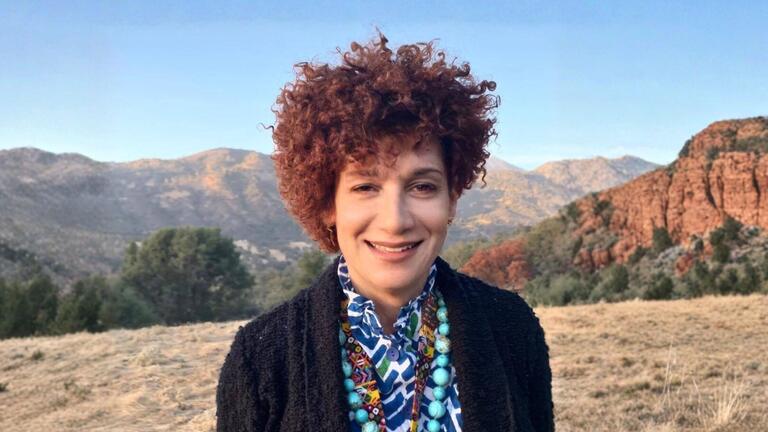
Dr. Myriam "Mimi" Savage, Ph.D. RDT/BCT, registered drama therapist and board certified trainer with a doctorate in Expressive Arts Therapy, remembers the moment she would have loved a program like the one she now helps lead at California Institute of Integral Studies. As a working actress who became a teaching artist, she was drawn to supporting marginalized children as well as other populations through the arts. There just weren't any advanced degrees inclusive of teaching artistry and social advocacy that embedded arts within a coaching practice.
Now, as an associate professor in CIIS' inaugural Expressive Arts Coaching & Community Building master's program, Dr. Savage helps create the pathway she once wished existed, one that integrates artistic practice with coaching skills, community building, and rigorous scholarship. These abilities will prepare graduates for any job at the intersection of arts, community, and coaching — or help them create such a position for themselves.
Research Rooted in Marginalized Voices
Dr. Savage's own research trajectory informs her teaching philosophy. Beginning as a working actress, she became a teaching artist supporting children, then created programs in psychiatric units before pursuing her Ph.D. Her dissertation focused on young women in foster care, using arts-based narrative research—specifically Personal Public Service Announcements (PPSA)TM—to center participants' own voices.
"Who better to speak on their selfhood than the child or the person themselves?" she asks. "People talk around you and tell you who you are and give you labels, but I wanted my participants to look right into the camera and tell us who they are in the moment."
In order to work with people, you're also working with systems. Even if you're working with one person, who are they in the grand scheme of things? Who are they in their world? We have to consider that. Myriam (Mimi) Savage, Associate Professor, Expressive Arts Coaching & Community Building
This commitment to centering marginalized voices, especially women and girls often unheard, continues to shape her work and teaching. "I think the environment in which you learn is really important, and I'll speak on what I feel in this environment myself at this school: I feel very welcomed. And as a woman of color in the lowest of percentages of folks who have Ph.D.s, that's not always the case," she emphasizes. "I think it's really important to feel like you have a home and that professors are approachable, and that maybe professors may look like you or have feelings like you or understand the world that you're going to be going into when it comes to employment."
Who This Program Serves
The program attracts students who have a strong passion for both creativity and social good, but those students can come from a plethora of backgrounds: teaching artists seeking professional development, experienced coaches wanting to add creative tools to their practice, or professionals desiring an additional master's degree without committing to a Ph.D. "It is coaching for individuals and coaching for community," Dr. Savage explains. "It is also so based on relational approaches that it is perfect for anyone who wants to use their arts, whatever that might be, whether it's music or visual arts, drama, dance movement, poetry."
The key qualifier is wanting to support others while honoring the relational dynamics of that work. "If you want a place to figure out, to learn how to hone those skills in a way of supporting others, and also with the foundation of relational approaches, narrative approaches, this is the master's for you," she says.
Image
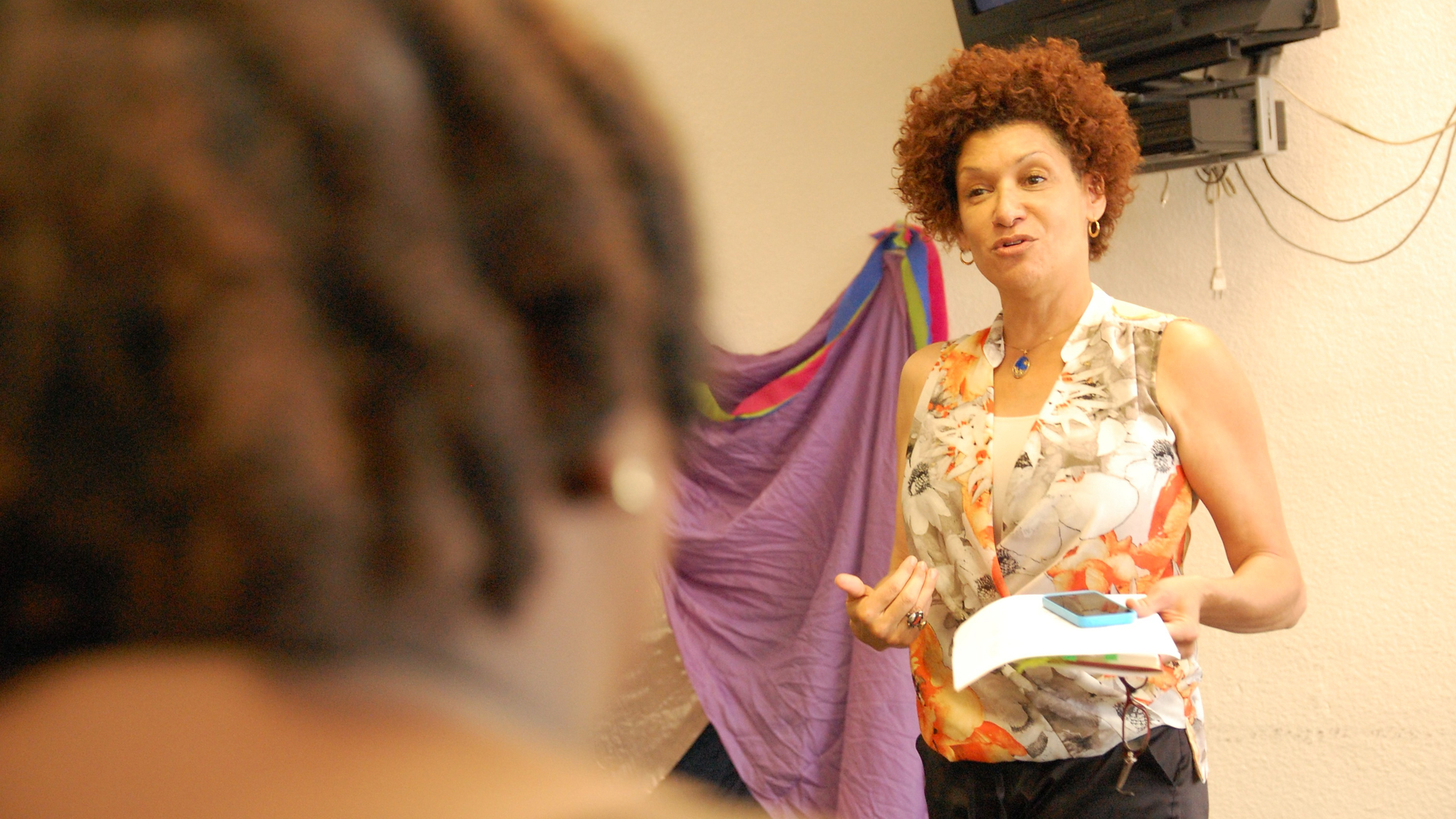
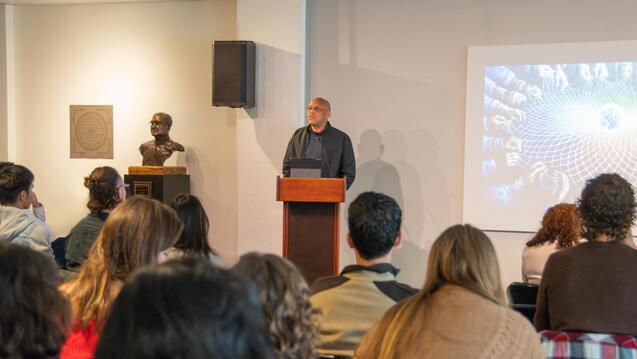
Photo of Dr. Savage speaking in a classroom.
Beyond Individual Coaching
The program's full title, Expressive Arts Coaching and Community Building, reflects a core philosophy: individuals exist within systems, and effective coaching acknowledges those contexts. "It's difficult not to think of community building as part of coaching," Dr. Savage notes. "In order to work with people, you're also working with systems. You're working with people who live with other people."
Drawing on ecological systems theory, the program asks students to consider not just who their clients are, but where they come from, what surrounds them, and how larger forces shape their experiences. "Even if you're working with one person, who are they in the grand scheme of things? Who are they in their world? We have to consider that," Dr. Savage emphasizes.
This approach is grounded in intersectionality, understanding how multiple aspects of identity and experience shape people's lives. "In this program, we're going to help you to identify your gifts and who you are, your identity," she explains.
The Arts as Understanding, Not Add-On
Dr. Savage is emphatic about the role of creative expression in the program: the arts aren't supplementary tools but fundamental ways of knowing and understanding. "It's not an aside. It is the way of understanding. It's not an add-on," she insists.
Expressive arts coaching uses creative modalities intentionally. Rather than relying solely on conversation or written assessments, coaches might use visual art, movement, role-playing, group collages, or poetry to help clients access and express their experiences. "What better way than an embodied way of using the arts to really get what's going on in the space?" Dr. Savage asks.
Image
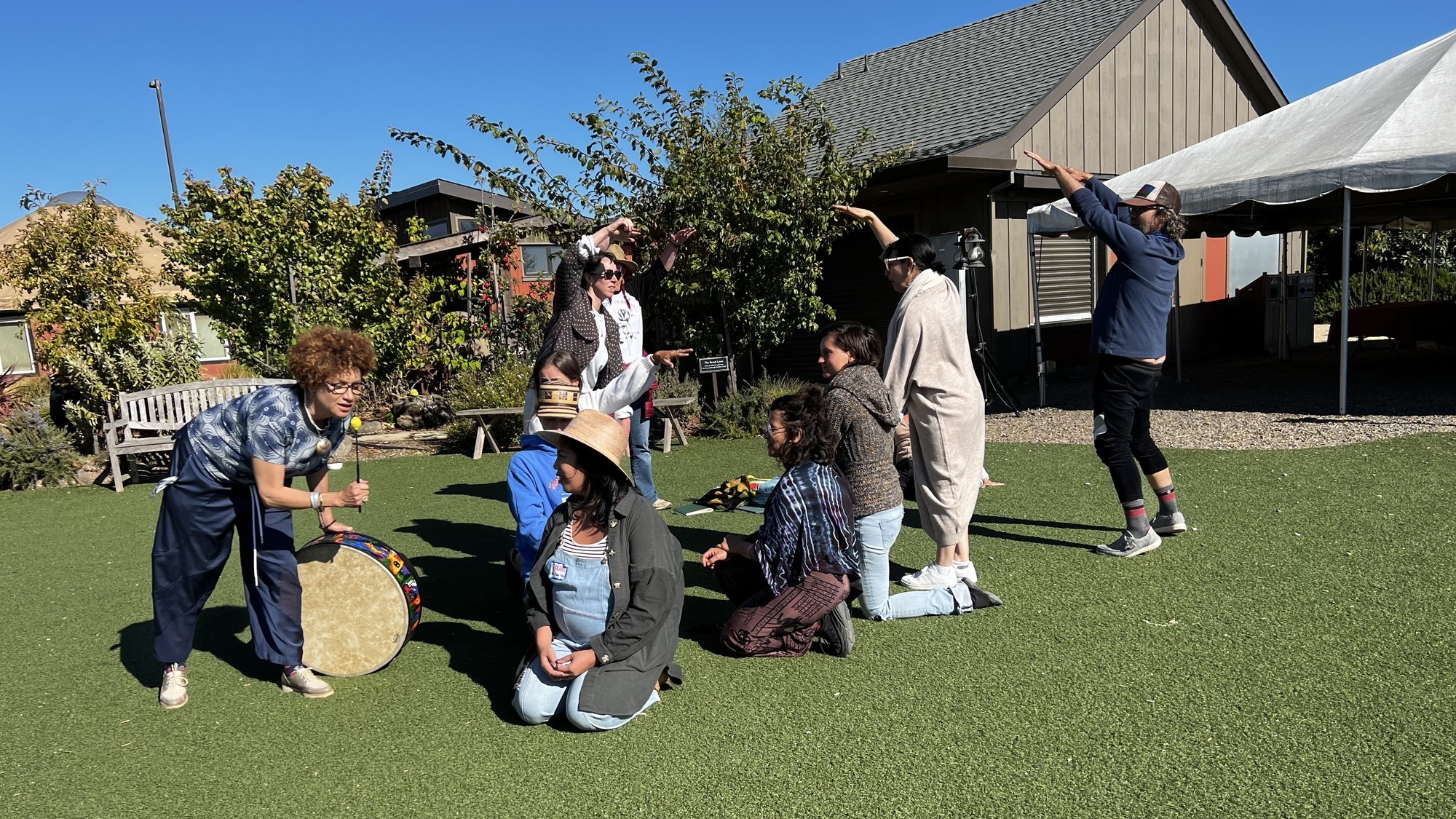
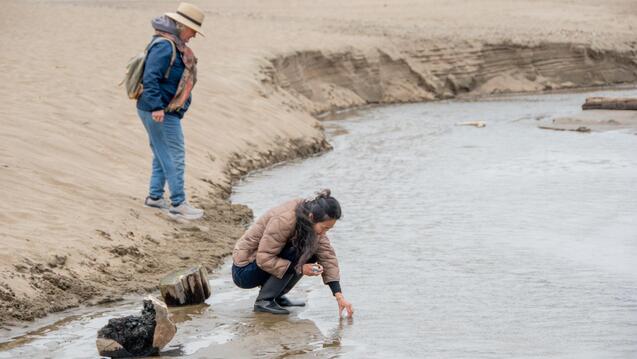
Photo of Dr. Savage and group of students participating in an outdoor expressive arts activity.
In a corporate team-building context, for instance, visual arts might reveal power dynamics or communication patterns that surveys miss. With individual clients, creative expression can bypass defenses and access deeper truths. "The arts are such a quick and fast way to assist folks because they get it. They feel it. It's in their bodies," she explains.
It is the way of understanding. It's not an add-on. The arts are such a quick way to assist folks because they get it. They feel it. It's in their bodies. Myriam (Mimi) Savage, Associate Professor, Expressive Arts Coaching & Community Building
The program's pedagogy mirrors its philosophy. Students don't just learn about expressive arts coaching—they experience it themselves through parallel processing. "How can you do it with others if you aren't doing it with yourself?" Dr. Savage asks.
Even academic reading gets processed creatively. "Let's say you have something that's very much word driven. You're reading the literature. We want you to process what you're reading also through the arts for yourself," she describes. This arts-informed approach applies to research methodology as well, with students learning to use creative processes both to generate and to represent data.
Practical Tools and Professional Credentials
Dr. Savage is conscious that students invest significant time and resources in graduate education and need concrete outcomes. The program prepares graduates to pursue board certification as coaches and certification with the International Federation of Coaches. Students can also affiliate with organizations like the National Organization of Arts and Health and the International Expressive Arts Therapy Association.
Beyond credentials, graduates leave with practical skills: understanding group dynamics, applying relational approaches with clients, validating experiences, navigating power dynamics, and using creative tools effectively. "We are being very conscious of practical knowledge, not just book knowledge," Dr. Savage emphasizes. "You're going to be in the doing of things."
This practical orientation means students can develop highly tailored program proposals to meet specific community needs to present to potential employers. This capstone project is another way that the program prepares students for the jobs they want to find after graduation, whatever those may be.
Why This Program, Why Now
Dr. Savage sees an urgent need for the kind of practitioners this program will prepare to send out into the world. "Since the pandemic, who hasn't had trauma in their life?" she observes. The program addresses a moment when coaching is increasingly accepted, when people are experiencing profound loneliness and disconnection, when relationships are strained by politics and social upheaval.
Since the pandemic, who hasn't had trauma in their life? Someone's got to go out there and help folks. Myriam (Mimi) Savage, Associate Professor, Expressive Arts Coaching & Community Building
For Dr. Savage, creating this program fulfills a professional dream while addressing real-world need. Students won't become saviors, she's clear about that, but they can "help people help themselves" — and they'll do it through the transformative power of community and creative expression.
Professor Jun Wang shares how CIIS’ East-West Psychology Department teaches students to unite scholarly understanding with embodied practice through Eastern, Western, and indigenous wisdom traditions.
Dr. Rene Dumetz teaches CIIS' Clinical Psychology Psy.D. program, training therapists to work with the unconscious, relationships, and holistic human experience.