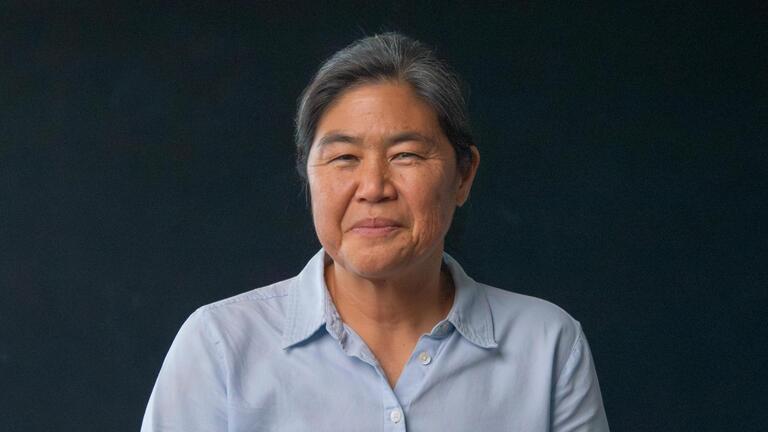
Professor Lani Chow, core faculty in the Clinical Psychology Psy.D. program at California Institute of Integral Studies, envisions a different kind of mental health care, one in which therapeutic approaches are humanized rather than mechanized, and the relationship between therapist and client takes precedence over quick fixes. This vision isn't abstract idealism. It shapes every aspect of how the Psy.D. program trains future psychotherapists, distinguishing it from more conventional approaches to clinical psychology education.
Depth Psychology and Post-Conventional Training
The program attracts students interested in depth psychological traditions. These are approaches that incorporate transpersonal aspects, spirituality, psychoanalysis, and engagement with the unconscious. These aren't students seeking a broad survey of psychology. They come specifically because they want these traditions integrated into their clinical training.
"Typically our students are people who've really studied that a little bit, maybe not necessarily formally, but have some knowledge of what that is and are very specifically interested in incorporating those traditions into their training," Professor Chow explains.
The program's approach is what the faculty calls "post-conventional" — keeping things broad, deep, and inclusive rather than reducing people to generalized categories. "There isn't a kind of foreshortening of who people are and what cultures and traditions inform the way that they understand themselves," Professor Chow notes. "I feel like the more traditional ways of studying psychology do foreshorten those aspects for something much more general and less specific to who individuals are within their communities."
We don't define ourselves within constructs in the discipline, but we include ourselves within constructs in the discipline.
Lani Chow, Associate Professor, Clinical Psychology
The pedagogy centers people within their cultural contexts and communities, honoring the diversity of worldviews rather than imposing standardized frameworks. This philosophical stance isn't peripheral to clinical training — it shapes everything about the program.
The Choice Not to Pursue APA Accreditation
The program is not accredited by the American Psychological Association (APA), a distinction Professor Chow presents not as a limitation but as a deliberate choice that preserves pedagogical freedom. "APA accredited programs, although they provide some benefit to students, what you get is a kind of broad and general approach to psychology, which is sanitized, which is I think informed by institutional structures that oppress peoples," she explains.
Without APA accreditation requirements, the program can teach from more inclusive positions specific to depth psychologies. Students still qualify for licensure in California and most other states, however. "You get something very different here. It's very unique in that we don't ascribe to those same institutional structures in the way that we teach how to be a psychologist," she notes.
The program's integrative nature aligns seamlessly with CIIS' institutional mission, especially the commitment to integral education enshrined in its very name. What does this mean to the Psy.D. program? "We don't define ourselves within constructs in the discipline, but we include ourselves within constructs in the discipline," Professor Chow explains. "We don't exclude other ways of knowing or other ways of practicing or other ways of thinking. We try and include those as important ways of working with people, of growing and changing ourselves."
The Impact of Integral Training
Community training partners consistently report that CIIS students stand out in specific ways. "What we hear from our community training partners is that our students really have the capacity to self-reflect. They are thoughtful and they forefront the relationship within any kind of clinical intervention," Professor Chow shares. Students learn to understand themselves as clinicians — their histories, their reactions, their presence — and bring that awareness into therapeutic encounters. The work isn't about applying techniques to clients but about being present in relationship with them. This focus on the therapeutic relationship as the primary vehicle for change distinguishes the program's graduates. "Our students are really focused on the relationship because it's really the therapeutic relationship that facilitates any kind of change or transformation," she explains.
The impact is significant for students as well as their clients, with Professor Chow having observed countless transformations over the course of the program. These positive changes are different for each student because the program responds to what each individual brings. One student might expand their emotional availability and sensitivity. Another might learn to contain and focus their creativity to serve clients more effectively. "The transformation is very specific to the skills and the capacities that the person comes in with," she notes. "What we see is that people are really able to develop those things into very effective ways to work in therapeutic interventions."
Our students are really focused on the relationship because it's really the therapeutic relationship that facilitates any kind of change or transformation.
Lani Chow, Associate Professor, Clinical Psychology
Students consistently report that the program is hard, requires huge investment, and includes unexpected personal transformations. But they also express appreciation for how they're "both pushed and held." The small program size and faculty investment create what Professor Chow describes as "a very personal program" where faculty "really want to know and support students."
The faculty are united in their commitment to students in this way. "A lot of programs will have faculty that represent different tensions or different positions within the field, and ours is very dedicated to the things that are included on our website and our mission statement and CIIS' seven principles. We all have chosen to be here for those specific reasons," Professor Chow notes.
This alignment extends to Professor Chow's personal experience. "One of the things that I love about being here is that I really have real relationships with my students. I know them not just within the program, but I know them beyond the program. They become my colleagues and we are in community with one another. I'm still in community with students who've graduated many, many years ago."
A Vision for Humanized Care
Professor Chow envisions a future in which forms of "the most wild and creative, the most inclusive, the least aligned with oppressive structures and institutions." She imagines therapeutic modalities accessible to anyone doing therapeutic work and systems of care that provide deep, meaningful well-being to all those who need it. This future begins with how therapists are trained — and the Psy.D. program at CIIS represents one model for that different kind of education.