Reconnecting to Nature and Self: Jeanine Canty on Transformative Studies
Professor Jeanine Canty explores how the Transformative Studies Ph.D. prepares visionary changemakers to address humanity's disconnection from nature and each other.
December 16, 2025
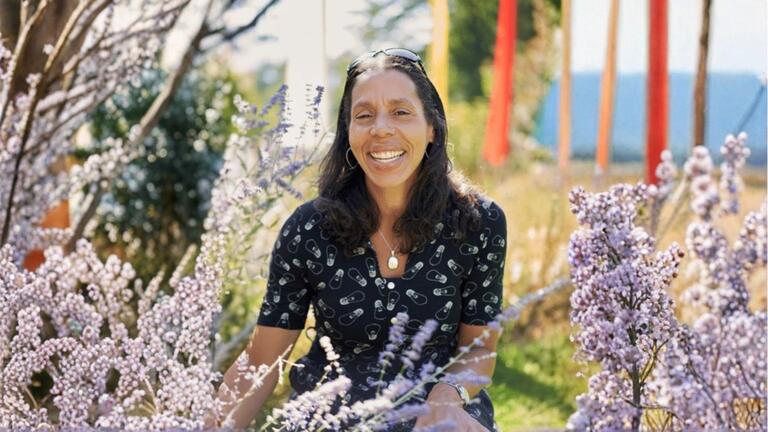
Jeanine Canty, Ph.D., is a professor in the Transformative Studies Ph.D. program within CIIS' Department of Transformative Inquiry. An author of four books including Returning the Self to Nature: Undoing Our Collective Narcissism and Healing Our Planet, Jeanine describes herself as "a lover of nature, justice, and contemplative practice." She teaches eco-psychology and transpersonal psychology, guiding students through rigorous inquiry that bridges Eastern and Western wisdom traditions. As both a CIIS alumna (Ph.D. '07, Transformative Learning and Change) and faculty member, Jeanine brings a unique perspective on how the program transforms not just what students know, but who they become.
A Degree for World-Changers
When asked to describe the Transformative Studies Ph.D., Jeanine first emphasizes not its outcomes, which are widely varied, but who it serves. "First and foremost, it is a degree for people that have some sort of inkling to create change in the world," she explains. "I always think of it in terms of service to the world. They notice that there are so many different issues going on, and they're interested in working with adults around transformation. They come into our program with some sort of burning hot passion about what they think is a question and a response to our current crises in the world."
Students are at the core of the program, more so than any particular subject. "The students that come to our program aren't specialized in any particular field," Jeanine notes. "Maybe they have a lifelong profession in one area, but they realize that the inquiry they have needs lots of different theories and fields, so they can't fit in any sort of box."
We're training the next generation of visionary changemakers in their professions. Jeanine Canty, Professor in the Department of Transformative Inquiry
The diversity of students is one of Jeanine's favorite aspects. "It's a cohort model, so we're in community — an online, asynchronous community, but engaging with one another constantly," she describes. The program is always developing its community-building efforts. "We're offering all sorts of salons — I'm doing a meditation lounge, we have creative future salons, all sorts of things," Jeanine explains. The department’s goal is to create intentional community, ensuring that students have opportunities to connect beyond shared courses, and by embracing their shared passions.
Together in both activities and in the classroom, students are able to engage critically with a plethora of new ideas, and remain grounded at the same time within their existing communities as well. Many are working professionals, and bring job experience as well as personal experience to bear on each topic and discussion. "Even though folks are focused on the same curriculum, they're all coming at it in very different ways. I'm constantly getting different perspectives and ideas from students. We have so many hats and lenses in the group."
From Student to Professor
Canty knows a great deal about the student experience, and the power of transformative learning. After all, she was once a student herself, graduating with a Ph.D. in Transformative Learning and Change.
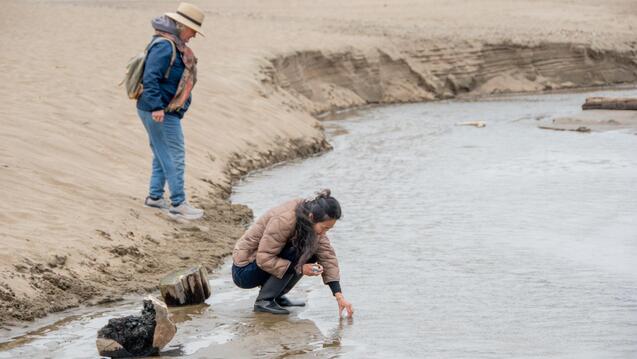
Her deep curiosity and passion for positive transformation has always driven her, and her work now focuses on a critical disconnect. "My main area is eco-psychology, which looks at how people of Western civilization in particular have disconnected from nature and the transpersonal, and how that's led to both the ecological crisis and human pathology," she explains. "I do a lot of teaching and writing that revolves around both ecological and social issues."
With the crises in our world just upleveling and seeing how much suffering is going on everywhere, I realized I wanted to push past my own comfort zone and engage in some new learning. Jeanine Canty, Professor in the Department of Transformative Inquiry
The current global crises have deepened her commitment. "With the crises in our world just upleveling and seeing how much suffering is going on everywhere, I realized I wanted to push past my own comfort zone and engage in some new learning and in a deeper way with a wider community," she shares. "That's what brought me back to CIIS as faculty — to work with students who are willing to do that same work."
Trusting the Process
So what does that work entail? Canty first emphasizes the depth of transformation required. "Transformative studies in some ways is just what it says: whereas researchers and scholars are trying to transform something out there, but in order to really do it, we have to change our paradigm thinking in a way that's not using the old ways. We have to step into the unknown, get uncomfortable, be okay with failure, and also be more comfortable with being creative and cooperative with others. It's asking us to in some ways change everything we know about ourselves."
Students often arrive with clear plans that shift dramatically. "A lot of students come in with so much fire about their proposed inquiry, thinking that they just know exactly what they're going to do, which is great," Jeanine observes. "Yet people realize that so much of the curriculum of the program is unlearning stagnant, fixed worldviews and dropping in and being daring enough to unpack, unravel, but also envision."
Image
The online Ph.D. in Transformative Studies is an innovative, individualized, cohort-based, transdisciplinary degree that frames inquiry as a creative process.
The transformation can be profound. "A lot of students go through almost like a rite of passage, breaking down what they thought they knew and then relearning and creating. They tell me that this program changed their life."
Creating Lifelong Impact
Transformative Inquiry is about changing the world by changing lives, and students are of course no exception. By graduation, students are well-versed in research and critical inquiry. They also have extensive practice in writing and speaking, so they are able to communicate powerfully and effectively. "But I would say the main skill is to be able to address some of the biggest issues of our times by bringing different types of pattern thinking, different types of disciplines together that hold a wide enough scope and actually have more tools and ways of thinking."
The benefits are hugely helpful to job success, but many benefits extend beyond career advancement. "When people follow through and really do that work, the investment becomes really manyfold — not only in promotions or new positions, but also in their social capital and visionary abilities to actually create new things and to have a larger audience of folks that are interested in their ideas," she explains. Students’ peers become their colleagues — and often their cherished friends. "I hear again and again, even after people graduate, they're getting together with folks from their cohorts and vacationing or creating writing together or projects together. These are ties that really last and create new things."
Perhaps most importantly, students gain clarity about their purpose. "There's a sense of incredible capacity that comes from this program — not only capacity to do a lot of research and writing, but just to feel settled in one's self and one's worldview and one's understanding of what their path for service to something greater is."
Professor Jun Wang shares how CIIS’ East-West Psychology Department teaches students to unite scholarly understanding with embodied practice through Eastern, Western, and indigenous wisdom traditions.
Dr. Rene Dumetz teaches CIIS' Clinical Psychology Psy.D. program, training therapists to work with the unconscious, relationships, and holistic human experience.