Art as Healing: Training Leaders in Expressive Arts Therapy
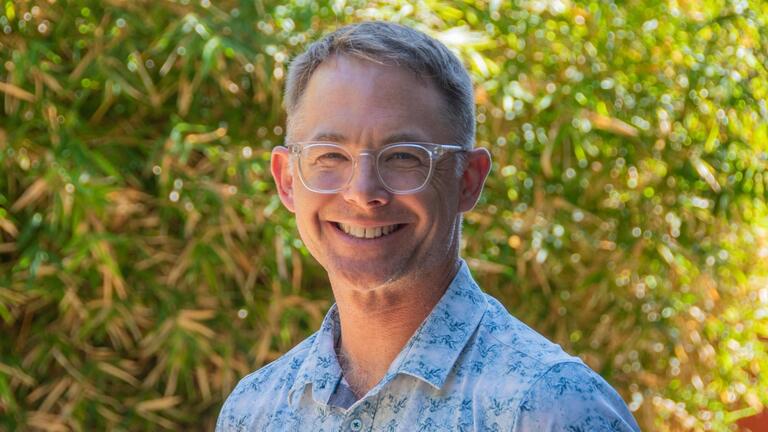
Professor Phil Weglarz leads CIIS' Expressive Arts Therapy program, preparing students to integrate creative modalities into mental health services and community transformation.
February 26, 2026
CIIS’ master's program in Counseling Psychology with a concentration in Expressive Arts Therapy combines rigorous clinical training with creative exploration, preparing graduates to become licensed marriage and family therapists (LMFT) or licensed professional clinical counselors (LPCC) in California. But the program's vision extends beyond traditional therapy settings. It also equips students to develop innovative, community-based arts programming to respond to emerging mental health needs in creative ways. This approach is relatively new in the world of mental health, and it requires skill and vision to unite the fields of art and wellness. That’s why Professor Phil Weglarz, program chair for the Expressive Arts Therapy program, describes the degree as a leadership program — one designed not just to train competent therapists, but to prepare innovators who will shape the future of arts-based mental health practice.
Who is Expressive Arts for?
The Expressive Arts Therapy program attracts a particular type of student: those who have experienced the power of creative expression in their own lives and want to bring that healing potential to others. "The program is for anyone who's interested in integrating their own experiences with creative modalities, often for their own healing and also in their professional practices," Professor Weglarz explains.
Students come from a wide range of professional backgrounds, including educators, community mental health providers, and artists seeking to deepen their therapeutic skills. "It's an opportunity to level that up into a master's degree so that you can develop your own practices and become a leader in the field," he notes.
Image
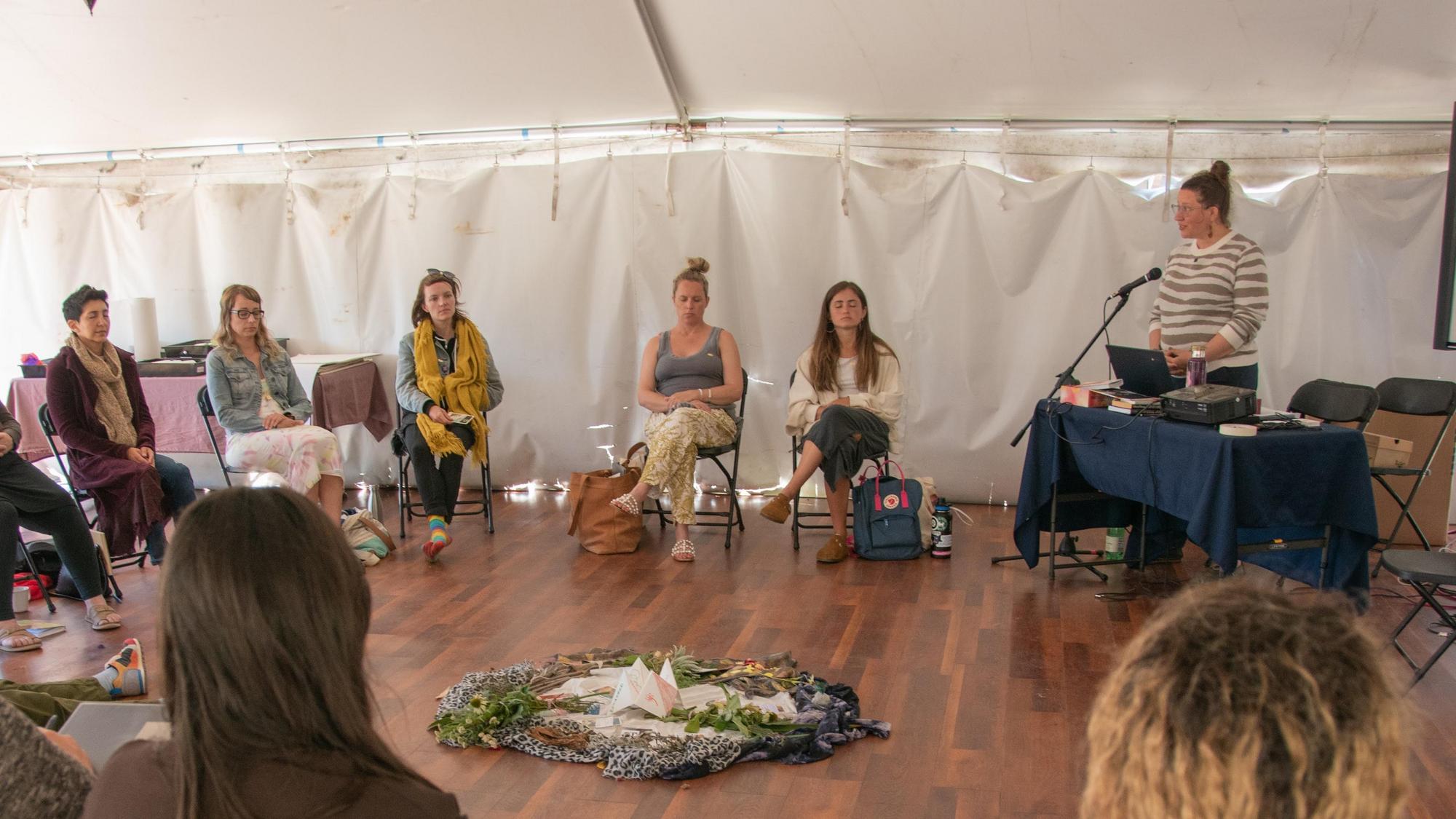
Expressive Arts Therapy cohort at the Fall 2022 Retreat Intensive.
The program emphasizes integration — combining past experiences with recovery, wellness, and the arts —to create practitioners who can then facilitate these processes for others. It is a transformative process.
What distinguishes the CIIS program from others is its explicit framing as leadership training. "All the students in our program are future leaders of the field, innovating, integrating, and developing the work that has yet to be seen and called for," Professor Weglarz emphasizes, his passion and conviction evident. The program's inclusivity extends to multiple theoretical approaches. "We are open and inclusive of multiple approaches to the use of the arts and therapy," Professor Weglarz notes. This philosophical stance allows students to explore various modalities and develop their own integrative practices rather than adhering to a single rigid framework.
This forward-looking approach also means the program remains open to emerging forms of creative expression. "We are curious about innovative and emerging ways of seeing visual and tactile arts, digital arts, virtual reality, drama, music, dance, and other performing arts, poetry and language-based arts developed into meaningful ways that can meet the needs of communities today," he explains.
We are curious about innovative and emerging ways of seeing visual and tactile arts, digital arts, virtual reality, drama, music, dance, and other performing arts, poetry and language-based arts developed into meaningful ways that can meet the needs of communities today. Phil Weglarz, Program Chair and Associate Professor, Expressive Arts Therapy
Students receive training in specific approaches to arts-based therapy, learning to integrate visual arts, dance movement, performing arts, and storytelling into clinical practice. "This allows graduates of the program to apply their skills in a range of community mental health and private practice settings, and even to develop their own innovative community-based arts programming," Professor Weglarz explains. CIIS maintains relationships with hundreds of practice sites throughout California, giving students options for where they apply their skills during training and beyond. After graduation, students are prepared for licensing as therapists, counselors, and as Registered Expressive Arts Therapists (REAT) should they so choose. The flexibility in licensure is another way that the Expressive Arts Therapy program tries to facilitate student success in a wide variety of existing and developing fields.
Many Leaders, Many Kinds of Leadership
So do all students have to enter the program expecting to become leaders? While the program welcomes those who have such a role in mind, it’s certainly not necessary. The program teaches and cultivates leadership skills, helping students prepare for many ways of leading and in many capacities and locations. The key is to foster collaboration and creativity.
The faculty structure mirrors the program's values of collaboration and integration. "The Expressive Arts faculty works closely and creatively together so that students integrate their learning across the classes within a semester, and that learning builds sequentially semester by semester," Professor Weglarz explains.
Image
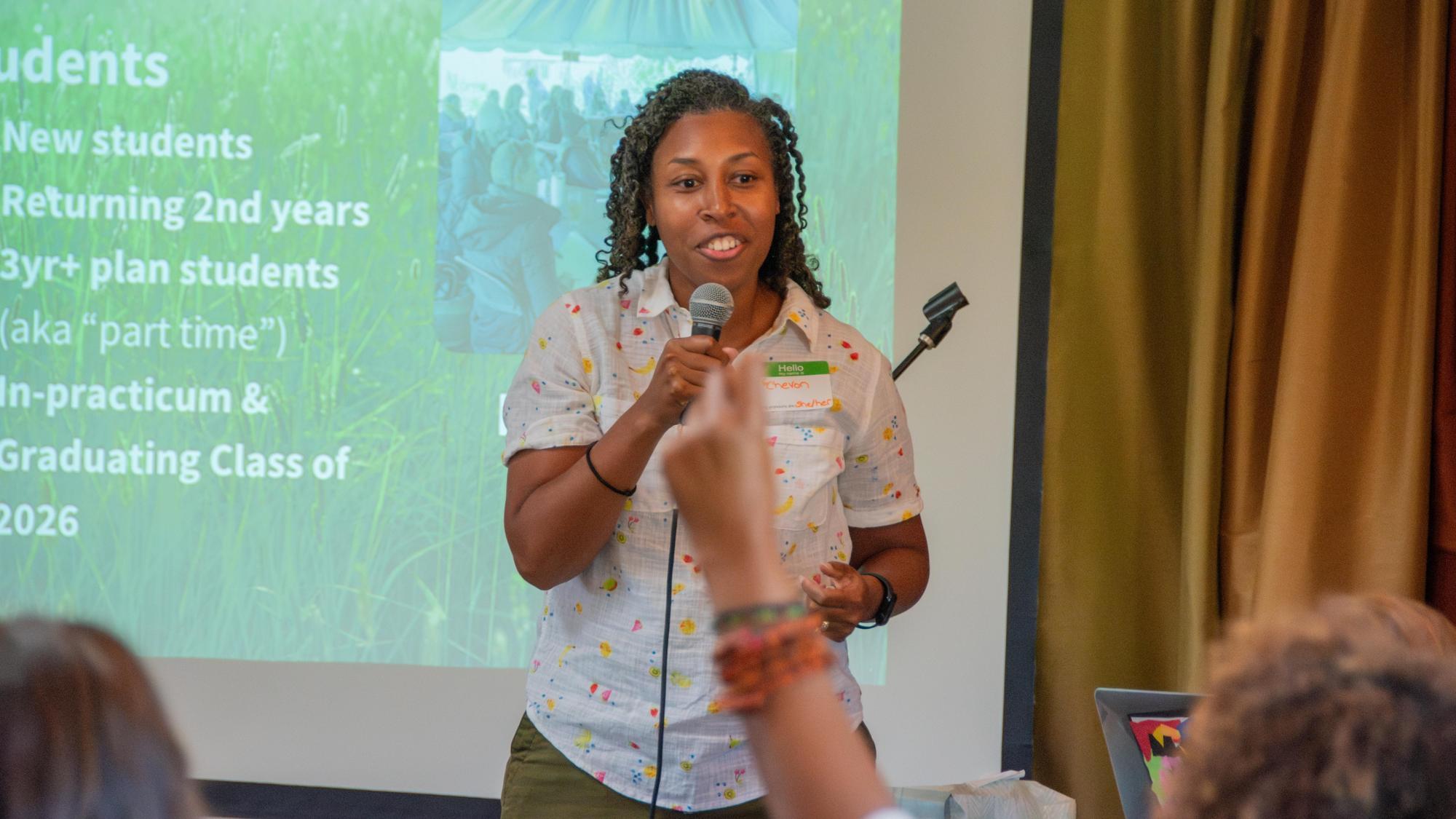
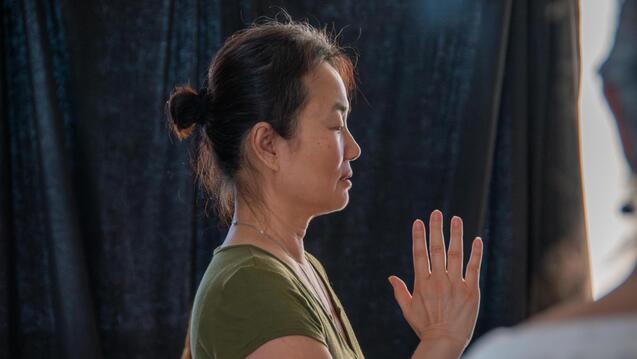
Chevon Stewart, Associate Professor of Expressive Arts Therapy, at the Fall 2025 Retreat Intensive.
This isn't accidental coordination but intentional collaboration. The faculty represents "a diverse group of artists, scholar practitioners who bring a wealth of knowledge from many fields of practice and research," Professor Weglarz notes. They "work closely together as an ensemble to collaborate across all the various classes that students take," ensuring that learning accumulates and deepens rather than fragmenting across disconnected courses.
Mutual learning among peers is just as essential. Perhaps the most profound aspect of the program, according to student feedback Professor Weglarz has gathered over the years, is the sense of community it fosters. "This offers them a home where they can be in community with like-minded individuals, others who see the power of the arts for personal transformation and social change," he shares. "This community and the collective learning experience is what makes our program unique and is one of the most beneficial and profound benefits of being part of it."
The program's structure deliberately supports this community building through a hybrid model that combines intensive in-person experiences with distance learning.
This [program] offers [students] a home where they can be in community with like-minded individuals, others who see the power of the arts for personal transformation and social change. This community and the collective learning experience is what makes our program unique. Phil Weglarz, Program Chair and Associate Professor, Expressive Arts Therapy
Each semester begins with what Professor Weglarz describes as a transformative experience: a six-day intensive retreat in beautiful settings. These retreats serve multiple purposes. They create deep bonds among cohort members early in each semester and allow for immersive engagement with course material. They also provide crucial time for integration, allowing students to absorb and experience new processes before students return to their home communities and continue their studies through virtual meetings and asynchronous online engagement.
Arts for Personal and Social Transformation
At its heart, the program rests on a conviction about the power of creative expression. Students are drawn to expressive arts therapy because they've witnessed or experienced how the arts can facilitate healing, growth, and change. The program gives them tools to offer that potential to others while also preparing them to innovate new approaches for communities facing challenges that haven't yet been addressed.
Image
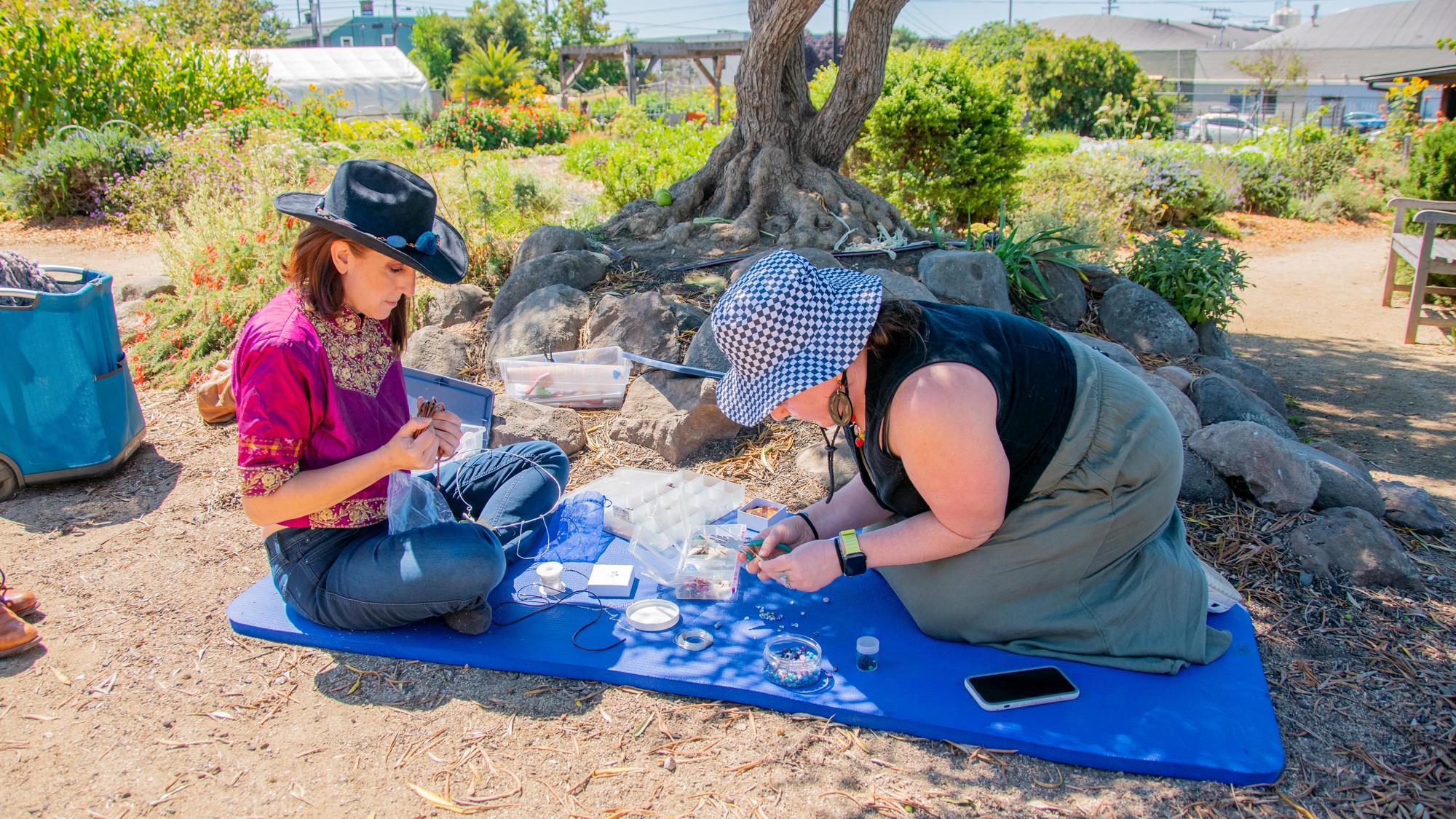
Students from the Expressive Arts Therapy program at the Fall 2024 Retreat Intensive Urban Adamah in Berkeley.
"The program is for those who are interested in integrating the arts into personal growth, social transformation, and social change, with an emphasis in applying those into the mental health industry," Professor Weglarz says. This dual focus—personal transformation and social change—reflects the program's understanding that healing happens both in individual therapeutic relationships and through community-based creative practices.
For students seeking a home where their passion for the arts and commitment to healing can come together. Here, they can develop as both practitioners and innovators, exploring the creative side of care, and the compassion inherent to art.
We see ourselves as a leadership program. All the students in our program are future leaders of the field, innovating, integrating, and developing the work that has yet to be seen and called for. Phil Weglarz, Program Chair and Associate Professor, Expressive Arts Therapy
Professor Jun Wang shares how CIIS’ East-West Psychology Department teaches students to unite scholarly understanding with embodied practice through Eastern, Western, and indigenous wisdom traditions.
Dr. Rene Dumetz teaches CIIS' Clinical Psychology Psy.D. program, training therapists to work with the unconscious, relationships, and holistic human experience.