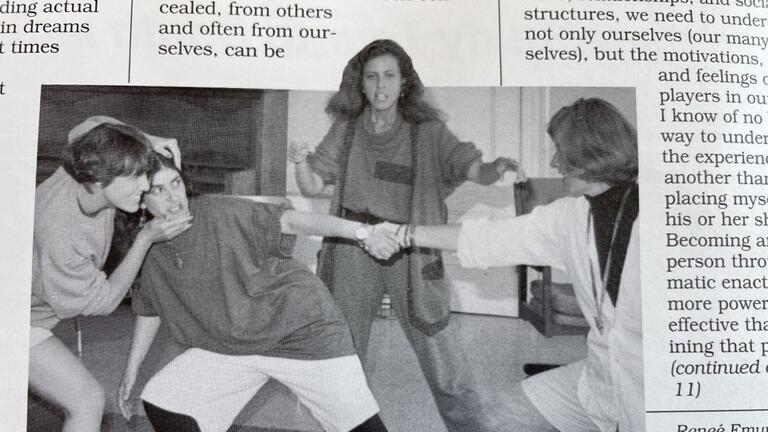
A newspaper clipping featuring Renée Emunah teaching a drama therapy class.
A newspaper clipping featuring Renée Emunah teaching a drama therapy class.
Faculty News
Four Decades of Drama and Healing: Renée Emunah's Legacy at CIIS
After four decades leading CIIS' Drama Therapy Program, professor Renée Emunah reflects on a career spent fusing theatre and healing.
May 21, 2026
In 1983, Renée Emunah was a young drama therapist working in four psychiatric facilities and running a theatre company composed of former psychiatric patients — a grant-funded project that earned her a commendation from the San Francisco Board of Supervisors. She had not been looking to start an academic program. But when a colleague at Antioch University San Francisco asked her to build a drama therapy training track, she said yes. That decision set in motion a career that would span more than 40 years and shape the field of drama therapy worldwide.
This spring, Emunah retires from CIIS, where she has served as founder, director, and professor of the Drama Therapy Program since it moved from Antioch in 1989. She leaves behind a program that has graduated more than 600 students, earned accreditation through the North American Drama Therapy Association (NADTA), and drawn aspiring drama therapists from across the globe. In recognition of this legacy, CIIS honored Emunah with Faculty Emerita status at the 2026 commencement — acknowledging her as a pioneer in the field, author of numerous publications, and founder of one of the first two graduate drama therapy training programs in North America.
Building a Program From Scratch
The early years tested Emunah's resolve. Just before the program's launch at Antioch, the department that housed it closed. With 11 incoming students counting on her, she spent that summer moving the fledgling program into the counseling psychology department. Six years later, when Antioch decided to shut down its San Francisco campus entirely, she relocated the program to CIIS.
Image
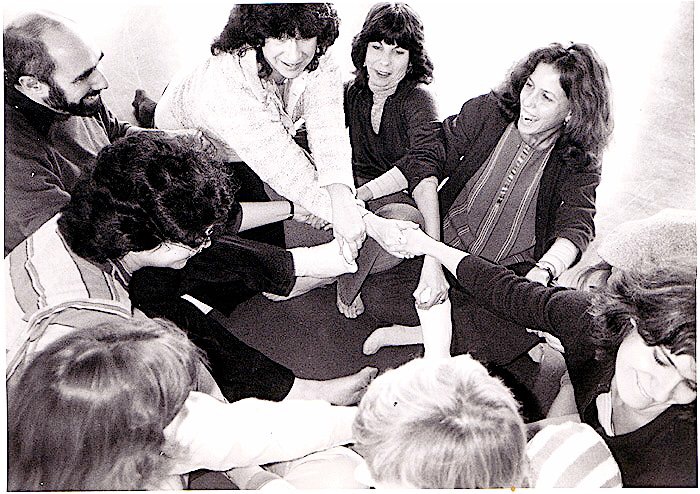
Renée Emunah with her first cohort in 1983.
At the time, she was the only local drama therapist. Designing a curriculum meant working from imagination, as there was no precedent for this innovative program. The goal, as she describes it, was a program that could be "rigorous yet supportive, in-depth yet eclectic" — one that trained students in clinical skill while honoring the artistic and personal dimensions of the work.
Teaching as a Creative Act
Image
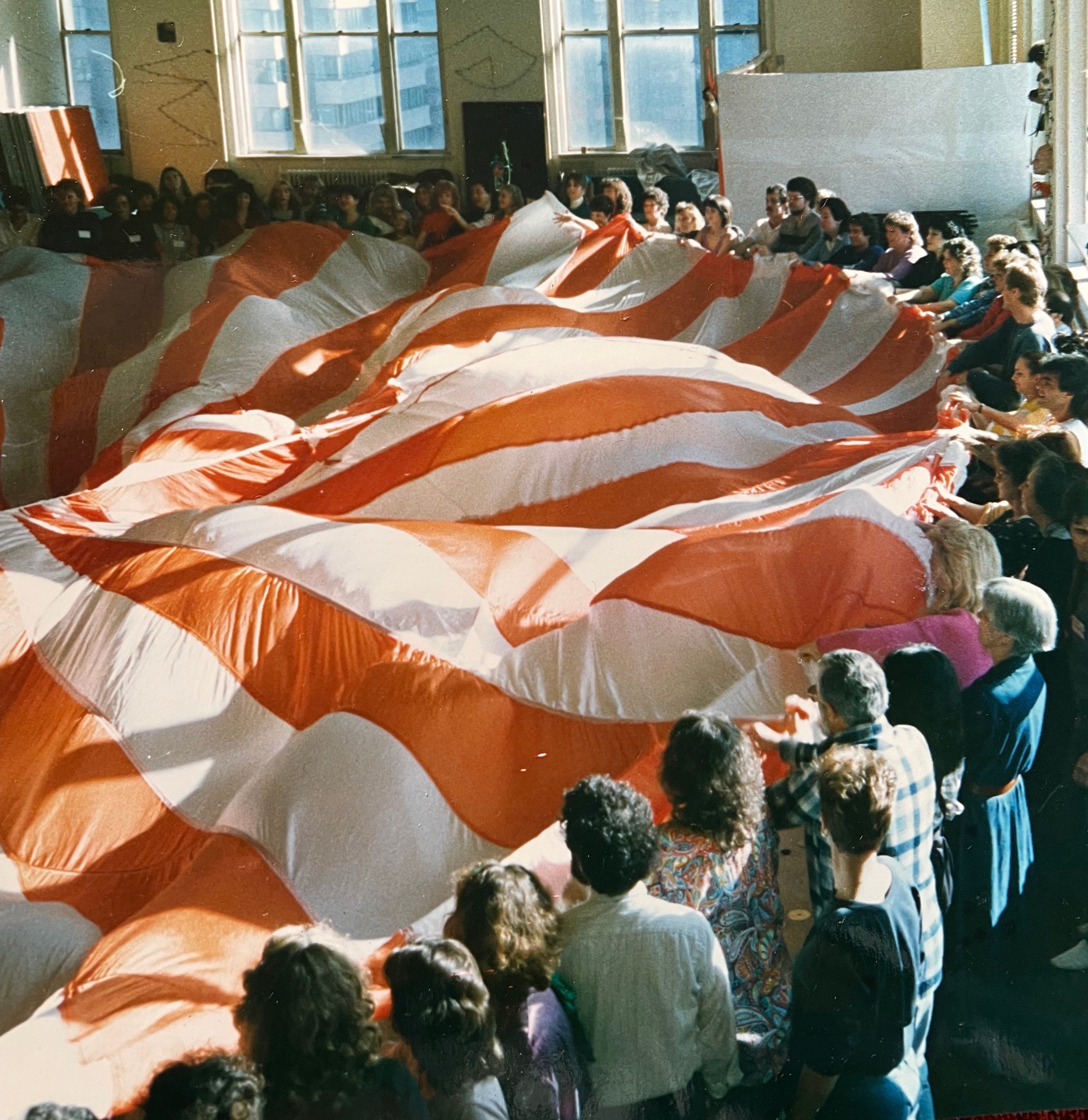
Renée Emunah and attendees during the closing ritual at the first West Coast Drama Therapy Association conference, 1985.
Emunah often describes teaching as the part of the job she loved most. Most of her classes ran three hours and were experiential, humor-infused, and fully embodied, even during the pandemic, when she taught from a semi-private spot in Golden Gate Park rather than move to a static online format. Each cohort brought a different energy, and she relished the newness of every configuration of students.
That commitment earned her the NADTA Teaching Excellence Award — a recognition that, by her own account, meant more to her than the Schattner Distinguished Award for Outstanding Contribution to the Field she received earlier in her career. "Teaching had become such a passion," she wrote in a recent letter to the community.
Scholarship and Innovation
Image
Book cover of Renée Emunah's book Acting for Real: Drama Therapy Process, Technique, and Performance (2020).
Emunah's scholarship has been inseparable from her teaching. Her book Acting for Real: Drama Therapy Process, Technique, and Performance is a foundational text in drama therapy training programs worldwide, translated into multiple languages. She also co-edited Current Approaches in Drama Therapy with David Johnson, and co-edited The Self in Performance with Susana Pendzik and Johnson. She has also authored numerous articles in the field, reaching a wide audience and generating robust scholarly work in the field.
Beyond her publications, Emunah developed three approaches that have become central to the program's identity and are now studied internationally: the Integrative Five Phase Model of drama therapy, the Self-Revelatory Performance form, and the Theatre for Change project. Theatre for Change, which she launched in 2003, brings drama therapy into the arena of social justice, producing original works that address issues from gender and race to political polarization. The project received the NADTA Raymond Jacobs Diversity Award. Its most recent production, Breaking News!, was performed at CIIS and at the NADTA conference this past Fall.
Passing the Torch
Emunah is handing leadership to Aileen B. Cho, a graduate of the program and associate professor who becomes chair in fall 2026. Cho, a Licensed Marriage and Family Therapist, Registered Drama Therapist, and Board-Certified Trainer, brings clinical experience across settings from private practice to residential treatment and inpatient hospitals. She has directed Self-Revelatory Performances and Theatre for Change productions, and trained in multiple therapeutic modalities. Cho and Emunah have co-chaired the program through spring 2026 to ensure a smooth transition.
Image
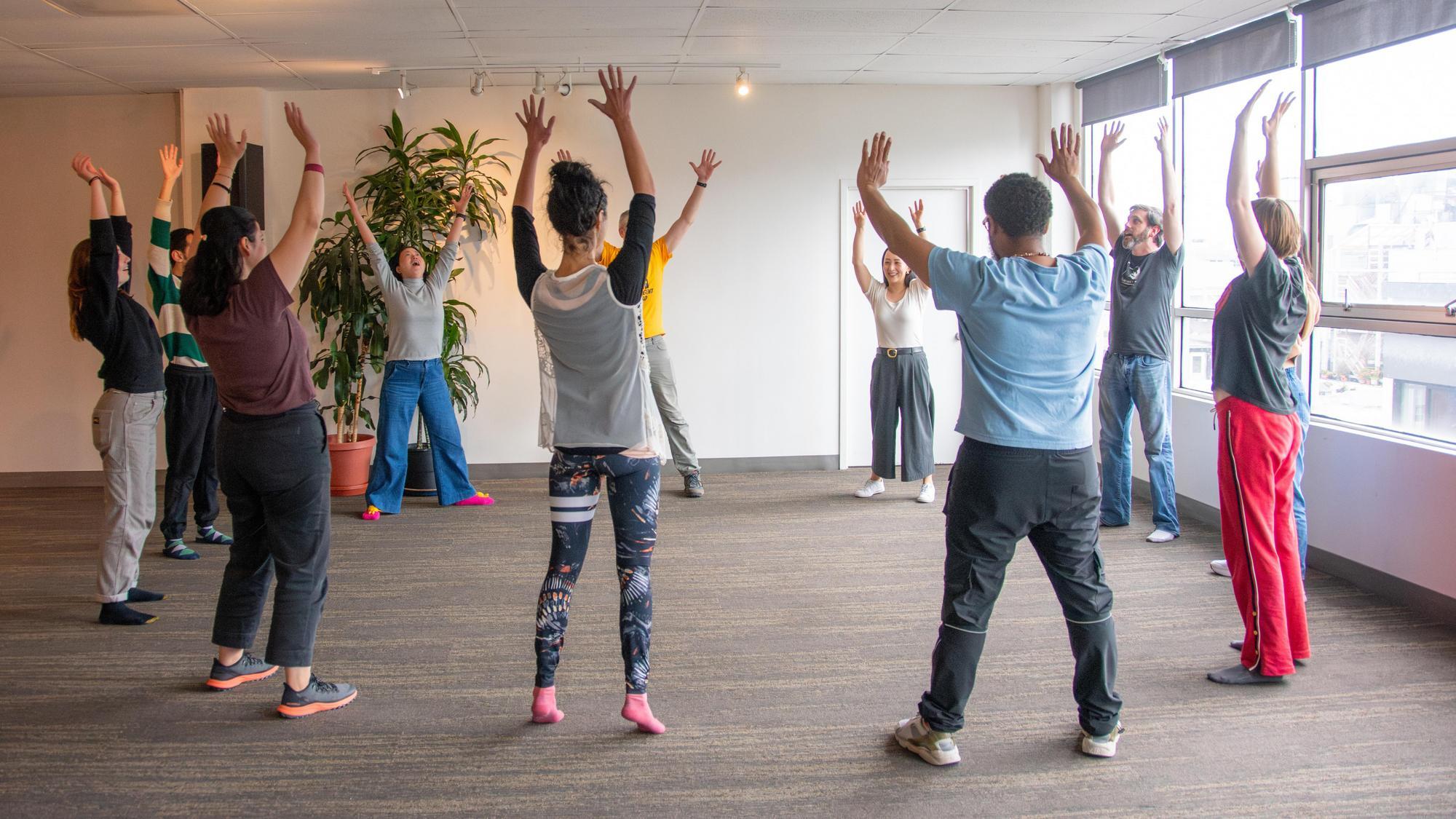
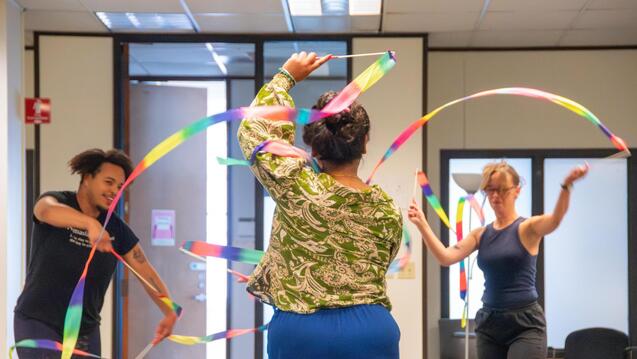
Aileen B. Cho (white shirt) and students during Drama Therapy Class, 2026.
"This homegrown star will light the way forward," Emunah writes of Cho. The remaining core faculty — Doug Ronning, Dr. Britton Williams, and Pella Weisman — continue alongside Cho.
What Comes Next
Emunah is not leaving drama therapy — she plans to continue clinical and creative work, international training and workshops, and special projects on a part-time basis. But she is ready to step away from the daily demands of directing a graduate program. With characteristic candor, she says, "I'm down for more down time, and up for more adventures."