Play as Noun, Play as Verb: Doug Ronning on Drama Therapy at CIIS
Associate Professor Doug Ronning graduated from CIIS' Drama Therapy program in 2006. Now he teaches in it — with monsters, role play games, and embodied play.
October 22, 2026
Doug Ronning didn't know drama therapy existed until he saw an ad in the San Francisco Weekly. He knew he wanted to become a psychotherapist for the second half of his life, but he hadn't found the right path. The ad was for an info session at CIIS. He went. They did a bit of play. The application was due a month later, and he got everything together just under the wire. "There was nowhere else I wanted to go," he says. "If I hadn't gotten in that first year, I would have tried again the following year."
He graduated from the Drama Therapy program in 2006. Today he is an associate professor in the same program, a licensed marriage and family therapist, a registered drama therapist, and a board-certified trainer with the North American Drama Therapy Association. He still collaborates with members of his original cohort. At a recent Jung 150 conference, he and a classmate — now a professor at the University of Alaska — led a workshop on Jung's essay Death and the Soul. Ronning also played death in a scene from The Twilight Zone, followed by opening the room to the audience.
That kind of work is what he means when he draws on the wisdom of Susana Pendzik and describes drama therapy: "We download a person's inside into exterior reality and then we enter into it in play."
Image
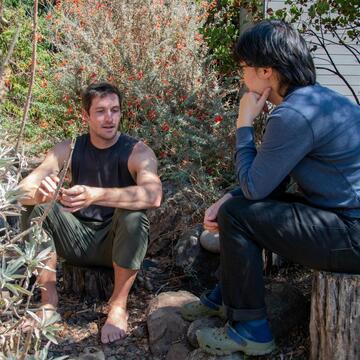
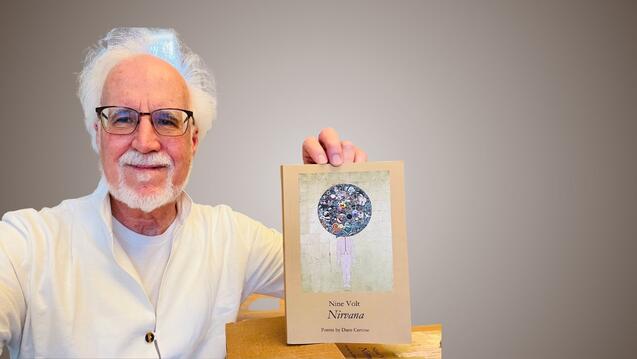
Portrait of Doug Ronning, Class of 2006 and Associate Professor of Drama Therapy.
We download a person's inside into exterior reality and then we enter into it in play. Doug Ronning, Class of 2006 and Associate Professor, Counseling Psychology, Drama Therapy
Play as Technology
Play comes up constantly in conversation with Ronning, and he pushes back against thin descriptions of it. "Play is a technology that has been with humanity since the beginning," he says. "It is a developmental function. Every child learns to play as they get older, and many adults have trauma, depression, anxiety because they are disconnected from that energetic life force that is play." He points out that drama therapy is one of the five paths to recovery in Bessel van der Kolk's The Body Keeps the Score precisely because of what embodied play makes possible.
Students are often surprised by how much the program asks of them interpersonally. They have to bring their full selves to the classroom for the work of play. But that demand, Ronning finds, is what produces the transformation. He teaches a psychotherapy theories course that follows the lineage from Freud forward, and students consistently tell him it became the class they cared about most, despite expecting the opposite, because the theories came alive when they were embodied rather than only discussed.
That course also holds one of his clearest examples of integral education in practice. He used to teach the theories chronologically, which meant multicultural and liberation psychology landed at the end of the semester. A student suggested moving it to the beginning so it could serve as a frame for evaluating everything else. "Something clicked," Ronning says. "This was the wisdom of the class." He restructured the entire course the following semester.
Monsters, Role Play Games, and the Noetic
Ronning's own research moves in three directions, each of them unique but still interconnected. The first is role play games. He runs RPG Field Days and RPG Mystery Quest through the GameScape Center for Creativity and Growth, events that fold drama therapy concepts into live-action and tabletop role play. Students participate alongside neurodivergent youth, building characters and crafting mystery stories together over the course of a week or weekend. Ronning is neurodivergent himself and says the program draws a lot of neurodivergent students, in part because it invites different ways of being in the world rather than flattening them.
Image
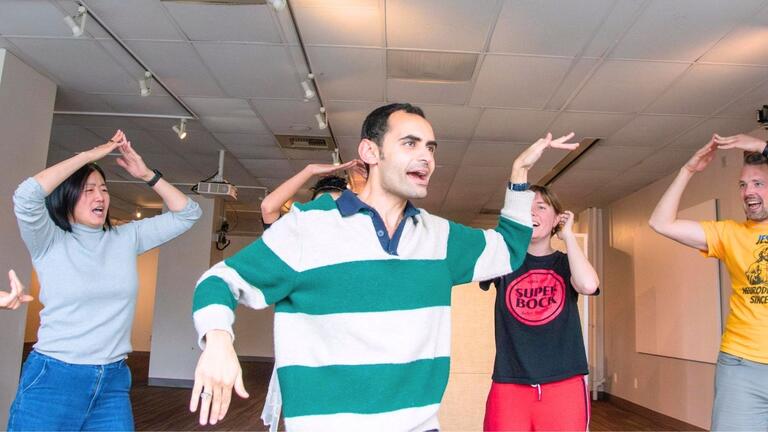
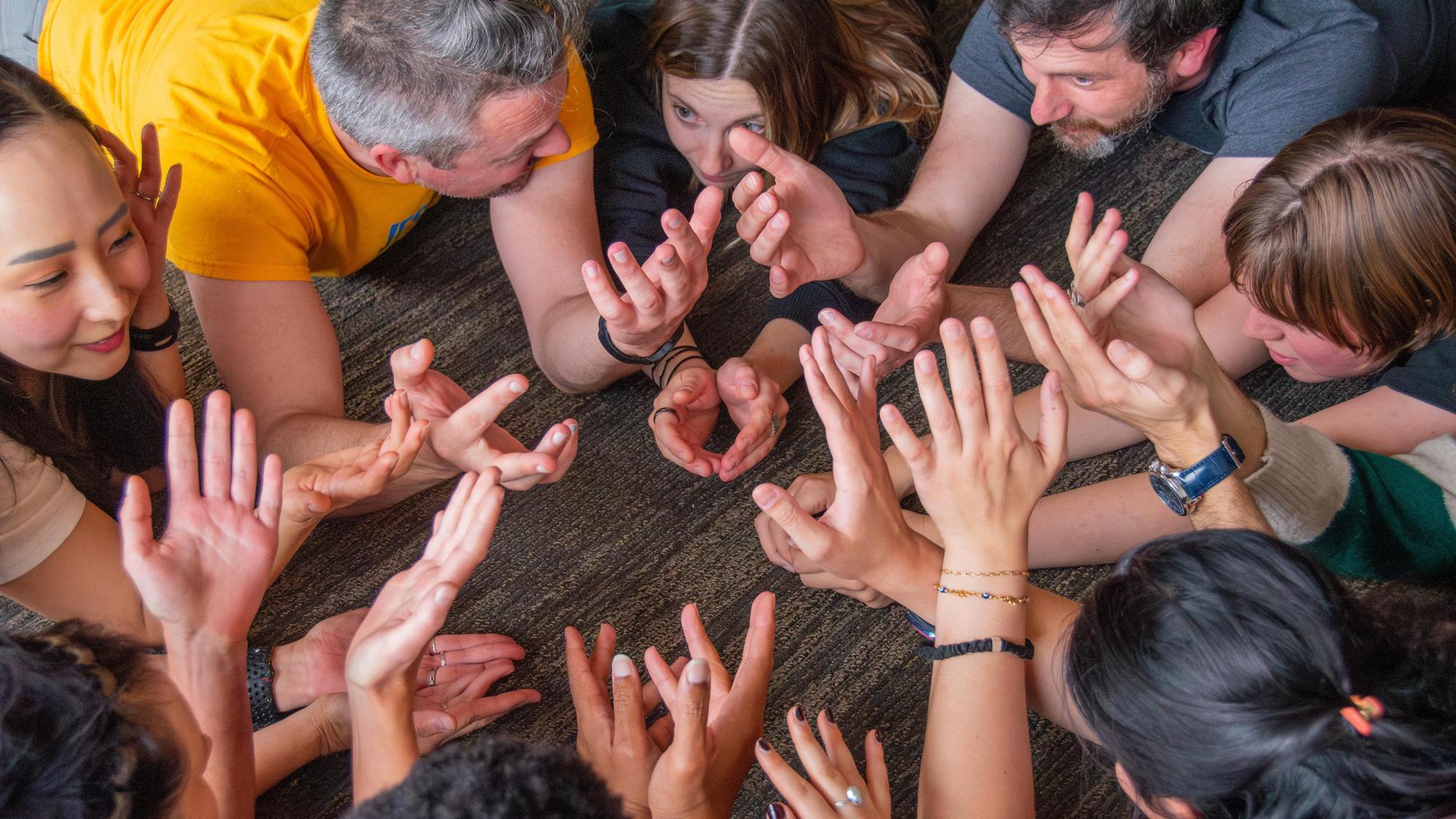
Drama Therapy students engaged in class activity.
Play is a technology that has been with humanity since the beginning. Many adults have trauma, depression, anxiety because they are disconnected from that energetic life force that is play. Doug Ronning, Class of 2006 and Associate Professor, Counseling Psychology, Drama Therapy
The second area is noetic and extraordinary experiences. He sits on the leadership team of the Extraordinary Experiences Empowerment Alliance, working to develop best practices for clinicians and researchers supporting people who have had these experiences.
The third is monster archetypes. For over a decade, Ronning has produced the Monster Movie Salon, a recurring event that integrates drama therapy with film appreciation and shadow work. Participants watch curated clips from monster films around a theme, pause for integrative writing, and then move into embodied action — taking lines and images from the clips into their bodies. "By the end, we will have created something special and unique that is a dramatic resonance coming out of the film clips," he says. (His must-watch list: Invasion of the Body Snatchers, Kubrick's The Shining, and Jordan Peele's Get Out.)
A Signature Capstone
The Drama Therapy program is a Master's in Counseling Psychology with a concentration in drama therapy. It is primarily in person and heavily experiential. Graduates meet the educational requirements for licensure as a licensed marriage and family therapist or licensed professional clinical counselor in California, and for registration as a drama therapist with the North American Drama Therapy Association.
Most classes begin with a short seminar or lecture, then move into embodied action for the rest of the session. Ronning sees the program as suited to people who want to keep human contact at the center of therapeutic work. "So many of the new forms of psychotherapy are online, via text or through video," he says. "Drama therapy is so about human contact and the interpersonal, what is emergent between people and in a person's story."
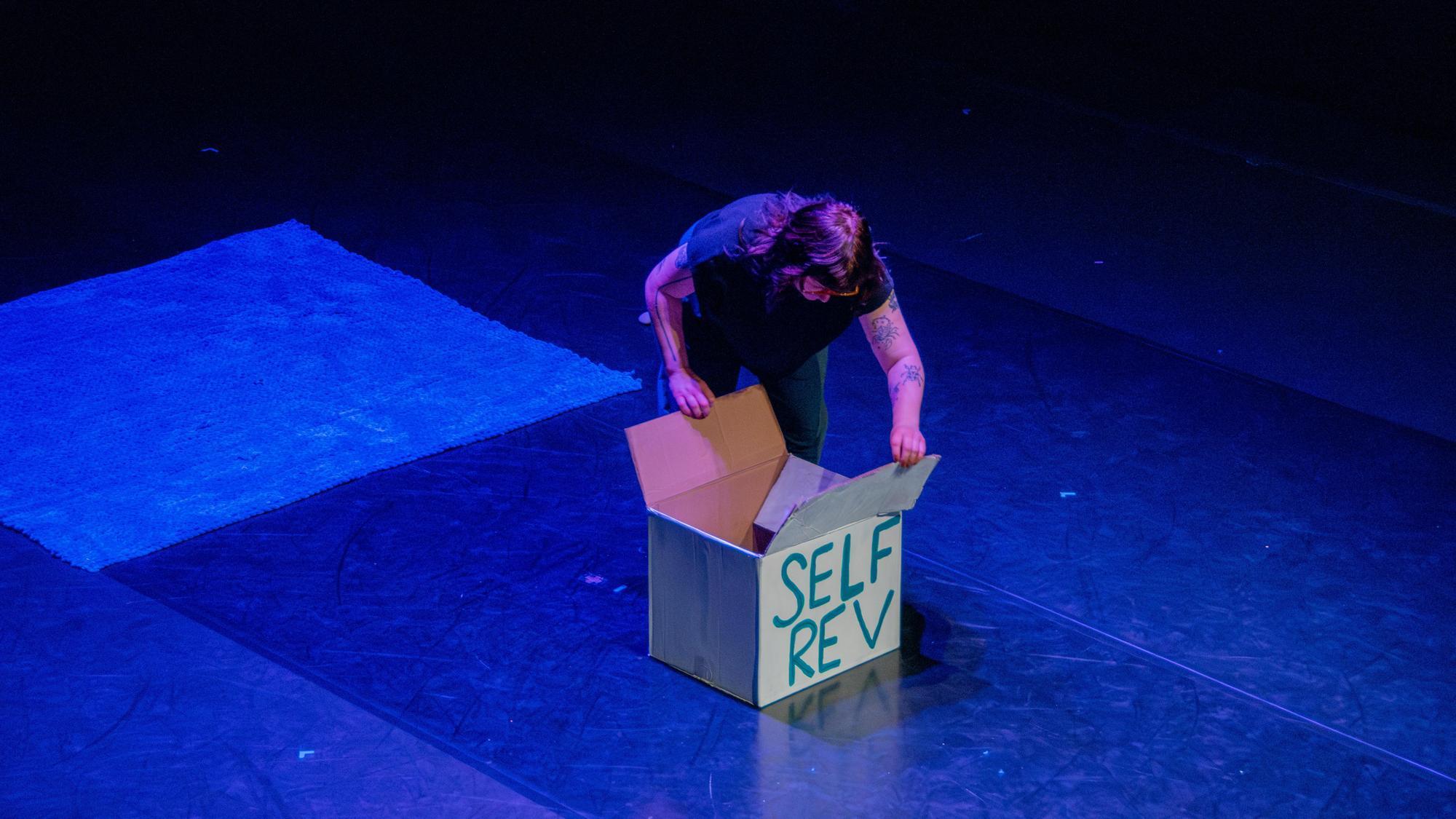
The program's capstone project offers several paths — some students make documentaries, others write articles — but its signature is the self-revelatory performance, created by program founder and Professor Emeritus Renée Emunah. Students work with a director over the course of a semester to craft a theatrical performance around something personally challenging: a stretch, a trauma, a new way of being with an experience. They perform it on stage, in front of a live audience, with a full theatrical team. Ronning sees it as a rite of passage.
Image
Self-revelatory performance rehearsal with Drama Therapy student.
Graduates go on to work across the mental health field, including in hospitals, substance use treatment, eating disorders programs, private practice, and hospice care. Many are hired by their practicum sites. Ronning himself was: he worked in substance use treatment during his practicum, stayed five years, and became program director within two.
He is candid about the present moment. "Right now, in our world, where it feels like consensus reality is unraveling, it can be really easy to get stuck," he says. "Drama therapy offers an avenue for play, for amplification, to understand our inner experiences through connection, through storytelling, and through communal play."
Associate Professor Sara Salazar shares how CIIS’ B.A. in Interdisciplinary Studies creates space for students who have started and stopped their degrees to finally complete on their own terms.