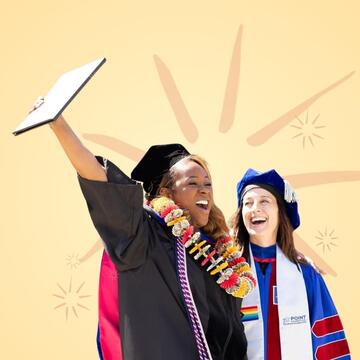
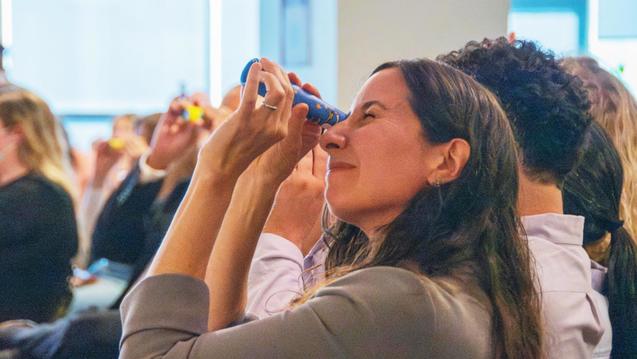
Image of undergraduate students and faculty participating in a class activity during the B.A. in Interdisciplinary Studies intensive, 2026.
Image of undergraduate students and faculty participating in a class activity during the B.A. in Interdisciplinary Studies intensive, 2026.
Campus News
How to Complete Your Bachelor's Degree as an Adult
Discover how degree completion programs offer flexible pathways for adult learners to finish their bachelor's degree.
March 5, 2026
Your Unfinished Degree Is Still Within Reach
Life rarely follows a straight line. Perhaps you started college years ago but circumstances shifted — work demanded more hours, family needed your attention, or finances became tight. Maybe you earned an associate degree and meant to transfer but never quite made it happen. Or perhaps you simply needed time to figure out who you were and what you wanted.
Whatever brought you to this moment, know this: nearly 42 million Americans hold college credits but have never finished their degrees, according to the Education Data Initiative. You're not alone in wanting to complete what you started. And more importantly, it's not too late.
Understanding Degree Completion Programs
Degree completion programs serve a specific purpose: helping students with prior college experience finish their bachelor's degrees. Unlike traditional four-year programs designed for recent high school graduates, these programs recognize that adult learners bring valuable life experience, professional skills, and academic credits already earned.
The beauty of these programs lies in their flexibility. Rather than forcing you back into a traditional classroom setting alongside teenagers, degree completion programs meet you where you are, acknowledging your commitments, honoring your experience, and structuring learning around adult needs.
Image
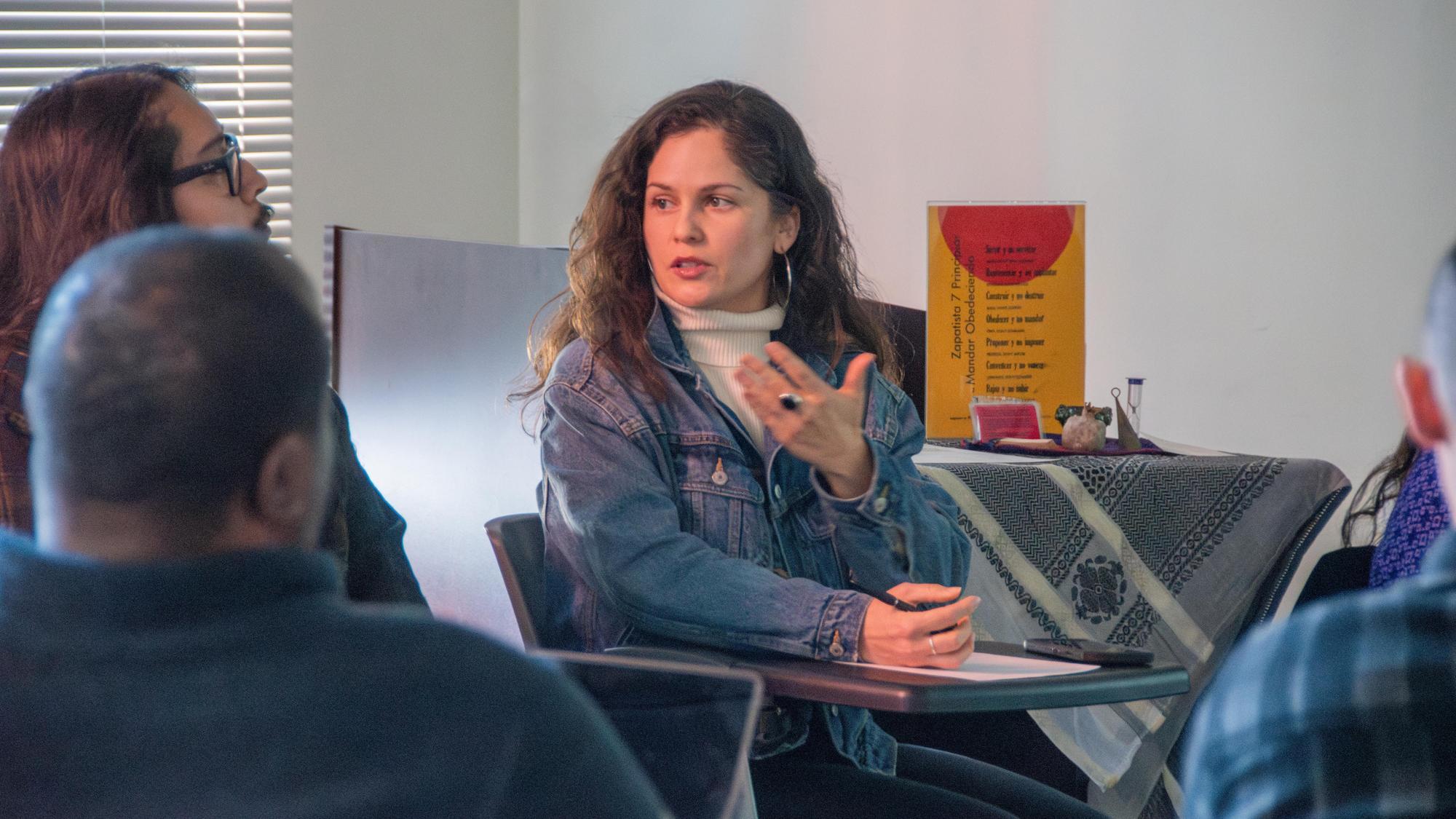
Undergraduate student engaging in class conversation during an in-person intensive, 2026.
The programs require a minimum of 54 transferable semester units to enter, with most students completing their degrees in three to four semesters. This accelerated timeline is possible because CIIS accepts up to 84 transferable units, building upon work you've already completed rather than starting from scratch.
What makes CIIS distinctive is its cohort model. Rather than navigating your return to school alone, you'll progress through coursework with the same group of peers — adults who understand the juggling act of work, family, and education. This approach builds genuine community and creates space for collaborative learning rooted in real-world experience.
All three programs are delivered entirely online through asynchronous classes, meaning you can engage with course materials on your own schedule within weekly parameters. While this requires discipline and time management, it also means you can study after the kids go to bed, during lunch breaks, or on weekend mornings — whatever works for your life.
Opening New Opportunities
The economic argument for completing your bachelor's degree is compelling. According to the Bureau of Labor Statistics, bachelor's degree holders earn approximately $400 more per week than those with some college experience but no degree. Over a career, this translates to $2.8 million in earnings compared to $1.6 million for high school graduates.
Beyond salary, degree holders more frequently access quality benefits: health insurance, retirement plans, paid leave, and professional development opportunities. In an evolving economy where automation and artificial intelligence reshape job markets, a bachelor's degree provides both immediate earning potential and long-term career flexibility.
Making Transfer Credits Work
One of the biggest advantages of degree completion programs is their generous approach to transfer credits. CIIS accepts credits from regionally accredited institutions in the U.S. and Canada, as well as international credits with proper evaluation. Military training documented through American Council on Education guidelines also transfers, as do certain test scores from CLEP, Advanced Placement, and Excelsior College Exams.
Even work completed years or decades ago still counts — credits don't expire. If you attended college in the 1990s or early 2000s, those units remain valid as long as you can provide official transcripts. The institution may need extra time to retrieve old records, but if you did the work, we’ll make sure it counts.
CIIS also recognizes that adult learners may not have completed all general education requirements. Rather than treating this as a barrier to entry, the university allows you to fulfill remaining requirements through elective courses while enrolled. This means you can begin the program even if you're missing a few general education units, completing them alongside your major coursework.
Image
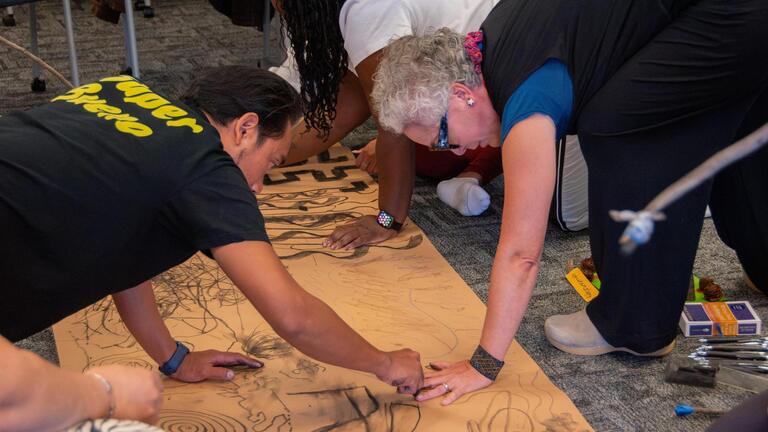
Undergraduate students engaging in a class activity during the B.A. in Interdisciplinary Studies program intensive, 2026.
Balancing Life, Work, and Study
Perhaps the biggest question adult learners ask: can I actually do this while working? The answer depends on your circumstances, but degree completion programs are specifically designed to accommodate working professionals.
As a general guideline, expect to spend about two hours per week of preparation and study time for each unit of credit. If you're taking 12 units — a typical full-time load — plan for roughly 24 hours weekly dedicated to coursework. This is substantial but manageable for many working adults, especially with the flexibility of asynchronous online learning.
Many students continue working while completing their degrees. Some employers even offer tuition assistance or reimbursement programs, recognizing that investing in employees' education benefits the organization. Additionally, federal financial aid through FAFSA, state grants, scholarships specifically for returning adults, and CIIS' own fixed tuition rates for undergraduates make finishing more financially feasible than you might expect.
Pathways Beyond the Bachelor's
For students thinking ahead to graduate education, CIIS offers Bachelor's to Graduate Accelerated Pathways. These programs allow qualified undergraduates to take graduate courses that count toward both degrees, potentially saving $20,000 in graduate tuition while completing both degrees faster.
Current accelerated pathways connect to master's programs in Anthropology and Social Change, Community Mental Health, East-West Psychology, Expressive Arts Coaching & Community Building, Interdisciplinary Arts and Writing, Transformative Leadership, Women, Gender, Spirituality, and Social Justice, as well as the Clinical Psychology Psy.D. program.
Taking the First Step
Starting feels daunting. You might worry about academic writing after years away from school, question whether you're "too old," or wonder if you can really balance everything.
The truth is that adult learners often excel precisely because of their life experience. You've developed time management skills through juggling work and family. You understand why education matters. You can connect theoretical concepts to real-world applications. These aren't disadvantages; they're strengths that traditional students are still developing.
Your unfinished degree doesn't define you, but completing it might transform what's possible. Whether you're seeking a promotion, changing careers, modeling persistence for your children, or fulfilling a personal promise, the pathway back is clearer than you think. CIIS has spent over 50 years creating space for nontraditional learners, people whose journeys don't follow straight lines but who bring invaluable wisdom to their education.
The question isn't whether you can finish. It's whether you're ready to begin.