
Campus News
Beloved Community is built with ongoing practices that bring it fully to life.
What are you looking for?
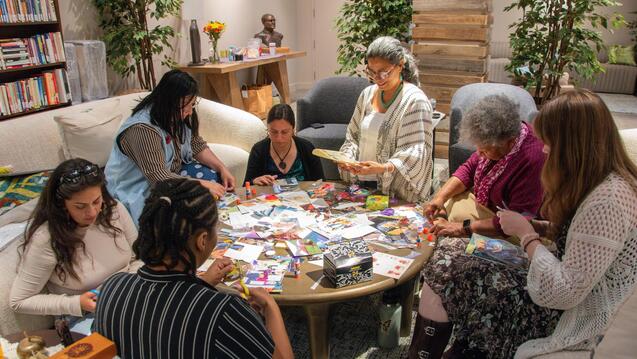
A month of workshops, talks, and community gatherings rooted in Black history, culture, and the enduring power of our ancestral seeds.
This past February, 28 Days of Blackness returned to CIIS with its 2026 theme: Seeds of Soul, Sown in Strength and Still Rising, an invitation to revisit the lesson of seeds and the ancestral wisdom they carry across generations.
The journey and inception of sustainable "Rootology" was only one portion of 28 Days of Blackness. However, it told the story of young and old across the diaspora searching for their roots and ways to sustain them together. Two young adults, one American and the other Nigerian, found one another to break the narratives of the past to transform the next generation’s future together from seas apart.
Kay'te Ingram, Anthropology and Social Change student, reflecting on "Sustainable Rootology" during one of the events
Over the course of 28 Days, twelve engaging, emotive, and educational workshops, talks, and conversations were hosted, diving into the seeds of the past and blooming into flourishing concepts, theories, artwork, poetry, and music. View the full list of events.
28 Days of Blackness closed with reflection on the seeds planted and sown throughout the month. Guests heard a seed talk from Rev. Dele, followed by a verbal recitation of "Lift Every Voice and Sing" known as the Black National Anthem, offered by Rev. Glencie Rhedrick and Benu Amun-Ra, and then sung by the talented Lewis Raye.
Presenters from across the month returned to celebrate with organizers at the closing event. Alile Sharon Larkin spoke to the film pioneers she honored in her 28 Days presentation. Donovan Jones shared details about his workshop on Demystifying Sexual Addiction. Two presenters from the CIIS Emerging Black Clinicians Fellowship panel reflected on the power of the Fellowship over its last five years. Lois Moses offered a powerful, deeply felt poem, and Lewis Raye closed the gathering with more soul-healing music.
By Rev. Glencie Rhedrick
When I first arrived on the virtual campus of the California Institute of Integral Studies, I was introduced to the Black Psychology Project team and its visionary founder, Dr. Deterville. What began as an academic encounter quickly became something far more personal and ancestral. I felt an immediate and sacred connection, a stirring of memory, lineage, and responsibility. It awakened within me a deeper desire to expand my awareness of how we, as African-ascended people, learn to care for ourselves and our communities through an African worldview.
The Black Psychology Project created space for new ways of knowing, epistemologies rooted not in fragmentation, but in wholeness, not in pathology, but in power. Through this work, I deepened my understanding of the founding of the Association of Black Psychologists and its historic commitment to developing psychological frameworks that honor African cosmology, culture, and collective well-being. Learning about the Association of Black Psychologists’ (ABPsi) origins and mission intensified my own commitment to study, research, and community engagement grounded in Africana thought.
One of the most transformative expressions of this work has been 28 Days of Blackness. What began as an intentional celebration evolved into a signature initiative of the Black Psychology Project, an annual gathering that honors the enduring contributions of our ancestors while exposing participants to the depth and breadth of Black Psychology. Each year, through carefully curated themes, lectures, artistic expressions, and community dialogue, the program invites participants to see Black history not as a single month of remembrance, but as an ongoing narrative of brilliance, resistance, resilience, and innovation.
28 Days of Blackness has never been merely commemorative; it is educative and liberatory. Its central aim is to inspire our community to read more deeply, study more intentionally, and research more expansively the vast contributions of African-descended people, both in the United States and globally. It calls us to move beyond passive celebration into active scholarship, embodied practice, and community transformation.
Through this initiative, the Black Psychology Project affirms that our history is not peripheral to American history, it is foundational. And through remembering, researching, and reclaiming our stories, we continue the sacred work of collective healing and intellectual empowerment.
By Rev. Dele
Each generation seeds its culture with the wisdom needed for the life phase they are living. This year during the 28 Days of Blackness, we discerned that the planet is in a time of clearing and opening, so it was time to revisit the lesson of seeds. As we revisit the lessons of seeds, we fertilize humanity’s communal soil. We pack the soil with faith and determination to “not let the darkness that surrounds us determine our light”—Sojourner Truth. Our visions, skills and Truths are the seeds we plant in this soil.
A seed is a capsule, a blueprint, a code; when the skin dissolves, the code explodes into the material realm where we live. We plant our seeds knowing that while aspects of our plans will fall away, the core essence will follow through fruition. Particularly in this time of immense chaos, violence and hate we remember that seeds do not struggle, they expand to receive nutrients and contract to send forth roots. They keep expanding and contracting until sufficient energy has been generated to move above ground. Likewise as curators of culture and nurturers of spiritual well being, we remind communities of faith that the seeds of strength sown by our ancestors are still rising. Our seeds of soul have survived the immense pressures of domination, exploitation, and capitalism to thrive economically, socially, spiritually in each decade we have lived in the Americas. Maya Angelou reminds us: And Still We Rise. By constantly feeding our Truths, we reset our nervous systems and maintain emotional balance. If you want to root your soul in strength and power, take a walk in Nature for just one hour.
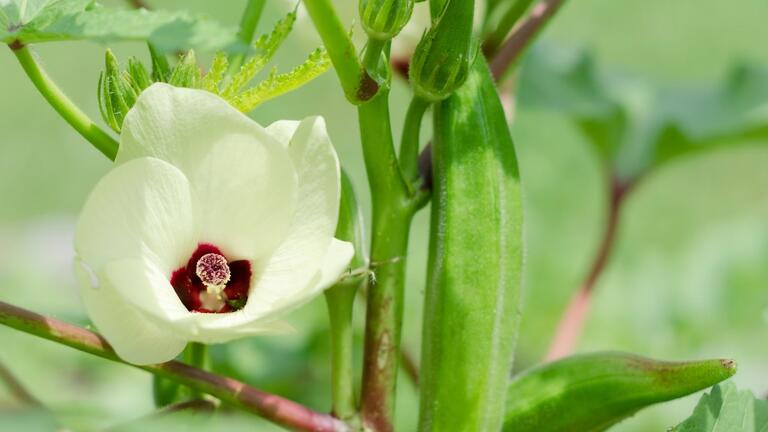
Even as children were captured for enslavement, mothers, aunties and grandmothers planted okra seeds in children’s hair. “Plant these when you get where you are going so you have something familiar to eat”, they whispered. Okra not only fill our stomachs, they are medicine to remove toxins, they are mucilage to keep our joints working properly. Okra was a seed sown in strength. Cotton is a beautiful seed to watch mature even though it is brutal to the body to harvest. It is a crop that created generational wealth for the settlers who stole the land it grew on throughout the southern United States. It’s cream, brown and white colors remind us that radiance pierces darkness. Light is born out of darkness in never ending cycles of life. We survived cotton’s back breaking cycle to thrive in new settings with new crops that returned the wealth we poured into the soil. Watermelon was such an economic boom crop that the oppressor created a psychological smear campaign to deter us from eating them. And Still we Rise because our original seeds were sown in strength.
Here is a song to remind us of the lesson of the seed:
Were packing our seeds for the Soul Train
We're packing our seeds for the Soul Train
To root your soul in strength and power take a walk in Nature for just one hour.
Gather your lesson and Pack your seed.
Fill your seed with intention and impact
Root your soul in abundance not lack
A seed is a capsule, a blueprint, a code
When the skin dissolves the code explodes
Expand 2 3 4 , contract 2,3,4.....
Expand 2,3,4 , contract 2,3 4
A seed is a capsule, a blueprint, a code
When the skin dissolves the code explodes
Breathe, Gather your wisdom
Breathe, gather your Truth
Place your seed on the Soul Train
Wisdom cycles again and again
The work doesn't end here. Stay tuned for updates about Black Psychology Project workshops and future 28 Days programming via the Division of Community Engagement and Belonging's upcoming events web page and the Division's Instagram Linktree.

Our team is here to support individuals, CIIS community, and beyond to flourish and experience a feel of belonging.
Beloved Community is built with ongoing practices that bring it fully to life.
CIIS' Center for Psychedelic Therapies and Research celebrated its tenth anniversary with the people who built it and announced a new endowed scholarship.
CIIS' Blue Sky Leaders program is built around a wager: that visionary leadership can be done with care, complexity, and contemplative depth.