Dr. Janis Phelps founded the world's first academically approved psychedelic therapy training program, preparing clinicians for a transforming field of mental health.
December 11, 2025
Dr. Janis Phelps is the founder and director of the Center for Psychedelic Therapies and Research at California Institute of Integral Studies. In 2015, before the field of psychedelic-assisted therapy began its modern renaissance, CIIS launched what would become the world's first academically approved training program for psychedelic therapists. Nearly a decade later, the program has trained hundreds of medical, mental health, and social science professionals, establishing itself as a leader in integrating rigorous science with sacred wisdom traditions. Dr. Phelps sat down with us to discuss the past and future of psychedelic-assisted therapy, along with the extraordinary impact already underway.
In 2015, after long and thoughtful consideration, leaders at CIIS broached the possibility of creating a program for psychedelic-assisted therapy. As a longtime CIIS professor, Dr. Phelps knew the institution was uniquely positioned to be at the forefront of a critical health need. "CIIS has had professors here for decades teaching about psychedelics in a didactic way. In particular, Stanislav Grof and Ralph Metzner taught doctoral level classes on the use of psychedelics and qualities of altered states of consciousness. That inquiry has been part of the weave of CIIS, even at its founding, where integration of spiritual practices and psychology were of utmost importance."
Dr. Phelps herself was also a well-established expert in the field, and she was eager for the chance to bring evidence-based training to others, most of whom had never had the opportunity to learn about psychedelic-assisted therapy. "This was the very first academically approved certificate for postgraduate medical and mental health professionals ever on the planet.”
Evolving with the Field
The Certificate in Psychedelic-Assisted Therapies and Research program has evolved significantly since its inception, including expanding to meet exponential demand. "We've grown from 45 students to many as 300 because of the need for more people to be trained," Dr. Phelps notes.
As of 2025, the Center accepts applicants with advanced degrees or graduate-level students in fields beyond clinical practice—including social sciences, allied health, humanities, sciences, law, and other affiliated disciplines; as well as outstanding applicants with bachelor's degrees as space allows.
"We encourage international applicants who were trained and/or reside outside the U.S.," Dr. Phelps adds. "These 130 international trainees have brought insightful breadth and depth into our classes and discussions."
The curriculum has also broadened. "We started out very much as a research-based program. Since then we've added in more indigenous ways of knowing and spirituality so that we have an ample balance," she shares.
A major milestone came with Oregon's sanctioned psilocybin program. "Two years ago, we were approved by the state of Oregon to be a training program — one of the first universities certified to teach professionals to use psilocybin with people in Oregon," Dr. Phelps says.
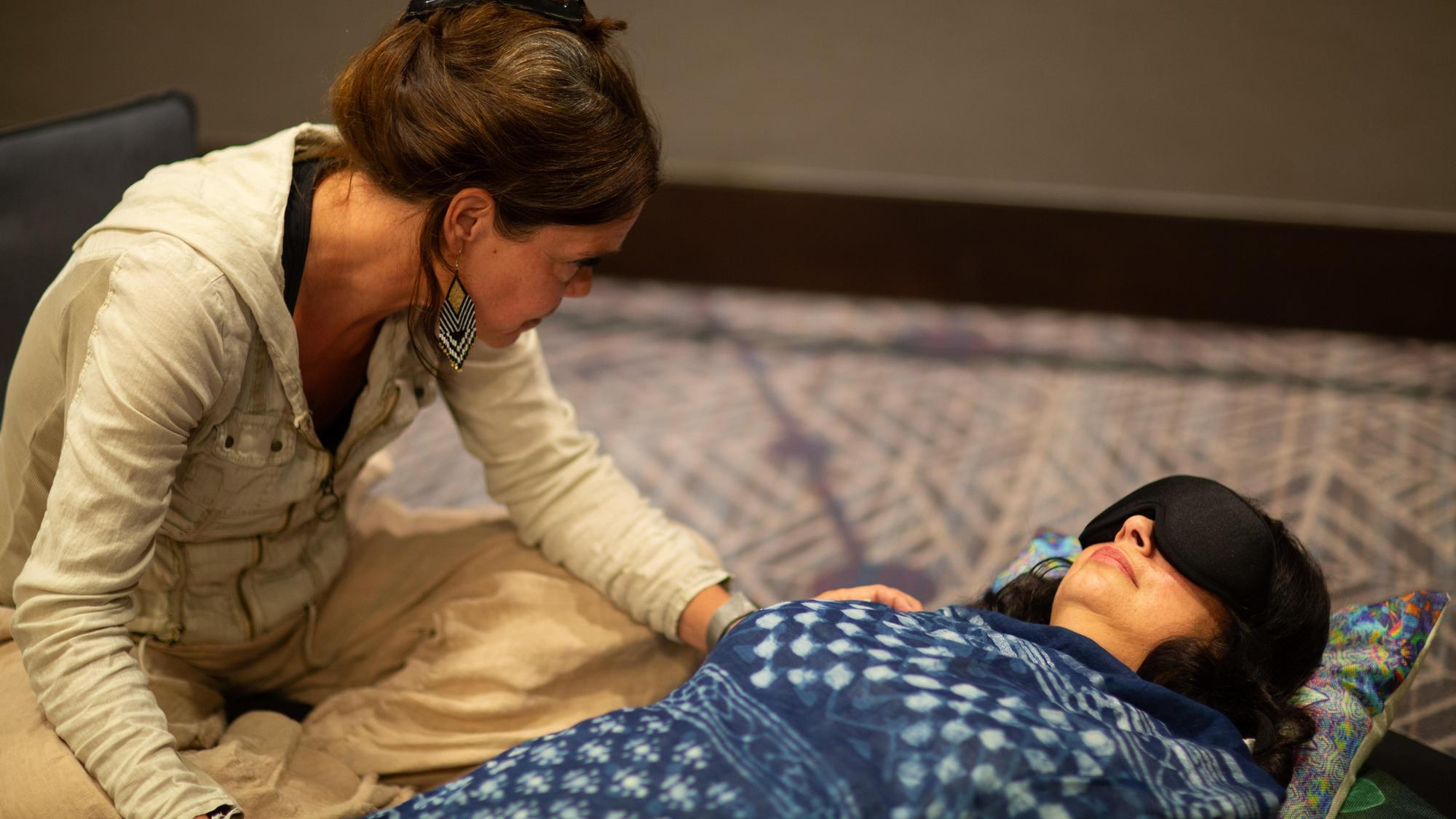
Today, the program is at the leading edge of the field. "We teach them everything from psychopharmacology, research designs, and group work, all the way to how to be mindful and in a meditative state while being with people while they're using a psilocybin."
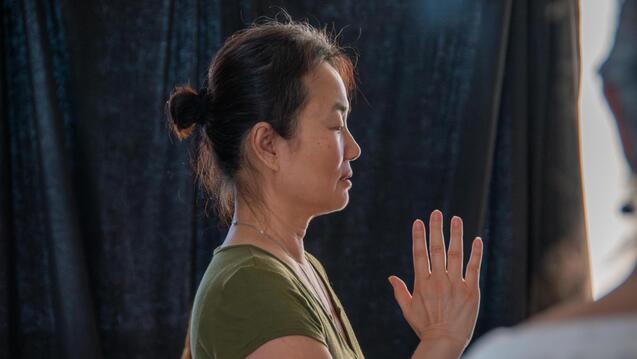
Image
Image from the Center for Psychedelic Therapies and Research May 2025 Training.
The mentor program is a distinctive feature. "All of our students get assigned to work with a mentor who is an esteemed expert in either clinical work or research. Students meet at least monthly with their mentor, who is available when they have questions or want resources or referrals to meet other people in the field," she describes. "What's unique is that it's an in-depth exploration with an expert. Other universities have some mentorship, but not to the degree that we do."
Core Values and Pillars
Even as the program expands, it remains strongly grounded in its foundational principles and ethical commitments. "We want our students to have both an understanding of psychospiritual development across the lifetime as well as evidence-based approaches. We meld the two, which is a forte we have here at CIIS," Dr. Phelps explains.
It will be very beneficial to equity and healthcare access if enough people have been trained to offer these services — there is an onslaught of demand for it. We need a tremendous number of people trained. Janis Phelps, Founder and Director of the Center for Psychedelic Therapies and Research
Social justice is central. "We want our students to become advocates at their workplaces, clinics and hospitals. It's not just about psychedelics, it's making healthcare access available for everyone," she emphasizes. Ethics receives particular attention: "We ask our students to learn very detailed ways of ethically behaving in this particular kind of therapy — what not to do, what to do, and how to continue with peer consultation after they graduate."
One third of instructors and mentors are people of color, which also reflects the diversity of students. "We put primacy on creating Beloved Community in our classrooms so that individuals from marginalized populations can feel more safe."
Real-World Impact and Training for the Future
The graduates' career trajectories are all over the map — quite literally. "Five of our graduates are now working at Dana-Farber running a palliative care research team together, studying psychedlics. A graduate from Iowa created a research study that got approval in the state. Graduates in Utah, Washington, Maryland and New York, among others, are doing research with several different psychedelic medicines at their clinical research sites," Dr. Phelps shares, naming just a few examples from a wide range of graduates’ accomplishments.
Research and publication are not the only metric of success, of course, and Dr. Phelps emphasizes the personal and social impact. Many have opened ketamine clinics. "They're loving their work and their clients are getting such benefit," she says.
Watching how transformation happens in others often triggers it in ourselves. There's a simultaneous process that our students and graduates go through — all for the better. It makes them better clinicians and facilitators, and they're out there serving others for the better. Janis Phelps, Founder and Director of the Center for Psychedelic Therapies and Research
The program transforms students in unexpected ways. "There's a parallel course that happens with our trainees where they start feeling the influence of the values that we share and they change things in their life," Dr. Phelps observes. "By the end, most have had something significant happen to change their personal or professional life. Many take up mindfulness practices or deepen their spiritual practices. Others push themselves to publish when they would've been nervous to do so before," she describes. "Students invariably say they treat their patients, co-workers, students, and clients better because they learned about the importance of compassionate care. Watching how transformation happens in others often triggers it in ourselves."
Looking Ahead With Optimism
Though a spirit of collaboration and mutual support suffuses the community of graduates, there are still wider issues in the field to contend with. Most prominent among them is the status of psychedelic-assisted therapies in the U.S. "It's reasonable that potential students would be hesitant to apply because none of these medicines have been rescheduled yet by the FDA," she acknowledges. "But to stay ahead of the curve in anticipation of legalization, people need to be steadily trained to use these medicines safely for the best benefits."
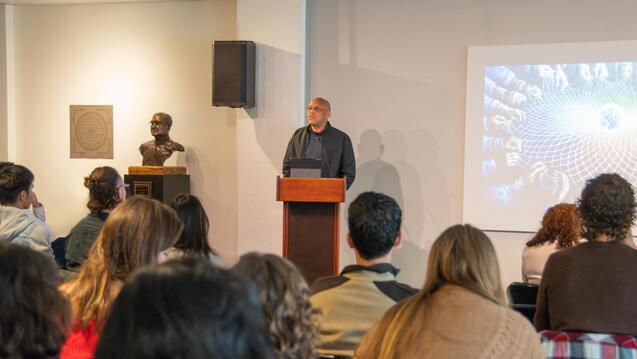
Image
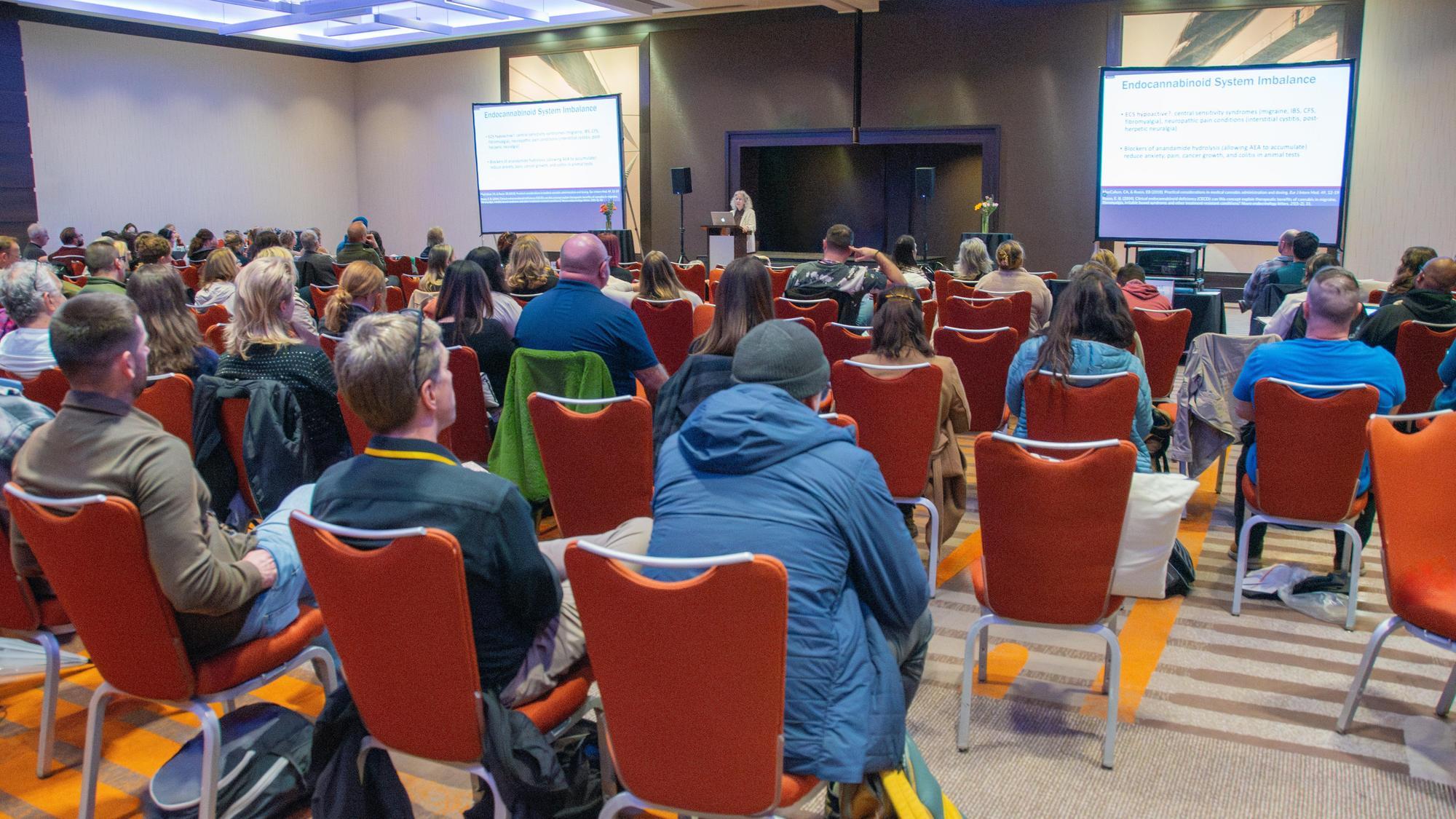
Image from the Center for Psychedelic Therapies and Research 2024 training.
The need is readily apparent. "There are already 3,000 people in Oregon waiting to be treated at service centers that are getting overwhelmed," she points out. Drawing on a historical parallel, she adds: "We have a great analogy with palliative care and hospice work. While the government was working on regulations, many clinicians got training to serve the need, and there was a mismatch between available physicians and nurses and patients and family in need of end-of-life care. I'd like to see us avoid that by training as many people beforehand as possible."
There are challenges still to consider, but looking at the program's overall contribution, she's optimistic. "I'm happy for our field because it's getting improvements by bringing in new ideas and understandings from this next generation of trained therapists, medical professionals, clergy and those in the humanities and social sciences."
Professor Jun Wang shares how CIIS’ East-West Psychology Department teaches students to unite scholarly understanding with embodied practice through Eastern, Western, and indigenous wisdom traditions.
Dr. Rene Dumetz teaches CIIS' Clinical Psychology Psy.D. program, training therapists to work with the unconscious, relationships, and holistic human experience.