Teacher as Student, Student as Teacher: How CIIS Helped an Early Childhood Educator Rediscover Her Own Passion for Learning
Preschool teacher Linette Illastron returned to school after a decade and rediscovered her voice, her strength, and her passion for learning at CIIS.
June 25, 2026
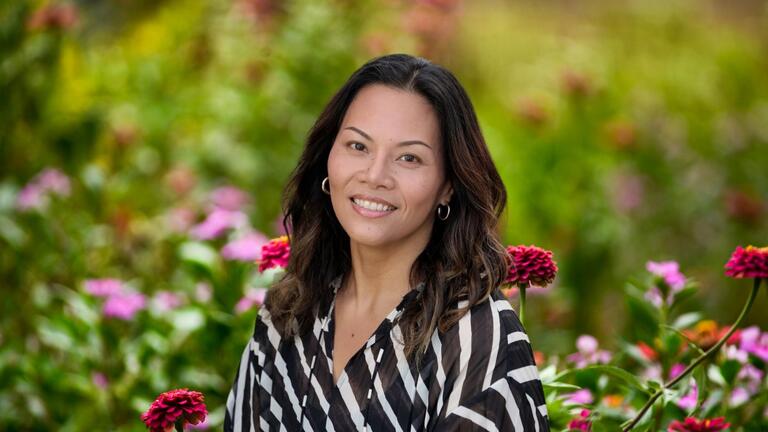
Linette Illastron knows her stuff. A 15-year veteran of the classroom and further experienced as a piano teacher and from raising her own child, she didn’t need a degree to get reacquainted with the basics. She also didn’t need more of the same. What she was looking for was a next step, something to take her beyond, not cement her in place. Something that would let her flex her creativity.
Looking for a program that would allow her to explore art therapy, music therapy, or drama therapy, Illastron was drawn to CIIS by its extensive offerings. She chose to pursue her Bachelor of Interdisciplinary Studies to connect with many kinds of artistic approaches. The opportunity was there, but so was the trepidation. Returning to school after years away meant fitting coursework into a life already full of responsibilities, and she was not sure how it would go.
The cohort changed that almost immediately. Getting to know her classmates and learning from her professors opened what she describes as an entirely new world of knowledge, curiosity, and passion. Her professors consistently encouraged her to ask more questions, reflect more deeply, and draw from her own life experiences. What she expected to be a logistical challenge became, instead, a kind of homecoming, during which she began to rediscover parts of herself that had been quiet for a long time.
Image
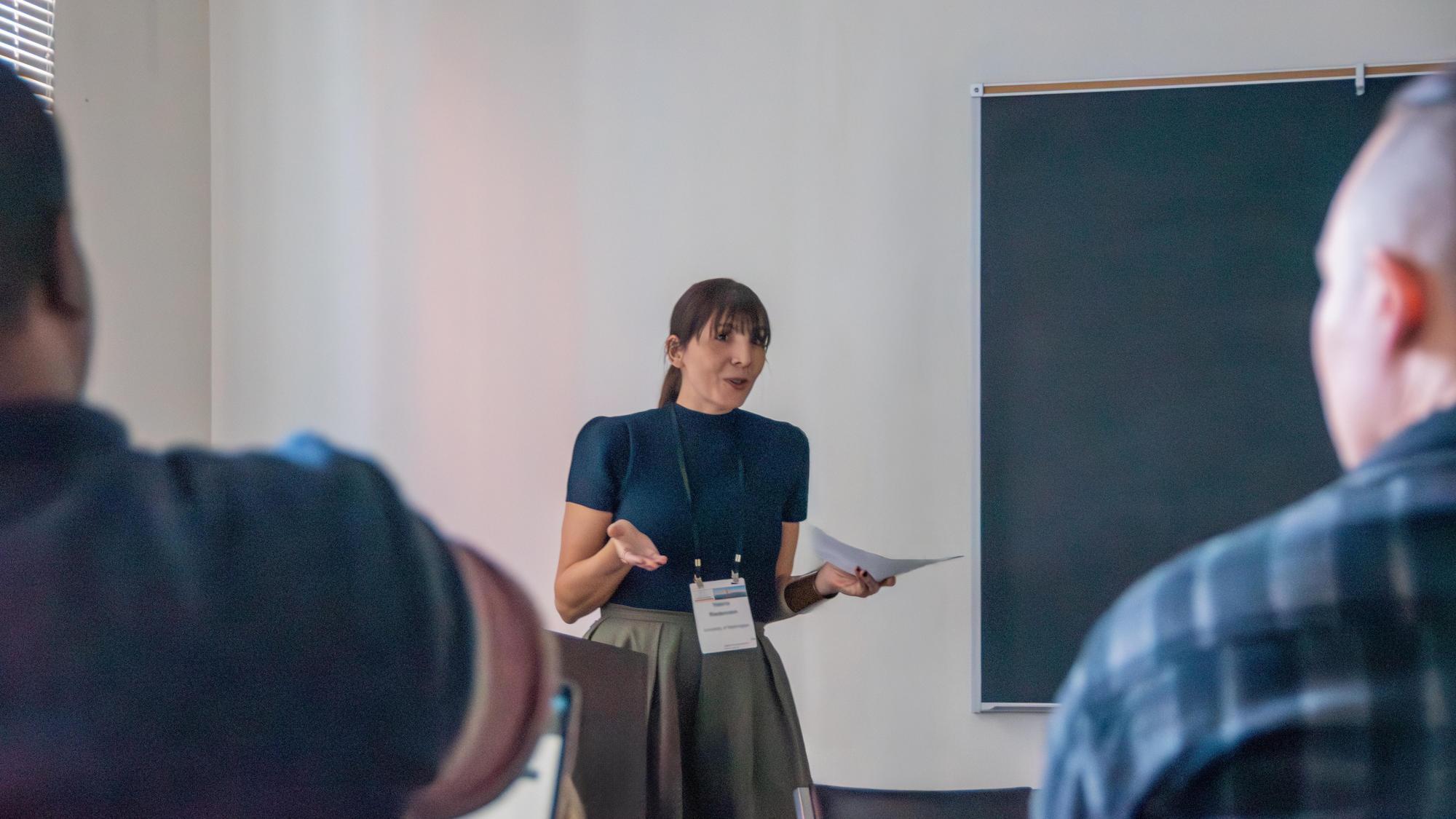
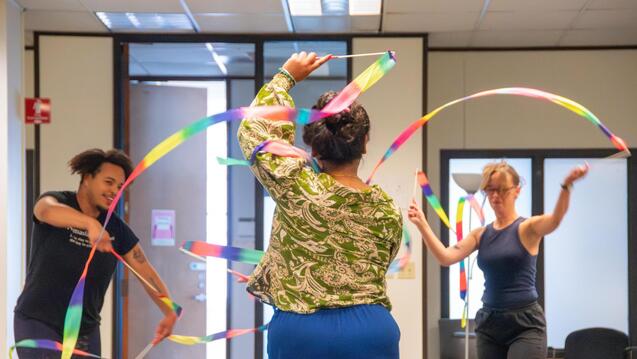
Bachelor of Interdisciplinary Studies faculty member engaging with students in the classroom.
My professors consistently encouraged me to ask more questions, reflect more deeply, and draw from my own life experiences. Through that process, I began to rediscover parts of myself that had been quiet for a long time. Linette Illastron, Bachelor of Interdisciplinary Studies
That rediscovery has reshaped how Illastron approaches her own classroom. She has become more intentional about creating spaces where young children can explore, express themselves, and connect with their environment through creativity, movement, and music. The reflective practice she engages in at CIIS has helped her become more present, more curious, and more open as an educator. She now considers children, learning, relationships, and the environment around her in a broader and more thoughtful way.
That attention to the inner lives has shaped Illastron’s own scholarship. In her Research Methods class, she is studying how emotional labor and burnout shape the professional identity of early childhood educators. Emotional labor, she explains, refers to the invisible work educators do to regulate their own emotions while supporting the emotional needs of children, families, and the classroom. It is constant, largely unrecognized, and rarely named, yet it sits at the center of the daily work of caring for young children.
Over time, she argues, that constant emotional investment can affect how educators see themselves, their value, and their role within the profession. It is a subject Illastron knows from the inside, drawn from 15 years in the field, and one she now has the tools to examine with the rigor of formal research. The work brings together her professional experience and her growing scholarly voice, the very combination CIIS encouraged her to make. “I have felt supported in expressing myself fully without fear or shame,” she says.
The community, she explains, has given her space to be who she is and to feel proud of it. She feels safe to share her thoughts, speak openly, ask questions, and explore ideas without fear of judgment. That openness, she says, has allowed her to bring her whole self into the learning experience.
That sense of openness and acceptance has meant so much to me. I feel supported in bringing my whole self into the learning experience. Linette Illastron, Bachelor of Interdisciplinary Studies
That sense of connection surprised her most in an unexpected place: the online classroom. The program is delivered virtually, and Illastron, who had never learned online before, assumed the format might feel distant or impersonal. The opposite proved true. In many traditional classrooms, she notes, students sit side by side without ever really knowing one another, and there is often little space for genuine dialogue. Her experience at CIIS has been different.
“Even though we are meeting online and viewing one another through small squares on a screen, the conversations are meaningful, thoughtful, and alive,” she says. She has formed deeper connections with her peers and professors than she expected, and she points to a real sense of presence, listening, and care in the way the cohort engages with one another. The format has practical benefits, too. She can participate from the comfort of her own home, or from out of town when family or personal matters call her away, without stepping back from her studies.
Image
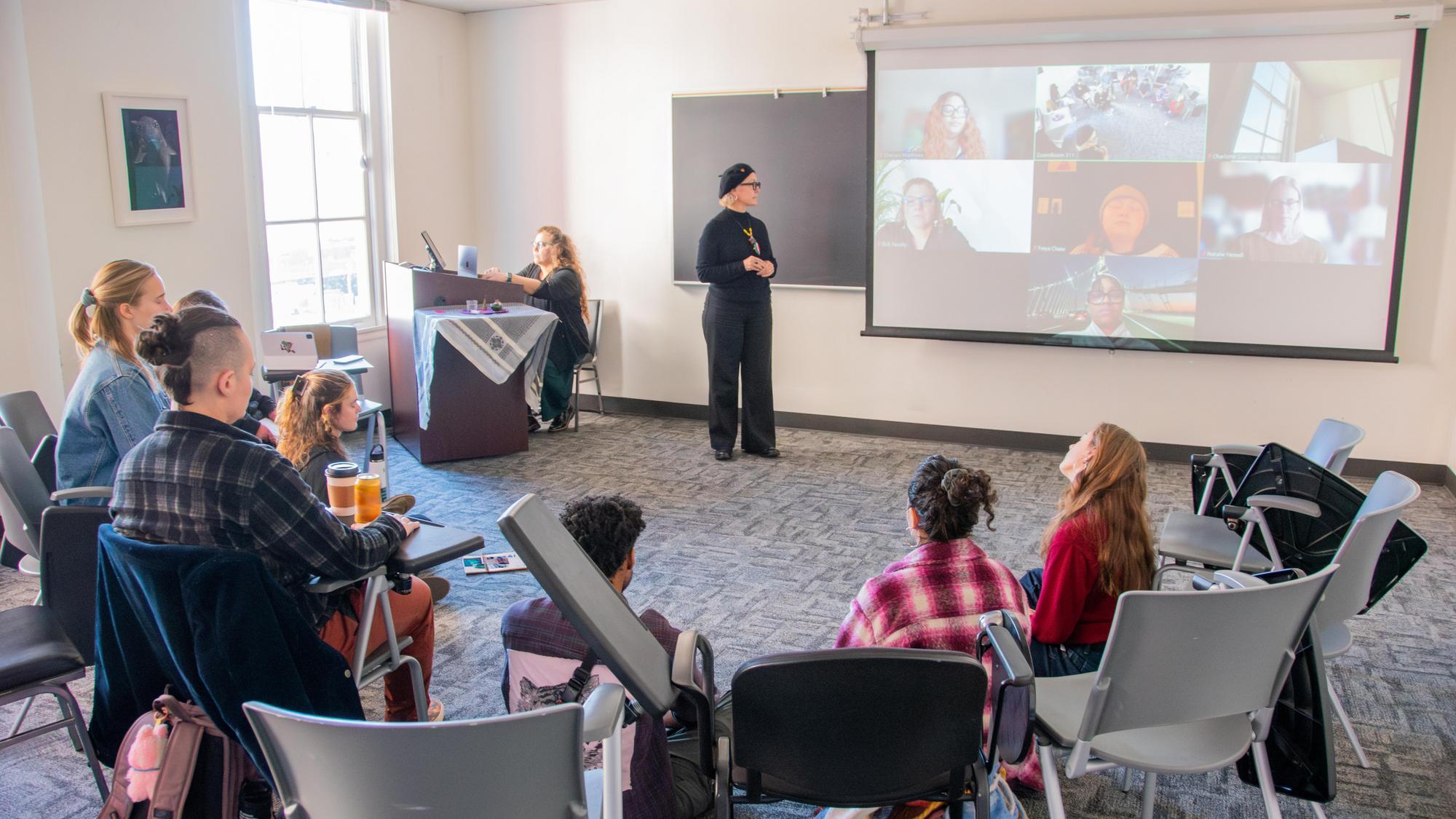
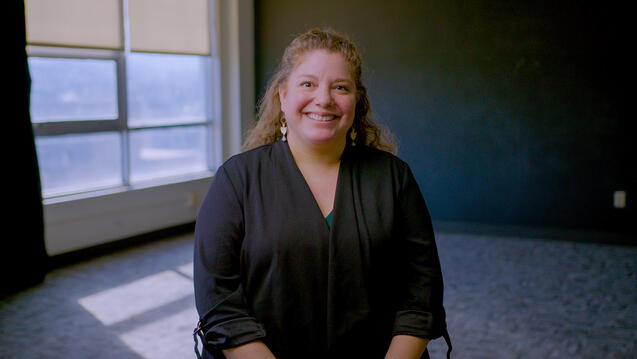
Charlotte María Sáenz engaging with in-person and online students during the Bachelor of Interdisciplinary Studies Intensive, January 2026.
At CIIS, even though we are meeting online and viewing one another through small squares on a screen, the conversations are meaningful, thoughtful and alive. Linette Illastron, Bachelor of Interdisciplinary Studies
Illastron plans to continue at CIIS by pursuing the M.A. in Expressive Arts Coaching and Community Building. Her vision centers on creating spaces where people, especially children, can express themselves freely through creativity, music, and the arts. It is a natural extension of a life already built around music and teaching. She has always believed that creativity allows people to discover their voice, their emotions, and their sense of belonging, and her time at CIIS has shown her even more clearly how powerful the expressive arts can be in helping people connect with themselves and one another.
Associate Professor Sara Salazar shares how CIIS’ B.A. in Interdisciplinary Studies creates space for students who have started and stopped their degrees to finally complete on their own terms.