

Campus News
CIIS community comes together in haiku to remember the scents of their summer
What are you looking for?
CIIS' Clinical Psychology Psy.D. isn't for everyone — it's for a specific kind of thinker, clinician, and person. Here's how to tell.
At CIIS, the Clinical Psychology (Psy.D.) is founded on three pillars: social justice, the psychoanalytic, and the transpersonal-spiritual. Stemming from these principles, it asks students to bring their whole selves to the work. This kind of work isn’t for everyone. It’s for a specific kind of thinker, clinician, and person. Here are some ways to tell if this could be the program you’re looking for.
You have an interest in spirituality, Jung, and psychology. You're drawn to the ways that Jungian and other depth-oriented frameworks open up dimensions of the psyche that more behavioral approaches tend to leave aside. You're curious about what happens when spiritual life and clinical work occupy the same room.
You aren't conventional or mainstream. Something about the standard path has never quite fit. You've probably felt this in other academic settings — a sense that the questions you care about most are treated as peripheral. At CIIS, they're central.
You're interested in going beyond mainstream psychological paradigms. You don't want to reject the evidence base. You want to expand it. You're looking for a training ground where cognitive-behavioral, psychodynamic, somatic, transpersonal, and systems-oriented approaches are brought into dialogue with one another.
You're curious about alternate ways of knowing and understanding. Empirical research matters to you, and so do contemplative practices, indigenous epistemologies, phenomenology, and artistic inquiry. You want a program that treats multiple ways of knowing as legitimate sources of clinical insight, not just footnotes to the dominant model.
You’re interested in the clinical use of psychedelics supported by a strong foundation of clinical theory, practice and experience. The growing research on psychedelic-assisted therapy isn't just news to you, it's a field you want to understand deeply and practice responsibly. You're looking for a program that takes this area seriously at the doctoral level, with the clinical training and ethical grounding to match.
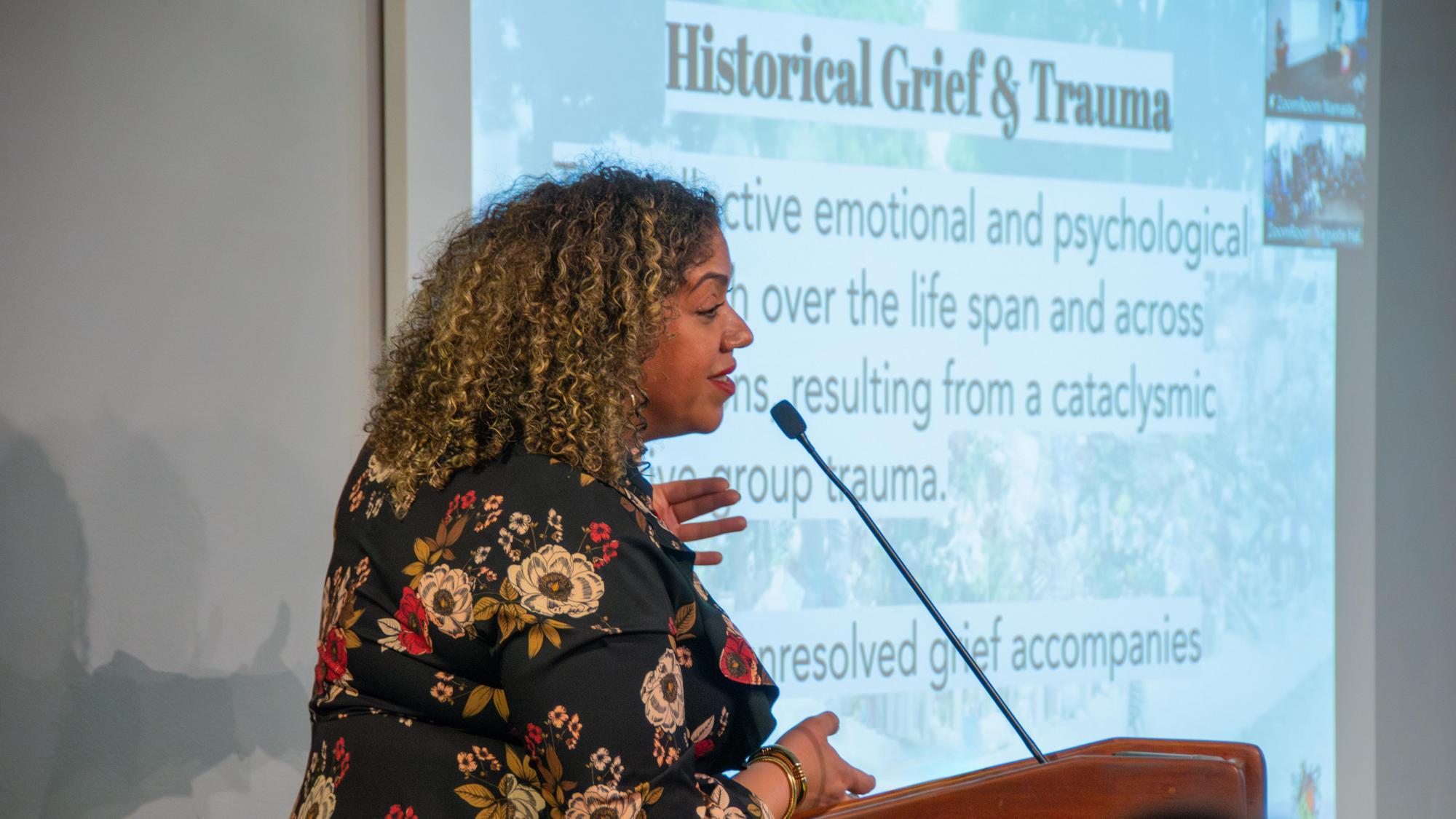
You want to contribute to a future that is more diverse and collaborative. Clinical psychology, for you, is not only about helping individuals in a room. It's about contributing to a larger shift — toward equity, toward collaboration, toward systems that serve more people more honestly.
You care about liberation. You understand that psychological suffering is shaped by oppression, and that clinical work that ignores this context is incomplete. Liberation psychology isn't an elective interest for you. It's foundational to how you think about healing.
You believe that positionality matters. You recognize that who you are — your social location, your identities, your history — shapes how you see, what you notice, and what you miss. You want a program that treats this awareness as a clinical skill to develop.
You believe that the therapeutic relationship heals. Techniques matter, but you sense that what makes therapy work is something deeper — the quality of presence, attunement, and trust between two people. You're drawn to a model of clinical training that takes the relationship itself as the primary instrument of change.
You're passionate about honing yourself as a clinical instrument. You understand that your own inner life, blind spots, and unfinished business will walk into every session with you. You want a program that asks you to do your own work in service of making you a more effective clinician.

You value the mind, body, spirit, and culture. You resist the reduction of a person to a diagnosis. For you, the psychological, the somatic, the spiritual, and the cultural are interwoven dimensions of a single life.
You're interested in holistic, integral practice. You're looking for training where coursework, clinical practicum, personal therapy, and contemplative practice are all part of the same formation.
You're ready to commit to a whole-person doctoral education. This program asks for your full presence and sustained commitment across several years of intensive clinical, academic, and personal development. You find that prospect energizing, not daunting.
You have an interest in complexity. Simple answers make you uneasy, because you know that human experience doesn't resolve into neat categories. You want a program that teaches you to sit with complexity rather than flatten it.
You honor the mystery of being human. After all the theory, all the research, all the clinical hours, something remains that can't be fully explained. You don't find that unsettling. You find it essential. A willingness to stay with mystery is part of what makes a CIIS-trained clinician different.
If several of these resonated, you may have found your program. The Clinical Psychology Psy.D. at CIIS trains psychologists who are as committed to depth, justice, and wholeness as they are to clinical rigor.

Join a community of forward-thinking psychologists in this unique Psy.D. program.
CIIS community comes together in haiku to remember the scents of their summer

Transpersonal psychology explores the full spectrum of human consciousness — spiritual, mystical, and transformative experience included — with empirical rigor, cultural humility, and a commitment to what actually helps people.
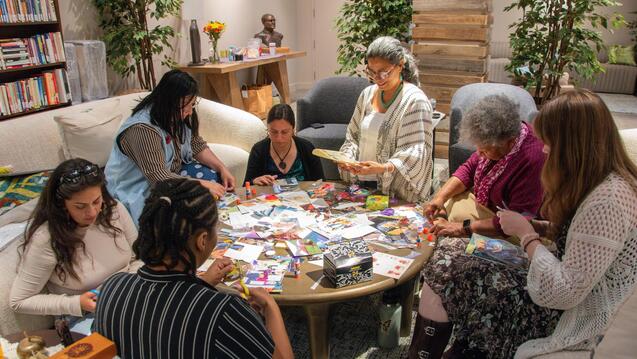
Beloved Community is built with ongoing practices that bring it fully to life.