
Campus News
Beloved Community is built with ongoing practices that bring it fully to life.
What are you looking for?

Transpersonal psychology explores the full spectrum of human consciousness — spiritual, mystical, and transformative experience included — with empirical rigor, cultural humility, and a commitment to what actually helps people.
At its core, transpersonal psychology is a whole-person approach that honors the full spectrum of human consciousness. It invites us to ask a profound question: What if our understanding of the human psyche extends far beyond what conventional psychology typically explores? This approach recognizes that our inner lives — mystical, spiritual, transformative — fundamentally shape who we are and how we engage with the world. Where traditional Western psychology often focuses on pathology and dysfunction, transpersonal psychology embraces the heights of human potential alongside the depths of suffering. It creates space for peak experiences, states of unity, creative breakthroughs, and moments of profound connection that many of us experience but that mainstream psychology has historically overlooked or pathologized.
Of course, plenty of disciplines study religion, meditation, or altered states. What distinguishes transpersonal psychology is a methodological commitment: to treat first-person experience as legitimate data without abandoning the standards of evidence that make a claim worth trusting.
Formally established in the late 1960s by psychologists Abraham Maslow, Anthony Sutich, and Stanislav Grof, this field draws from the wisdom traditions of both East and West, and includes contemplative practices, Indigenous knowledge systems, mystical traditions. Maslow described transpersonal psychology as the "farther reaches of human nature," positioning it as a "fourth force" in psychology that goes beyond the behaviorist, psychoanalytic, and humanistic approaches [1].
This synthesis allows researchers and practitioners to explore questions that lie at the heart of what it means to be human:
These are inquiries that touch the lives of millions seeking meaning, healing, and transformation.
Transpersonal psychology recognizes that we exist within interconnected webs of relationship. Our individual consciousness doesn't end at the boundaries of our skin: it extends into our families, communities, societies, and the living systems of Earth itself. From this perspective, personal transformation and collective healing become inseparable. When we work on ourselves, we contribute to the evolution of the larger systems we inhabit.
This ecological understanding shifts how we approach both research and practice. Rather than treating the individual as an isolated entity, transpersonal psychology invites us to consider how consciousness moves through and between us, how communities hold wisdom, and how our personal growth serves purposes larger than ourselves.
The implications extend far beyond academic theory. Transpersonal approaches inform diverse professional domains:
Practitioners trained in transpersonal psychology offer ways of working that acknowledge the full dimensionality of human experience. This includes the rational and the intuitive, the personal and the collective, and the scientific and the sacred. Therapeutic techniques may include meditation, mindfulness practices, guided imagery, breathwork, and creative expression, integrated with traditional counseling approaches.
The future of transpersonal psychology depends on scholars who can ask new kinds of research questions and develop methodologies that honor the complexity of consciousness itself. CIIS offers one of the few doctoral programs in the world dedicated to advancing this field. The Ph.D. in Psychology with a concentration in Integral and Transpersonal Psychology prepares scholars to contribute to this evolving discipline.
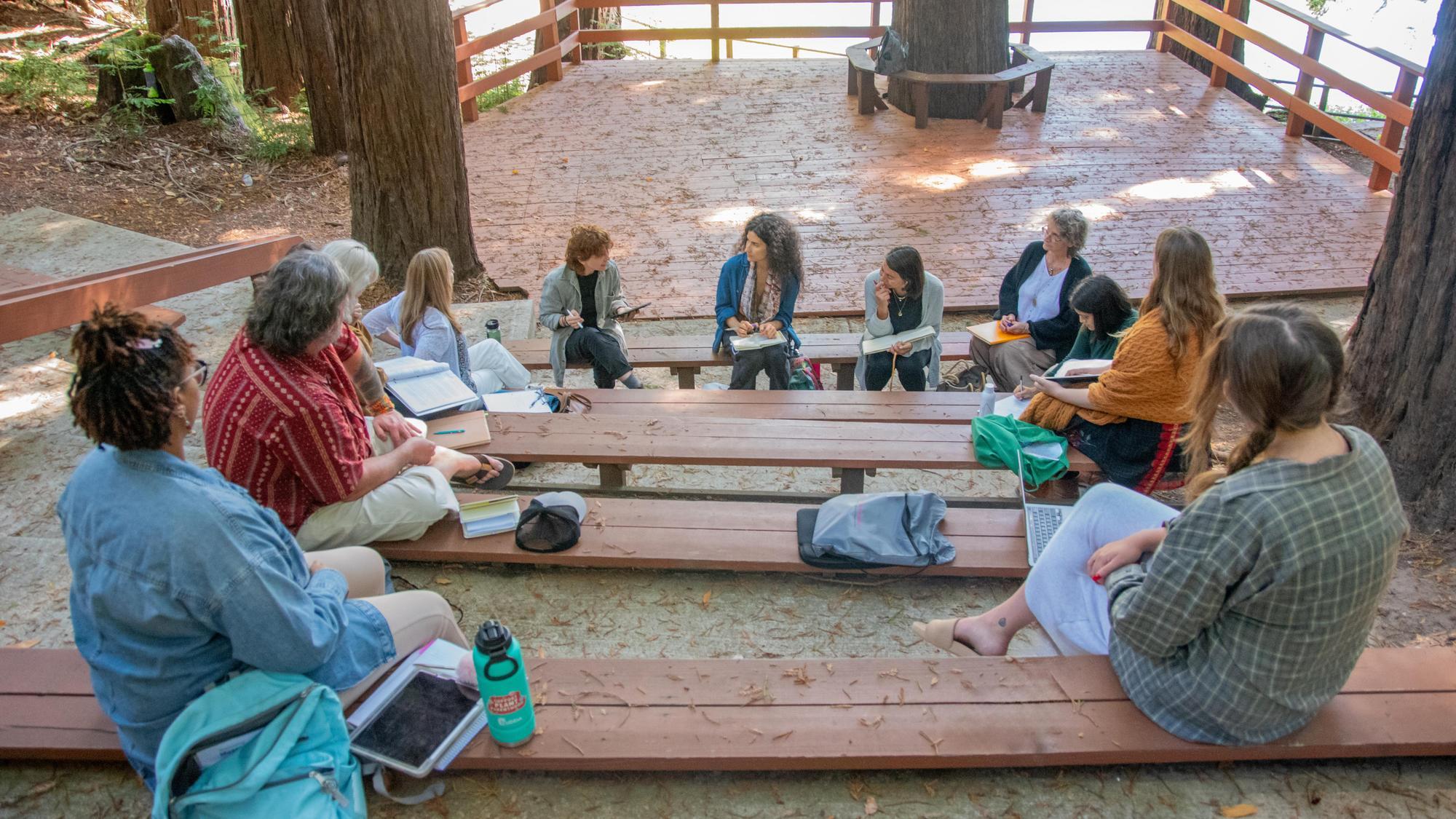
Students in this research-oriented program immerse themselves in the history, current issues, and future potentials of transpersonal psychology. They learn to work with transpersonal practices as sources of inquiry, developing expertise that can transform how we understand healing, growth, and human potential. This is scholarship in service to a more conscious, compassionate world.
As we face unprecedented global challenges, transpersonal psychology offers frameworks for addressing both the inner and outer dimensions of these challenges. It reminds us that transformation begins with consciousness itself — with how we perceive, how we relate, and how we imagine what's possible. In this way, transpersonal psychology isn't just a field of study. It's an invitation to participate in the ongoing evolution of human understanding.
[1] Maslow, Abraham H. 1969. "The Farther Reaches of Human Nature." Journal of Transpersonal Psychology 1 (1): 1–9.

Cultivating meaning and expanding scholarship in the psychological sciences
Beloved Community is built with ongoing practices that bring it fully to life.
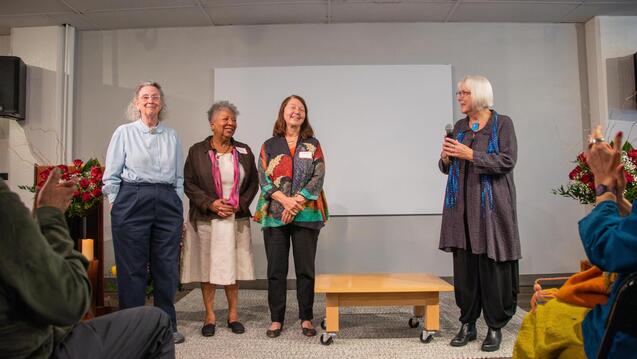
CIIS' Center for Psychedelic Therapies and Research celebrated its tenth anniversary with the people who built it and announced a new endowed scholarship.
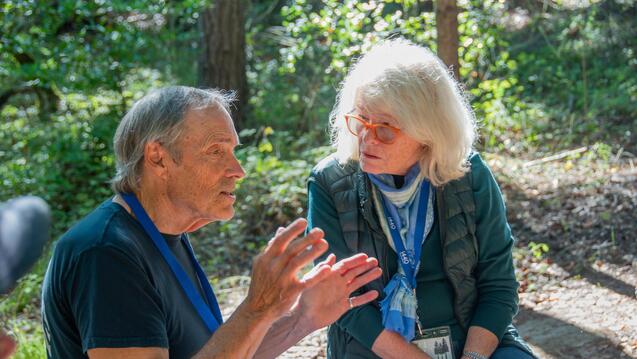
CIIS' Blue Sky Leaders program is built around a wager: that visionary leadership can be done with care, complexity, and contemplative depth.