Oct22
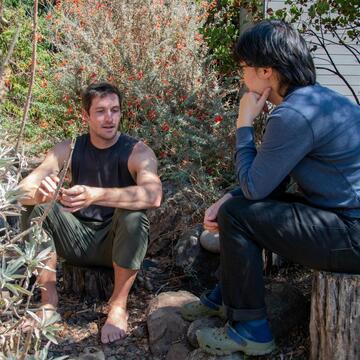
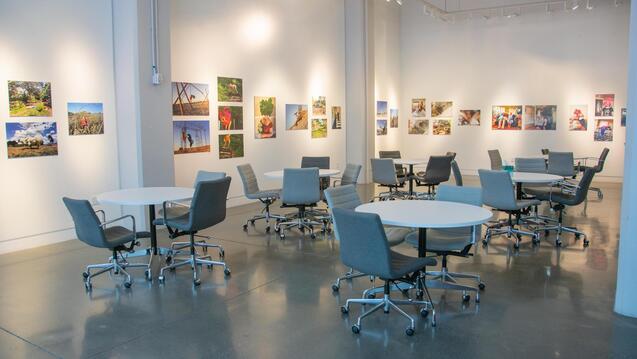
A new exhibition of nearly forty photographs by multidisciplinary artists Cara Judea Alhadeff and Emlyn Guiney.
What are you looking for?

A one-day hybrid (in-person and online) symposium open to the public, students, and colleagues in the counseling and clinical psychology fields.
A One-Day Symposium Sponsored by Department of East-West Psychology and Asian Contemplative and Transcultural Studies.
As the United States enters its 250th year as a nation, the country finds itself at a psychological, cultural, and planetary crossroads. At a time of political polarization, contested narratives, war, and intensifying ecological and social crises, the question of what constitutes the soul of the United States of America is urgent and needs to be explored from multiple directions.
At this historic turn, The Soul of a Nation Symposium seeks to illuminate the dynamics shaping America’s evolving identity through wisdom traditions and psychological perspectives. This symposium asks: What might the US become if we center psychological and spiritual wisdom in our collective evolution? What might become possible, when we reflect on the nation not solely through political, social or economic frames, but through psychological and spiritual lenses, including imagination, compassion, interdependence, indigenous awareness, and the evolution of consciousness?
This one-day symposium features scholar-practitioners sharing multidimensional perspectives on what is striving to emerge in the psyche of the United States of America and how to participate in its emergence.
Breakfast and dinner included with in-person ticket.
| Sessions | |
|---|---|
| 9:30am-10:00am | Refreshments |
| 10:00am-10:30am | Introductory Remarks Debashish Banerji and Sara Granovetter |
| 10:30am-11:45am | Depth Psychological Reflections Speakers: Stephen Julich, The Magic Circle and the True Center: The Mandala of America Helge Osterhold, Individuation in the Techno-Psychic Field: American Consciousness at 250 Moderator: Sara Granovetter |
| 11:45am-12:00pm | Break |
| 12:00pm-1:15pm | Asian Wisdom Traditions Speakers: Debashish Banerji, Religious Pluralism in Premodern India as a Model for Contemporary Nation-making Jun Wang, Laozi’s wisdom on “Governing a large country is like cooking a small fish.” Moderator: Adrian Villasenor-Galarza |
| 1:15pm-2:15pm | Lunch Break(on attendee’s own) |
| 2:15pm-3:30pm | The Ecological Dimension Speakers: Adrian Villasenor-Galarza, Dreaming Earth: Envisioning a Blossoming Nation Sara Granovetter, The Domestication of the Wild: Winnicott and the Ecology of Freedom Moderator: Ishtar Kramer |
| 3:30pm-3:45pm | Break |
| 3:45pm-5:00pm | Decolonial and Posthuman Perspectives Speakers: Ishtar Kramer, From the Anthropocene to a Collaborative Re-worlding Debashish Banerji, East-West and North-South: Decoloniality and Posthumanism Moderator: Jun Wang |
| 5:00pm-5:30pm | Concluding Community Activity: Ishtar Kramer |
| 5:30pm-7:00pm | Dinner (provided for all in-person attendees) |
Debashish Banerji
Debashish Banerji is the Haridas Chaudhuri Professor of Indian Philosophies and Cultures and the Doshi Professor of Asian Art at CIIS. He is also the Program Chair for the East-West Psychology department. Prior to CIIS, he served as Professor of Indian Studies and Dean of Academics at the University of Philosophical Research, Los Angeles. He has taught as adjunct faculty at the Pasadena City College, University of California, Los Angeles and University of California, Irvine. His interests lie in postmodern, postcolonial and posthuman approaches to Indian philosophy, psychology and culture. Banerji has curated close to fifteen exhibitions of Indian and Japanese art. He has authored and edited around ten books and art catalogs on major figures of "the Bengal Renaissance" such as the Indian poet Rabindranath Tagore, the artist Abanindranath Tagore and the spiritual thinker Sri Aurobindo; on Critical Posthumanism, Yoga Psychology and on a variety of creative and art-related projects. His most recent books are the monograph Meditations on the Isha Upanishad: Tracing the Philosophical Vision of Sri Aurobindo (Sri Aurobindo Samity and Maha Bodhi Publishers, 2019) and Philo-Sophia: Wisdom Goddess Traditions, co-edited with CIIS emeritus President, Robert McDermott. More updated information on his talks, publications and other academic activities may be found at his website www.debashishbanerji.com.
Helge Osterhold
Dr. Helge Osterhold is a psychotherapist and integrative educator. Teaching graduate-level psychology courses since 2006, he joined East-West Psychology’s core faculty in 2017. He offers courses in Jungian Psychology, Archetypal Psychology, Dreamwork, Spiritual Counseling, and the Psychology of Death and Dying. Dr. Osterhold’s theoretical and clinical orientation includes depth, transpersonal and humanistic-existential psychologies with a special appreciation for systemic thinking, indigenous wisdom, and multiculturalism. For 10 years, Dr. Osterhold served at the University of California San Francisco - in pediatric palliative care and as an educator and program director on mindful caregiving and clinician resiliency at UCSF Children's Hospital and faculty at UCSF School of Medicine. Originally from Germany, he pursued higher education in California, earning a B.A. in Human Relations, M.A. in Integral Counseling Psychology, and Ph.D. in East-West Psychology. He is a licensed psychotherapist and maintains a depth-oriented private psychotherapy practice with a focus on life transitions.
Stephen Julich
Stephen Julich is Core faculty in East-West Psychology at the California Institute of Integral Studies, specializing in Western Esotericism and Jungian Studies. Dr. Julich has worked as an adjunct instructor in History and Anthropology at the City College of New York, as a lecturer in Jungian Studies at the University of Philosophical Research in Los Angeles, and as an adjunct instructor in East-West Psychology at the California Institute of Integral Studies. Currently, he teaches classes on mysticism, the Western magical traditions, subtle beings and worlds, the religious imagination, and the work of Jungian analyst Marie-Louise von Franz. His areas of interest are the psychology of myth, dream, and symbol, and the place of the imagination in the generation and transformation of religious forms and ideas. His current research is in magic and mysticism as cross-cultural phenomena with a special emphasis on contemporary trends.
Sara Granovetter
Sara is an integral educator and contemplative depth psychotherapist who draws on the teachings of the nonhuman world to support emancipation from destructive patterns conditioned by dominant culture. Sara joined the faculty of the East-West Psychology department in 2021, with courses including Spiritual Counseling II, Research Methods I, Ensouled Animal Studies, Jung and Nature, Zen and Nature, and courses in Ecopsychology. Sara received her bachelor's degree in Philosophy from Harvard in 2002, and her M.A. and Ph.D. from California Institute of Integral Studies, in Integral Counseling Psychology and East-West Psychology, respectively. In Sara's clinical and academic practice, she weaves together ecopsychology, psychoanalysis, Jungian and archetypal psychology, somatics, posthumanism, re-wilding, and Buddhist-informed transpersonal psychology. Sara's research, including her recent article, Wild Otherness Within: A Jungian and Zen Approach to the Untamed Self in the Ten Oxherding Pictures, deconstructs traditional hierarchies across traditions, offering posthuman and trauma-informed understandings of self and society. Sara's research and pedagogy are deeply rooted in her longtime practice of Zen Buddhism, and she is committed to mindful, experiential, and multi-modal learning.
Jun Wang
Dr. Jun Wang holds a Ph.D. in Anthropology from the University of North Carolina at Chapel Hill, and a Doctorate degree in Traditional Chinese Medicine from Capital University of Medical Sciences in Beijing, China. A committed practitioner of embodied contemplative arts-- including Qigong, Taiji quan, meditation, and guqin music-- Jun embraces a scholar-practitioner approach. Since joining East-West Psychology’s core faculty in 2021, she has taught courses in body-mind healing systems, Daoist philosophy and life cultivation, Buddhism and meditation, and Chinese philosophy and psychology. Jun’s earlier career focused on interdisciplinary research in integrative and alternative medicine, and teaching in the Holistic Health Studies program at San Francisco State University. Funded by the NIH, she collaborated with UCSF researchers and Asian communities in the Bay Area for ten years to promote health equity and wellbeing. She also held leadership roles at two of the oldest Acupuncture colleges (ACCHS in Oakland and ACTCM in San Francisco), and advocated for the establishment of doctorate degrees in acupuncture schools. From 2015 to 2020, Jun served as co-Chair of the Traditional and Complementary Medicine (TCM) Research Group, conducting several Asian community-based collaborative health projects.
Adrian Villasenor-Galarza
Adrián Villaseñor Galarza, Ph.D., is passionate about human transformation in service of the living Earth. He is Core Faculty in the East West Psychology Department at CIIS and Adjunct Faculty at Naropa University. He has been engaged in transformative education for over 17 years and has offered individual counseling for the last nine, based on a contemplative, eco-systemic, animistic, and transpersonal approach. His work is often considered a Latin American referent when it comes to Nature Reconnection, Ecopsychologies, and Earth-based spirituality. Adrián's an integral ecopsychologist, international facilitator, contemplative teacher, author, and ritualist whose work weaves the psycho-spiritual study of the Earth-human relation, animist principles, and contemplative wisdom. He’s the founder and director of the Bioalchemy Institute and the Work That Reconnects Latin America, author of a few books in Spanish and English, editor of the first anthology on the applications of the Work That Reconnects in Latin America, and translator of Joanna Macy’s seminal book, Coming Back to Life: The Updated Guide to the Work That Reconnects. The contemplative and Earth-based lineages of beauty, wisdom, and compassion he has honored since his teens serve as the guiding force behind his service toward personal transformation and socio-ecological viability.
Ishtar Kramer
Dr. Ishtar Kramer joined the East-West Psychology Program as core faculty in 2016. Prior to that Ishtar taught as adjunct faculty for the program, and as well taught at Naropa University. As a scholar/activist, spiritual seeker and aspiring decolonial educator whose vision is aligned with the praxis of decoloniality and relationality, Ishtar’s integral transformative pedagogy coalesces at the intersections of decolonial depth psychology, earth based psychospiritual midwifery, embodied liberatory pedagogy, contemplative traditions, anti-racist pedagogies, Jungian dreamwork and storytelling. In response to the wound of modernity, Ishtar seeks ways to unsettle and disrupt the ontological war against life, by designing, participating, collaborating and creating spaces where decoloniality can truly happen. Ishtar aspires to support the process of un-learning and un-doing, such that students can re-store and re-story their own narratives, exploring relational ontologies which emphasize and support ways of being and reciprocity that sustain flourishing lifeways amongst all beings.
| Registration Type | In-Person | Online |
|---|---|---|
| Reduced Rate | $11.49 | N/A |
| General Admission | $21.99 | N/A |
| Generosity Rate | $32.49 | N/A |
| Livestream Ticket | N/A | $11.49 |
Full refunds issued with 7 days advance notice.
For any questions, please reach out to events@ciis.edu.
A new exhibition of nearly forty photographs by multidisciplinary artists Cara Judea Alhadeff and Emlyn Guiney.

The Inaugural Book Launch Celebration of Women’s Spirituality Studies Press