
M.A. in Ecology, Spirituality, and Religion
Learn to articulate your voice for Earth in a community of scholars and activists
Program Overview
Our Approach
The Master of Arts in Ecology, Spirituality, and Religion program empowers students to explore how religions, spiritualities, and philosophies can address today’s socio-ecological crisis. Through a transdisciplinary approach, students gain the skills and knowledge to reimagine and transform practices, worldviews, and lifeways supporting a more just and flourishing future for human and more-than-human communities.
Offered fully online, this program emphasizes an approach that integrates contemplative practice, social justice, and rigorous scholarship. Students join an engaged learning community where faculty and peers examine ecological issues from perspectives in religious studies, philosophy, environmental humanities, social sciences, and environmental policy. Motivated by deep concern for the Earth, they work together to cultivate creative solutions and transformative actions for our shared future.
Career Paths
Our graduates are well-prepared to pursue careers that bridge ecological and spiritual concerns. Some enhance their current roles; others create entirely new paths. Alumni have found purpose-driven work in areas such as:
- Teaching, publishing, and conducting research in academic institutions and non-academic settings
- Founding or contributing to nonprofit, governmental, and non-governmental organizations
To explore career pathways and learn more about Ecology, Spirituality, and Religion graduates, visit the Impact page.
Curriculum
Over the course of the program, students become familiar with one or more religious traditions that resonate with them, as well as one or more specific ecological issues. After developing the ability to navigate the epistemological challenges in studying religion and ecology and the various approaches to the philosophy of religion, they will embark on creating a capstone experience — rather than a thesis — that integrates their many insights.
Featured Courses
- Ecology in a Time of Planetary Crisis
This course provides a broad overview of the human imbrication in planetary systems, through an examination of critical planetary issues in the Anthropocene, including climate change, biodiversity loss, marine and freshwater pollution, and globalization. - Theory and Method in the Integrative Study of Religion and Ecology
This course studies the theoretical and methodological lenses that allow rigorous, imaginative, and sympathetic engagement from the diverse fields represented in the Ecology, Spirituality, and Religion concentration. - Indigenous Lifeways and Ecology
This course will take a cross-continental and culturally comparative approach to explore the unique environmental perspectives Indigenous communities and their diverse traditions offer through land-based practices rooted in social, cultural, and spiritual relationships to geography and place.
-
Year One (18 units)
PAR 6078 Theory and Method in the Integrative Study of Religion and Ecology (3 units)
PAR 6079 Ecology in a Time of Planetary Crisis (3 units)
One Religion course (3 units) Options may include:
PARP 6532 Christianity and Ecology
PARP 6563 Buddhism and Ecology
PAR 6483 Hinduism and Ecology
PARP 6538 Krishna, Buddha, and Christ
PARW 6548 Women and World Religions
One Philosophy course (3 units) Options may include:
PARP 6403 Spirit and Nature
PARW 7006 Women Philosophers, Mystics, and Wisdom Teachers
PAR 6071 Philosophy and Ecology: Toward a Green Metaphysics, Phenomenology, and Epistemology
PAR 6089 Myth, Imagination, and Incarnation: Barfield, Tolkien, Lewis, and the Oxford Inklings
PAR 6472 The Colors of American Philosophy: Pluralism, Pragmatism, and Political Transformation
General Electives (6 units) Students may choose from any course in the School of Consciousness and Transformation
Year Two (18 units)
PARP 6533 Touch the Earth: Ecology Practicum (3 units)
PARP 6897 Integrative Seminar (3 units)
One Religion Course (3 units, same tradition as first year)
One Ecology Course (3 units) Options may include:
PARP 6522 Science, Ecology, and Contested Knowledge(s)
PARP 6523 Environmental Ethics
PARP 6525 Toward an Integral Ecological Consciousness
PAR 6292 Next of Kin Perspectives on Animal Ethics and Biodiversity
PARP 6278 Integral Ecologies
One Feminism, Globalization, and Justice Course (3 units) Options may include:
PARW 6428 Ecological Consciousness and Climate Justice
PARW 7002 Ecofeminist Philosophy and Activism
PARW 6419 Transformative Philosophies of Justice: Local and Global Perspectives
PARW 6425 Gender, Power, and Spirit in Indigenous Cultures
PARP 6431 Martin Luther King Jr.—Justice, Cosmology, and Interconnection
General Electives (3 units) Students may choose from any course in the School of Consciousness and Transformation

Entry Requirements
Applicants with a variety of backgrounds will be considered, provided the applicant possesses demonstrated interest in the subject matter of the concentration, and strong writing, analytical, and critical thinking skills developed during undergraduate study at an accredited institution.
Required Application Materials
Your application is your opportunity to share who you are. To be considered essays and written responses must be your own authentic work.
Online Admissions Application: Begin the application process by submitting an online application and paying the non-refundable $68 application fee.
Degree Requirement: A bachelor’s degree from an accredited college or university.
Minimum GPA: A GPA of 3.0 or higher in previous coursework is required. However, a GPA below 3.0 does not automatically disqualify an applicant and CIIS will consider a prospective student whose GPA is between 2.0 and 3.0. These individuals are required to submit a GPA Statement and are encouraged to contact the Office of Admissions to discuss their options.
Transcripts: Official transcripts from all accredited academic institutions attended where 7 or more credits have been earned. Transcripts may be sent digitally to materials@ciis.edu or mailed to CIIS in their official, sealed envelope. Transcripts from institutions outside the U.S. or Canada require a foreign credit evaluation through World Education Services (WES). CIIS will also accept foreign credential evaluations that are in a comprehensive course-by-course format from the current members of the National Association of Credential Evaluation Services (NACES).
Statement of Purpose: A four-to-six-page (typed, double-spaced) statement of your educational and professional objectives, including any significant biographical events that directly influenced your decision to apply to this program. The statement should further demonstrate familiarity and alignment with the program's objectives. Lastly, the statement should also articulate what you hope to gain from your time in the program and, if appropriate, how your time in the program relates to your long-term personal and professional aspirations.
Academic Writing Sample: A writing sample of eight-to-ten pages that demonstrates your capacity to think critically and reflectively and demonstrates graduate level writing abilities. A sample that uses outside sources must include proper citations. You may submit copies of previous work, such as a recent academic paper, article, or report that reflects scholarly abilities.
Two Letters of Recommendation: Letters of recommendation should ideally be from professors who can attest to your scholarly writing and research abilities. If you are not able to obtain two letters from faculty, one of the letters can be from an academic advisor or professional supervisor. Recommenders should use standard business format and include full contact information (name, email, phone number, and mailing address).
Events and Info Sessions
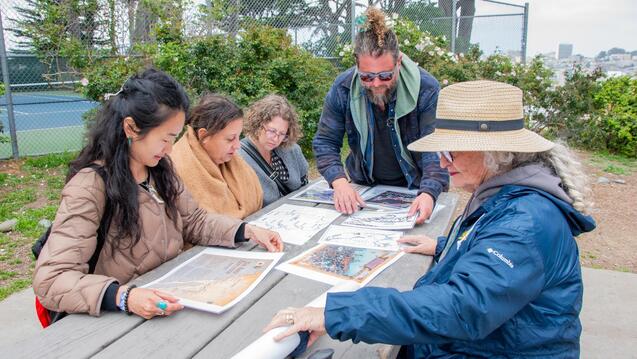
A Faculty-Led Info Session with Elizabeth Allison
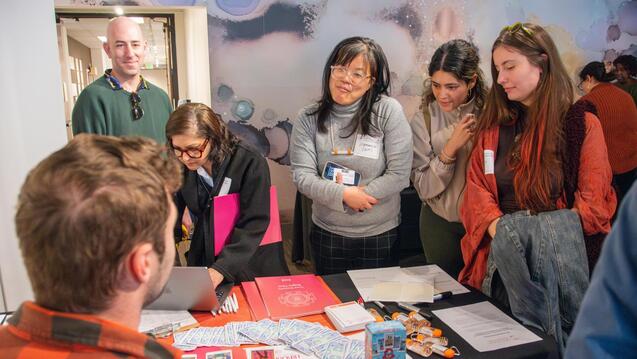

Attend the Fall Open House to get to know your admissions counselors and learn more about CIIS' bachelor's, master's, and Ph.D. programs.



Take the Next Step
For over 50 years, CIIS has been at the forefront of education that integrates rigorous science, innovative scholarship, and social justice. You will learn from faculty at the forefront of their fields, local artists and activists, and a community of peers as passionate and dedicated as you. There’s never been a better time to be here – let’s build a healthier and more equitable world.