

Campus News
CIIS community comes together in haiku to remember the scents of their summer
What are you looking for?
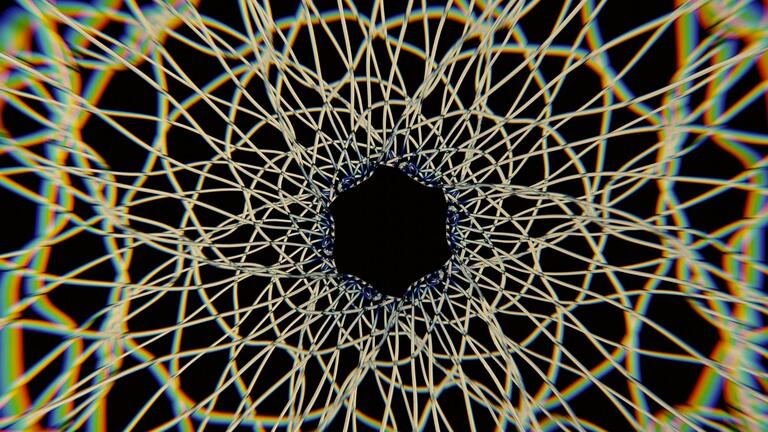
Complex thought equips researchers to navigate uncertainty, cross disciplines, and generate scholarship that meets the scale of today's challenges.
The world is not simple. Its problems are pressing and intertwined: economic need, environmental defense, spiritual and social change. These are a mosaic of concerns, each piece interlocking. With such an overwhelm of factors, it can be tempting to choose a single element to focus on. It can sound appealing to simplify and reduce until there is only the smallest, most manageable fragment – but then the larger whole is lost.
At the Transformative Studies department at CIIS, students don’t just pick out one piece to examine. They study the whole picture. And in that way, they can see connections – and solutions – that others can miss. The foundation for this way of seeing is complex thought.
Complex thought is a way of orienting to knowledge through flexible, mutually supportive frameworks. Rather than asking "what caused this?" as if a single variable held the answer, complex thought invites researchers to map the intricate web of interconnected factors at work: historical, structural, cultural, and ecological.
Complex thought does not stay within the boundaries of a single field. It actively draws on and bridges diverse theoretical frameworks and methodologies: systems thinking, postcolonial theory, ecological science, philosophy of mind, Indigenous knowledge systems. This is not eclecticism for its own sake. It reflects the recognition that the most significant research questions cannot be adequately addressed from within any one discipline.
This interdisciplinary synthesis is also generative. When researchers bring different intellectual traditions into genuine dialogue, they produce frameworks that none of those traditions could have arrived at alone. Community support, rather than competition, is the goal. Researchers who bring this orientation to their work are producing scholarship that is more rigorous, more responsive, and more attuned to the world.
Every field carries assumptions that have calcified into orthodoxy. Complex thought invites researchers to vigorously question those assumptions. Leading scholarship from Indigenous, BIPOC, and Global South thinkers has been particularly important here, offering conceptual resources that challenge dominant Western academic frameworks and open up genuinely new ways of understanding social change, ecological relationship, and human possibility.
One of complex thought's defining characteristics is its capacity to remain productive in the presence of uncertainty. Social science and humanities research routinely encounters data that resists easy interpretation. Researchers trained in complex thought experience this as the actual nature of the work. This stance requires intellectual humility, self-examination, and a willingness to seek collaboration. Cultivating these traits can be difficult, but the process is enormously generative. By holding multiple variables, perspectives, and time horizons in view simultaneously, researchers are better positioned to develop genuinely creative approaches to design, methodology, and interpretation. They are also better equipped to anticipate the broader implications of their findings, including consequences that were not intended and effects that may only become visible in different contexts or at different scales.
This capacity for foresight matters especially when research aims at real transformation, when scholars are not simply describing the world but contributing to efforts to change it. When studying sensitive social issues or working across communities with different relationships to academic institutions, researchers face real questions about power, representation, and responsibility. Complex thought insists that these questions are central to the research process.
Complex thought is, in this sense, the engine of scholarship's evolution. Not because it offers a fixed methodology, but because it sustains the kind of deep, honest, generative inquiry that keeps a field alive.
For researchers who want to work at this edge, CIIS’ Ph.D. in Transformative Studies is one of the few programs in the world explicitly designed around these questions. The program draws from complex thought, real utopian studies, degrowth, and scholarship from Indigenous, BIPOC, and Global South traditions to prepare scholars who can ask genuinely new kinds of research questions. The emphasis is not on mastering a fixed body of knowledge, but on cultivating the kind of mind that can meet problems that don't yet have solutions. Adaptive, creative, and curious, these are the scholars who are ready to build the future.

Join a community of passionate scholars exploring innovative ways to make a difference in the world through our online Ph.D. program.
CIIS community comes together in haiku to remember the scents of their summer
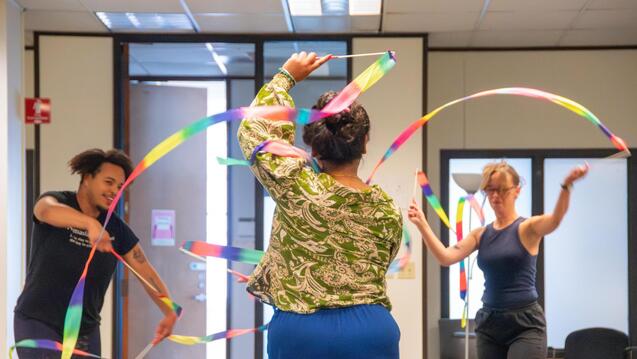
Associate Professor Helena Vissing describes a program where students don't just study somatic psychology — they practice it from day one.
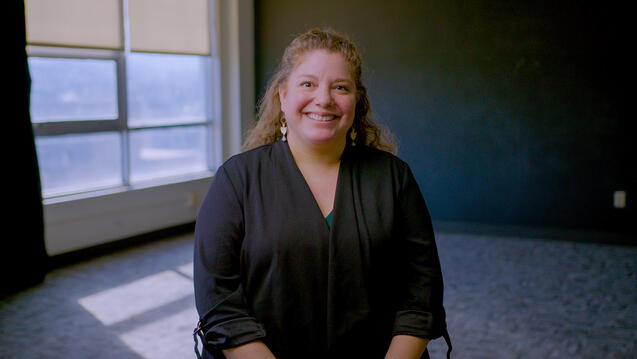
Associate Professor Sara Salazar shares how CIIS’ B.A. in Interdisciplinary Studies creates space for students who have started and stopped their degrees to finally complete on their own terms.