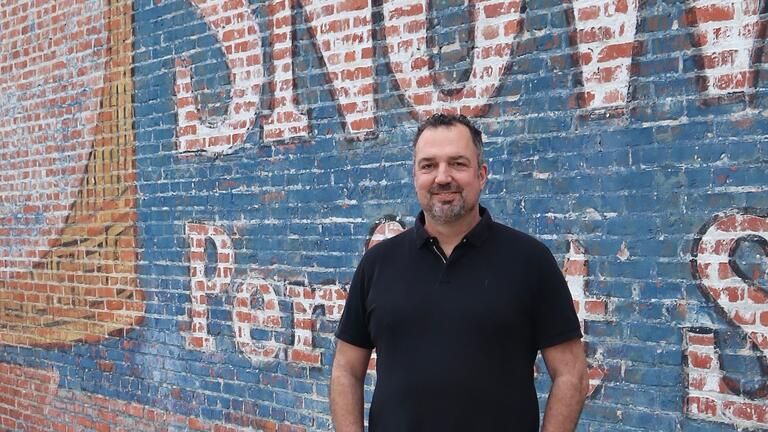
Photo of Alex Burger, Senior Adjunct Lecturer in the Interdisciplinary Arts Department
Photo of Alex Burger, Senior Adjunct Lecturer in the Interdisciplinary Arts Department
Faculty News
Teaching What You Can't Figure Out: A Conversation with Alex Burger
Playwright and activist Alex Burger brings his global experience into the CIIS MFA classroom, teaching art as transformation, and crisis as creative fuel.
December 4, 2025
Alex Burger doesn't believe in teaching from a place of certainty. The Senior Adjunct Lecturer in CIIS' MFA in Arts & Writing program spends most of his time "gobbling up the world"—developing a film in South Africa, theater in London, or televisions projects in Hollywood, and working in international development across three continents. When he returns to the classroom, he brings questions rather than answers, inviting students into the impossibility of figuring things out together.
Since joining CIIS in 2018, Alex has taught courses ranging from screenwriting to pedagogy to storytelling, always with the same underlying commitment: freeing minds from the prisons we create around who we and other are and could be. His approach to integral education is both deeply personal and urgently political, rooted in decades of work for racial justice and a belief that art-making should involve crisis, transformation, and the reckless crossing of boundaries. Alex's approach to teaching—rooted in lived experience, committed to transformation, and unafraid of difficult questions—embodies the kind of integral education CIIS has pioneered since 1968. Our MFA in Arts & Writing brings together artists, activists, and seekers who believe that creative practice can change both the self and the world.
Can you describe your creative practice and work as a faculty member at CIIS?
I adore teaching, but I only do it part time because most of the time I'm engaged in the world as an artist and international development practitioner in Africa, Asia, and Europe. I feel the same way about teaching—I want to be experiencing the world to have something to come back and talk to my students about. A writing mentor once said "write all morning and whore around all afternoon so you have something to write about the next day."
I'm currently working on a play in London "The Crusaders", about global capitalists who travel to India to build a dam and are met with local opposition then encounter a series of ghosts, including Mansa Musa, the 13th-century King of Mali and wealthiest man in history. I’m also about to return to Hollywood for a spell with three TV shows in progress: "I Killed King", a murder mystery; "The Campaign", about a campaign to improve the image of African Americans; and "Reparation City", a Scooby-Doo investigation of systemic racism.
Image
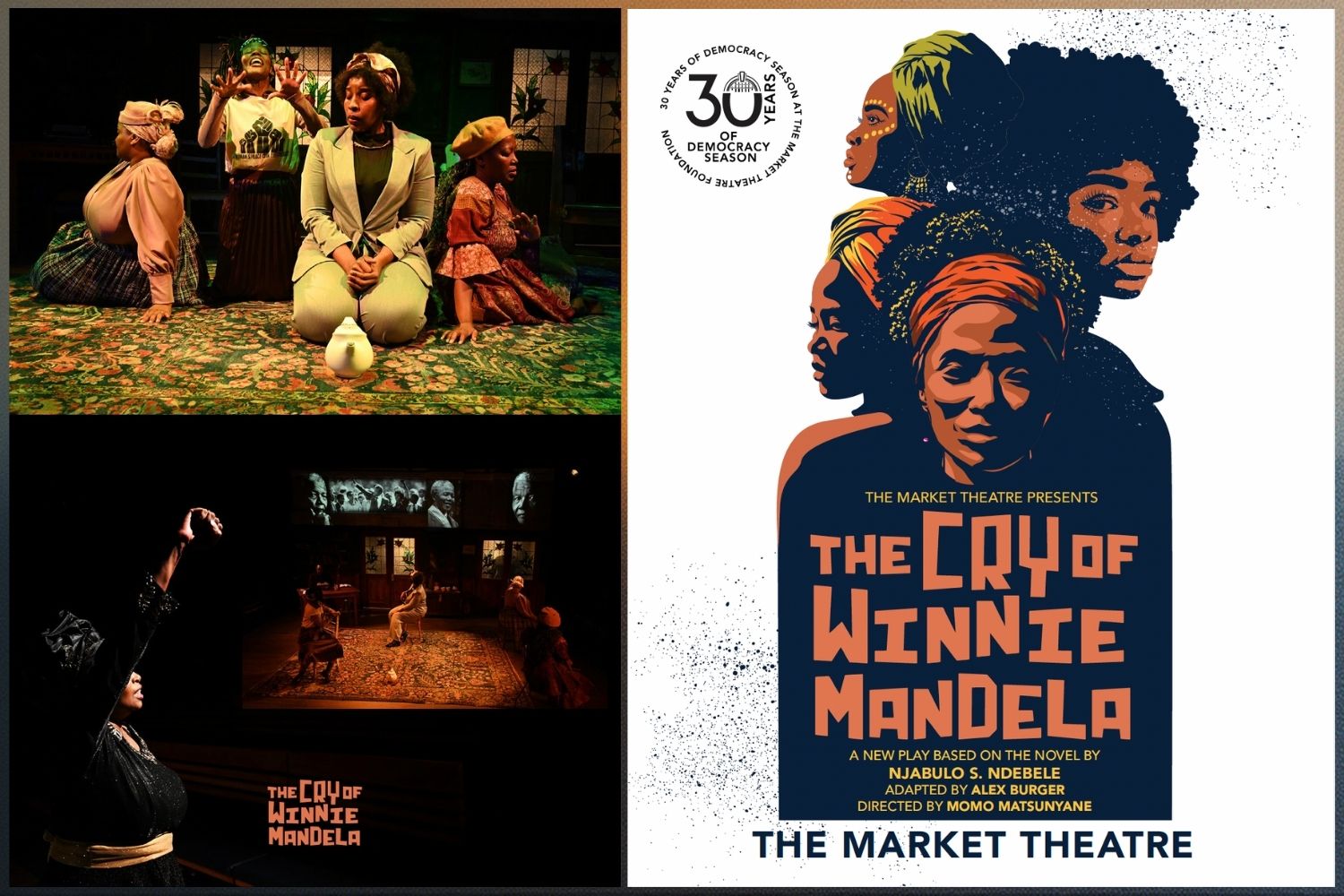
A two-photo collage from The Cry of Winnie Mandela, featuring scenes from the play and the official poster.
I'm most proud of my recent play "The Cry of Winnie Mandela", which had four runs in South Africa in 2024 and 2025 and is now planning European and U.S. tours. The play is about four Black women who question their lives as they sit waiting for their husbands—as Winnie did. When women came to see the play they said again and again "This is my private life, but I’ve never seen it voiced in public before." Hearing this, we knew we had really accomplished something. These journeys aren't separate from my teaching—they're the substance of it.
You've developed a unique pedagogical approach. Can you describe how you see integral education?
I believe in the dictum "you can only teach what you need to learn." I'm best at teaching what bothers me, what I can't yet articulate to myself. Why not invite a group of students to together help figure out a set of impossible questions? I can think of nothing more delicious.
My approach is therefore: how do I help me and others to free our minds? How can we imagine possibilities we hadn't before?
How does this manifest in your classroom?
I learned to facilitate in training as a therapist and through extraordinary mentors in my twenties working for racial justice in Alabama. My dear friend and mentor Jack said to me once, "If you don't walk into a room loving everyone in there, you have no business facilitating." He is absolutely right.
What kinds of transformations do you observe in students over the course of your classes?
A few years back we did a panel on "the crisis of art making", and our thesis was that the creation of any work of art should involve a crisis—or two! In fact, I began to believe that the most our students in the MFA could hope for was to come into the program thinking they knew their work and their art, to welcome a crisis that inevitably comes with deep work, and then to leave the program changed, as a more authentic version of themselves.
I have to remember this in my own work—that I'll feel really good and think I've reached the top of a mountain, only to arrive and watch the earth shift under me and realize my map was all wrong, and I'm actually on a different journey. Oh, that we should learn to rejoice in these transformations!
That sounds challenging. How do students respond?
I sometimes hear appreciations, that I pushed students to think and imagine in new ways. I certainly hear and invite dialogue and disagreement—"I'm not right!" I say over and over. I sometimes have students who push back really hard. One student stormed out of the room when I told her that her plan to make money by writing a bestselling novel in the next two years wasn't sufficient. She later came back, hugged me, and said that was actually the truth she needed to face.
You can only teach what you need to learn. I'm best at teaching what bothers me, what I can't yet articulate to myself. Alex Burger, Senior Adjunct Lecturer, Interdisciplinary Arts
What kinds of conversations are happening in your classroom right now that feel particularly urgent?
How can art save us and serve as a form of resistance at this critical moment? That's the question we keep returning to.
What skills do you think are essential for artists working today?
Critical distance—the ability to see one's own thoughts, feelings, and actions from a distance. A curiosity to learn and devour what others have done—they've been here before! And the vitality of connection.
What advice would you give to incoming or current students?
Come for the art. Drop yourself in. Create with every fiber of your being.
And have a way to put food on the table, a roof over your head, friends an arm's reach away. We all need bread, blood, and poetry, to quote Adrienne Rich.
Looking ahead, what do you see as the future of integral education?
Genius involves recklessly crossing boundaries—what can we learn from those who are most different from us? With those whom we disagree with most? From and with those to which our humanity is bound?
Genius involves recklessly crossing boundaries—what can we learn from those who are most different from us? Alex Burger, Senior Adjunct Lecturer, Interdisciplinary Arts
Alex Burger teaches Narrative Arts in the MFA in Arts & Writing program. Learn more about his work at alexburgerart.com.
Discover Your Path at CIIS
This teaching philosophy—rooted in lived experience, committed to transformation, and unafraid of difficult questions—embodies the kind of integral education CIIS has pioneered since 1968. Our MFA in Arts & Writing brings together artists, activists, and seekers who believe that creative practice can change both the self and the world.