

Doctor of Clinical Psychology
Our unique postconventional program provides a pathway to licensure as a clinical psychologist while maintaining our commitment to our integral embrace of body, psyche, soul, spirit, culture, and society.
Program Overview
Our Approach
Steeped in depth psychology, the Clinical Psychology Psy.D. program values complex thinking, respect for the unconscious, and a welcoming of multiple perspectives. We emphasize deepening development, expanding worldviews, and ongoing spiritual awakenings that allow for therapeutic presence, care, responsiveness, and change. Our unique curriculum is built on three foundational pillars that center on contemporary psychodynamic theory, a strong social justice orientation, and humanistic, existential, and transpersonal perspectives:
1. Contemporary Psychodynamics
Grounded in the philosophical foundations of psychoanalytic thought, our program emphasizes multiple depth psychological perspectives, the personal and social dimensions of the unconscious, radical and critical approaches to psychodynamic psychotherapy, and the importance of the therapeutic relationship in change and transformation.
2. Humanistic, Existential, and Transpersonal Perspectives
Our program recognizes and teaches transpersonal, postconventional levels of practice, personal and social development, engaging with the world with the understanding that we are not only mind and body, but also soul and spirit.
3. Social Justice
Our program takes a social justice stance by recognizing, critiquing, and deconstructing systems of power and oppression. We explore race, class, gender, and sexuality, and center dialectics of cultural attunement and humility, rupture, and repair. Students engage through meaningful connection, thoughtful curiosity, assessment of intersectionalities, receptive openness, and the appreciation of sameness and differences.
Unique Within the Field
In a field dominated by short-term, standardized treatment and a dogmatic adherence to behavioral approaches, our program stands out as unique. We believe in the importance and efficacy of a depth-oriented approach to psychotherapy by considering social, cultural, and political factors.
Our postconventional program provides a pathway to licensure as a clinical psychologist in private practice, while maintaining our commitment to the integral embrace of body, psyche, soul, spirit, culture, and society and integrating the conscious and the unconscious for healing, growth, and wholeness. As a non-APA accredited program, we are not limited by the American Psychological Association’s narrow view of the field of psychology and what makes an effective good psychologist.
Career Paths
The Clinical Psychology Psy.D. program trains students to become resourceful and integrative clinicians. They become skilled in the application of theories and interventions, capable in client assessment and diagnosis, and able to contribute scholarship that contributes to the growing psychological field. Graduates have a strong grasp of human differences and understand the deconstruction of the dynamics of power, privilege, and oppression. Our extensive theoretical and practical opportunities prepare students for successful careers after they graduate. Some of these experiences include:
- Comprehensive preparation for California licensing exams
- Training and experience in clinical intervention modalities
- Expertise in current assessment and diagnostic techniques
- Learned skills in designing and conducting research in a range of clinical topics
- Practical knowledge about the process of building a private practice
- Cultural sensitivity and experience working with diverse populations
To explore career pathways and learn more about Clinical Psychology graduates, visit the Impact page.
Curriculum
The Psy.D. in Clinical Psychology is an in-person program taught by experienced faculty who are experts in their fields. Students take three years of coursework in addition to two years of practicum starting in their second year. Upon completion of the core courses and the practicums, students will complete an oral examination for approval to begin the required 2000 hour pre-doctoral internship. Students are also required to complete and defend a dissertation before completion of the degree. Students begin writing the proposal in their second year, allowing ample time for topic development and research.
Clinical Training
Clinical training in our program is fully integrated with the academic work. Each student gains two years of practicum experience in community agencies, requiring about 20 hours a week at the training site. A minimum of one hour per week of individual supervision by a licensed psychologist, group supervision, and didactic trainings are offered at these off-campus sites.
At the same time, students complete professional seminar courses at CIIS with a core faculty member; "prosems" support integration of theory, research, and clinical materials from classroom learning with the real world experience of psychotherapy in clinical settings. Prosem is the heart of clinical training in the Psy.D. program. Read about the Contemporary Psychodynamic Training Model this program employs.
When all required coursework and practica have been completed, students may begin the clinical internship in the form of a Psychological Associateship through the California Board of Psychology (BOP), at an approved training site in California.
The internship may be one year of full-time or two years of half-time work and must be completed within two and a half years from the beginning date. In their internship, students deepen their skills in offering a variety of psychological services including treatment planning and psychotherapy, psychological assessment, case consultation, and supervision, often working in multidisciplinary teams, across the spectrum of psychopathologies.
Support for the process of selecting, applying for, and completing practicum and internship experiences is offered by the Psy.D. Director of Clinical Training and Field Placement Specialist.
Research and Training
The mission of the Clinical Psychology program is to train psychology practitioners rather than researchers. However, all Psy.D. graduates will have mastered research skills sufficient to produce a clinical dissertation and prepare them to be proficient consumers of psychological science.
Research training is conducted in the context of psychological science as the cornerstone of effective clinical practice. Students are also expected to gain a scientific understanding of how individuals interact with others, behave in groups, and relate to the broader contexts in which they live their lives.
Our Psy.D. program is notable in the breadth of research methodologies and topics chosen by students, for example: treatment outcome studies, applied program evaluation studies, studies of underserved populations, and studies of psychospiritual issues.
Featured Courses
- Theory and Practice of Psychotherapy: Psychodynamics
This course examines psychodynamic ideas and concepts central to psychology or “soul work,” providing students with working knowledge of basic and theoretical models. - Gender and Sexuality in Clinical Practice
In this course, students explore the intersection of beliefs about gender and sexual identities and how they are expressed and engaged with in the world. - Advanced Depth Psychology Seminar IV: The Transpersonal
This course integrates insights about spirituality, mysticism, intersubjectivity, relationships, dreaming, psychotherapy, and psychoanalysis. Students will engage with three principal texts, advancing applied theory, clinical reflections, and experiential learning.
-
Essential Aspects of Clinical Psychology
PSY 5601 Psychopathology (3.0 units)
PSY 6010 Professional Standards and Ethics for Psychologists (3.0 units)
PSY 6201 Lifespan Development (3.0 units)*Theory and Practice
PSY 5502 Theories and Practice of Psychotherapy: Psychodynamics (3.0 units)
PSY 5504 Theories and Practice of Psychotherapy: Humanistic-Existential (3.0 units)
PSY 5506 Theories and Practice of Psychotherapy:
Cognitive-Behavioral and Emerging Treatments (1.0 unit) *Culture and Context
PSY 5002 Culture & Ethnicity in Clinical Practice (3.0 units)*
PSY 6144 Gender and Sexuality in Clinical Practice (3.0 units)
PSY 6961 Advanced Seminar in Cultural Psychology (2.0 units)Clinical Skills
PSY 5705 Foundation Clinical Skills: Children and Family (3.0 units)
PSY 5704 Foundation Clinical Skills: Adults- Individuals and Couples (3.0 units)
PSYL 5704 Foundation Clinical Skills: Adult- Individuals and Couples Lab (1.0 unit)
PSY 6774 Foundation Clinical Skills: Groups (2.0 units)
PSY 7033 Supervision and Consultation (2.0 units)License Portability Series**
PSY 6001 Biological Bases of Clinical Practice (3.0 units)
PSY 6110 Statistics (3.0 units)
PSY 6192 Social Psychology (3.0 units)
PSY 6301 Cognitive and Affective Foundations of Behavior (3.0 units)
PSY 7174 History and Systems of Psychology (3.0 units)Assessment Series
PSY 6331 Psychological Assessment I: Psychometric Theory (3.0 units)
PSY 6332 Psychological Assessment II: Cognitive and Intelligence Testing (3.0 units)
PSY 6333 Psychological Assessment III: Personality Assessment (3.0 units)Professional Seminar Series
PSY 6732 Professional Seminar 1a (2.0 units)
PSY 6733 Professional Seminar 1b (2.0 units)
PSY 6734 Professional Seminar 2a (2.0 units)
PSY 6735 Professional Seminar 2b (2.0 units)Depth Psychology Series
PSY 6925 Depth Psychology Seminar: The Therapeutic Relationship (3.0 units)
PSY 6930 Depth Psychology Seminar: The Unconscious as Personal & Social Process (3.0 units)
PSY 6935 Depth Psychology Seminar: The Transpersonal (3.0 units)Research
PSY 5401 Quantitative Methods (3.0 units)
PSY 6115 Qualitative Methods (3.0 units)Proposal Writing
PSY 9800 Dissertation Proposal Writing I (1.0 unit)
PSY 9801 Dissertation Proposal Writing II (1.0 unit)
PSY 9802 Dissertation Proposal Writing III (1.0 unit)Electives
Students select 5.0 units of elective courses to complete the requirements of the degree. These electives may be taken through the PSYD program or any other graduate-level degree at CIIS.
Offerings may include such courses as:
PSY 6145 Psychedelic Studies (2.0 units)
PSY 6147 Jungian Psychotherapy (3.0 units)
PSY 6150 Somatic Psychology (3.0 units)
PSY 8513 Perspectives: Trauma-Informed Care (3.0 units)*These courses are eligible to be waived upon admission if previously completed in another accredited Master’s or doctoral program leading to a mental health professional license. This reduces the total number of units required for the PSYD.
**These five courses are not required by the State of California for licensure as a professional psychologist; however, many other states do require them. A student wishing to take additional elective course work may work with their advisor and obtain permission to substitute other CIIS course work for these courses.
Dissertation
After completing PSY 9803, students are required to enroll in PSY 9999 for 0.1 units each semester until their dissertation is complete.
Students who have achieved Candidacy for the doctorate are not required to enroll in the Summer semester unless they are defending their dissertation.Clinical Training
Foundational Skills Practicum (2.0 units) Spring and Summer of Year 1
PSY 6775B Foundational Skills Practicum 1.0
PSY 6775C Foundational Skills Practicum 1.0Practicum and Internship (9.0-12.0 units)
Students are required to complete two years of practicum. Students are required to enroll in the appropriate coordinating course while in a clinical setting. This is determined by the terms of the student’s placement contract with the site. Students must be enrolled in a Practicum class every semester that they are in a placement setting. All practicum activities take place in California.In a case where either the student or the Director of Clinical Training determines that a third year of Practicum would be beneficial to the student’s development as a clinician, a third year of Practicum may be required before the student is permitted to apply for Internship.
Internship Students are required to complete an internship, either full-time for one year or part-time for two years. Students are required to enroll in the appropriate coordinating course while in a clinical setting. This is determined by the terms of the student’s placement contract with the site. All internship activities take place in California.
PSY 6776A Practicum I (1.0 unit)
PSY 6776B Practicum I (1.0 unit)
PSY 6776C Practicum I (1.0 unit)
PSY 6777A Practicum II (1.0 unit)
PSY 6777B Practicum II (1.0 unit)
PSY 6777C Practicum II (1.0 unit)
PSY 6778A Practicum III (1.0 unit)
PSY 6778B Practicum III (1.0 unit)
PSY 6778C Practicum III (1.0 unit)
PSY 9699A Internship (1.0 unit)
PSY 9699B Internship (1.0 unit)
PSY 9699C Internship (1.0 unit)

Entry Requirements
The Psy.D. program at CIIS is for students who hold a bachelor's degree in the field and wish to pursue a broad and general training in clinical psychology that prepares students for the professional practice of psychology.
Ready for doctoral study, but missing your bachelor's?
Complete your B.S. in Psychology in 3-4 semesters and advance seamlessly into our Clinical Psychology doctoral program—through our accelerated pathway—one application for both degrees.
Required Application Materials
Your application is your opportunity to share who you are. To be considered essays and written responses must be your own authentic work.
Online Admissions Application: Begin the application process by submitting an online application and paying the nonrefundable $68 application fee.
Degree Requirement: A B.A. or B.S. from an accredited college or university.
Minimum GPA: A GPA of 3.0 in previous coursework is required.
Transcripts: Official transcripts from all accredited academic institutions attended where 7 or more credits have been earned. Transcripts may be sent digitally to materials@ciis.edu or mailed to CIIS in their official, sealed envelope. Transcripts from institutions outside the U.S. or Canada require a foreign credit evaluation through World Education Services (WES). CIIS will also accept foreign credential evaluations that are in a comprehensive course-by-course format from the current members of the National Association of Credential Evaluation Services (NACES).
Academic Writing Sample: A writing sample of a minimum of five pages (typed, double-spaced) that demonstrates your capacity to think critically and reflectively and demonstrates graduate level writing abilities. A sample that uses outside sources must include proper citations. You may submit copies of previous work, such as a recent academic paper, article, or report that reflects scholarly abilities.
Two Letters of Recommendation: Letters of recommendation will be accepted from academic advisors, professors, professional supervisors, or someone able to attest to your maturity, motivation, and ability to undertake the work required for the Psy.D. program. Recommenders should use standard business format and include full contact information-name, email, phone number, and mailing address.
Professional Goal Statement: A one-page statement of your educational and professional objectives. What would you like to do as a licensed clinical psychologist in the areas such as but not limited to clinical work and research? Please be sure to address the reason(s) you believe this Psy.D. program will be a good match for your goals.
Autobiographical Statement: A four to six page (typed, double-spaced) self-reflective, lifespan autobiographical statement discussing your values, emotional, relational and spiritual insights, aspirations, and life experiences that have led to the decision to apply to the Psy.D. program.
Resume/CV
Events and Info Sessions

Attend the Fall Open House to get to know your admissions counselors and learn more about CIIS' bachelor's, master's, and Ph.D. programs.

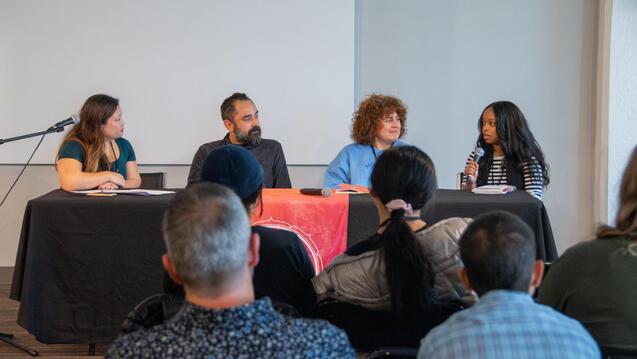
A Faculty-Led Info Session with Stephanie Chen


Applying with a Master’s
-
If the degree leads to a professional license, yes. Up to 15.0 semester units from a licensable master’s degree may be transferred into the Psy.D. program: 10.0 units of the foundational courses and up to 5.0 units of elective course work.
-
Students with appropriate master’s level course work may transfer:
- Lifespan Development (3.0)
- Culture & Ethnicity (3.0)
- Psychopathology (3.0)
- Cognitive-Behavioral Psychotherapy (1.0)
- Up to 5.0 units of elective
-
No. Prior clinical experience cannot be used to fulfill the Psy.D. practicum or internship requirements.
-
No. Neither the Board of Behavioral Science (BBS) nor the Board of Psychology (BOP) allow hours to be counted toward more than one program or license at a time.
-
Psychology course work taken in a graduate program that does not lead to a professional counseling license is not transferable.
Licensing Questions
-
Yes, competing the Psy.D. program track for the professional psychologist license will fulfill the academic requirements to apply for licensure through the California Board of Psychology (BOP).
In addition, the state requires training in the following subject areas not covered by the PSY.D. curriculum:
- Human Sexuality A minimum of ten (10) contact hours [BPC § 25 & CCR § 1382],
- Alcohol/Chemical Dependency Detection and Treatment A minimum of fifteen (15) contact hours from a degree-granting educational institution or in an extension course offered by an approved/accredited institution [BPC § 2914(e) & CCR § 1382.3],
- Child Abuse Assessment and Reporting A minimum of seven (7) contact hours [BPC § 28 & CCR § 1382.4],
- Spousal or Partner Abuse Assessment, Detection, and Intervention Strategies If you began graduate training before December 31, 2003, a minimum of two (2) contact hours. If you began graduate training on or after January 1, 2004, a minimum of fifteen (15) contact hours [BPC § 2914(f) & CCR § 1382.5],
- Aging and Long-Term Care [BPC § 2915.5], and
- Suicide Risk Assessment and Intervention [BPC § 2915.4].
-
In order to become a licensed psychologist, you must successfully complete the regulatory agency’s licensing requirements in the state where you practice.
The Examination for Professional Practice in Psychology (EPPP or “E Triple P”) is a licensing examination developed by the Association of State and Provincial Psychology Boards that is used in most U.S. states and Canadian provinces.
- California administers the EPPP in two parts. This is followed by the California Psychology Law and Ethics Examination (CPLEE) in the State of California.
- Additionally, 1500 hours of post-doctoral supervision is required. These hours may not be accrued until all requirements for the degree have been completed.
-
If you plan to practice in a state other than California, check their specific requirements regarding degree and course completion requirements for licensure before enrolling in this program. The professional practice of mental health is regulated by state governments. The Admissions Office can provide you with additional information about where you can be licensed with this degree.
-
No, but in order to practice as a mental health professional in California or any other US state or territory, you must be licensed.
-
Not with the PSY.D. degree. The Psy.D. program does offer an interim Master of Arts in Clinical Psychology as an interim degree; however, this does not fulfill the academic requirements to apply for licensure through the California Board of Behavioral Sciences (BBS), the state agency that licenses master’s-level practitioners in California.
If you possess a licensable Master of Arts degree in Counseling Psychology, you may opt to obtain that license and practice within its scope after obtaining the PSY.D..

Take the Next Step
For over 50 years, CIIS has been at the forefront of education that integrates rigorous science, innovative scholarship, and social justice. You will learn from faculty at the forefront of their fields, local artists and activists, and a community of peers as passionate and dedicated as you. There’s never been a better time to be here – let’s build a healthier and more equitable world.