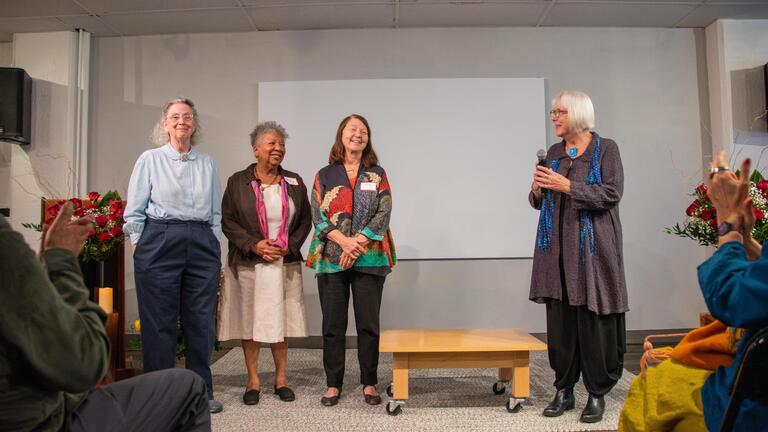
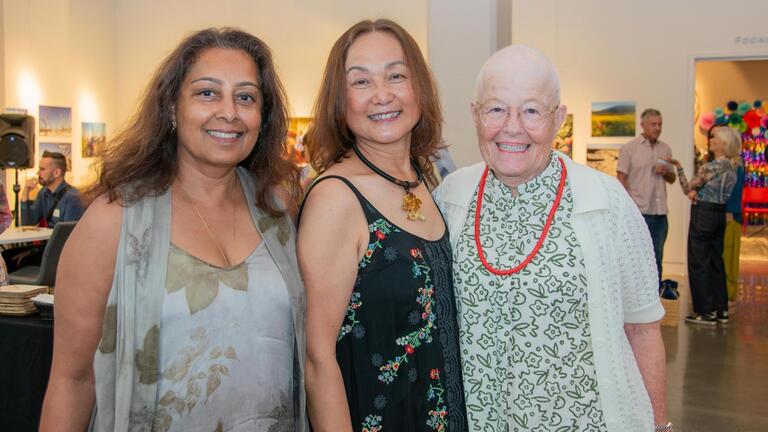
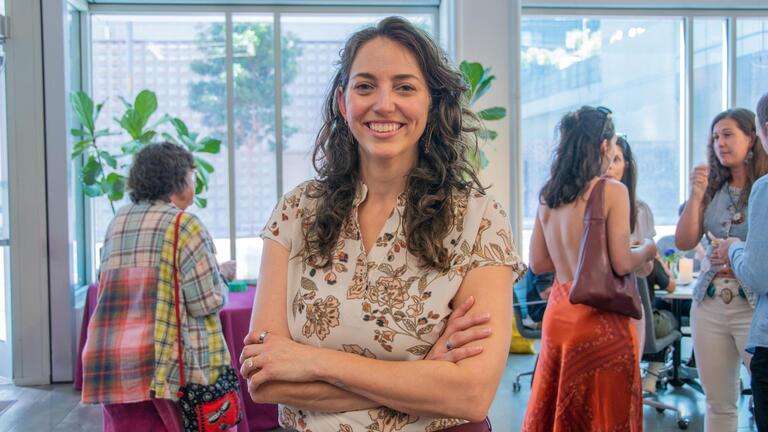
Maria Mangini, Shirley Strong, and Cathy Coleman with Janis Phelps at the CIIS Certificate in Psychedelic-Assisted Therapies & Research 10 Year Anniversary Celebration.
Maria Mangini, Shirley Strong, and Cathy Coleman with Janis Phelps at the CIIS Certificate in Psychedelic-Assisted Therapies & Research 10 Year Anniversary Celebration.
Campus News
The Center for Psychedelic Therapies and Research Celebrates Ten Years
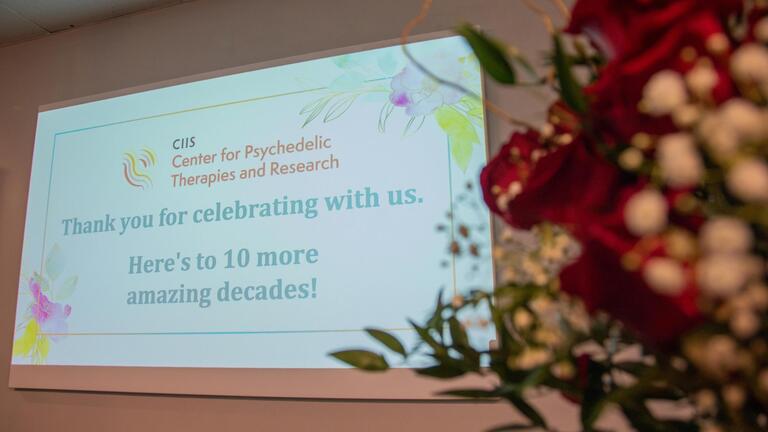
CIIS' Center for Psychedelic Therapies and Research celebrated its tenth anniversary with the people who built it and announced a new endowed scholarship.
September 15, 2026
CIIS' Center for Psychedelic Therapies and Research celebrated its tenth anniversary with a new endowed scholarship in honor of founding director Dr. Janis Phelps.
In 2014, CIIS President Joseph L. Subbiondo approved a certificate program in psychedelic-assisted therapies. It was, by most measures, an audacious bet. The landmark psilocybin studies from NYU and Johns Hopkins hadn't been published yet. No major corporate money had entered the field. Ten years and 1,700 graduates later, the people who made that bet gathered in Namaste Hall to celebrate what it has become.
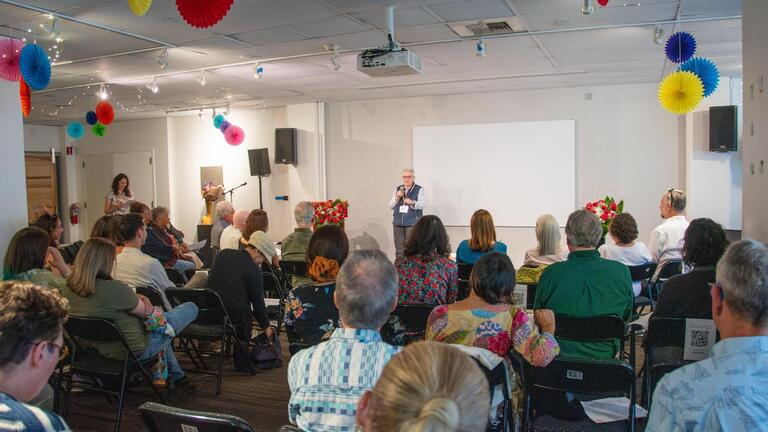
"One of the things that I was really concerned about is I didn't want a traditional school," Subbiondo told the room. "Little did I know then what this would turn out to be." He described visiting NYU's Department of Psychiatry with Phelps, where faculty were excited about what CIIS wanted to do. "When you can do things that would not be supported by traditional education, then the institution is really making a mark on higher education."
Cathy Coleman, who had worked at CIIS for twenty years and later returned to work with Phelps on admissions, offered a memory of her late husband, Ralph Metzner, reacting to the program's formation. "He said, 'This is just so funny — to create a program for something that's basically illegal that you can't do,'" she recalled. "And he would just kind of chuckle and go on." What followed that chuckle: over 1,700 trainees across ten years. Two hundred sixty-three peer-reviewed publications and books produced by alumni. Thirty-seven countries represented. More than $2.4 million raised from foundations and individual donors, with $1.6 million distributed in scholarships. The program was approved as a licensed Oregon psilocybin training program in 2022, graduated its 1,000th trainee in 2024, and expanded eligibility to non-clinicians in 2025.
"That is the golden key in higher education," Subbiondo said of the alumni publication count. "How is the institution contributing to learning?"
Much of the celebration was devoted to making sure the people who had sustained the program behind the scenes were seen.
Image
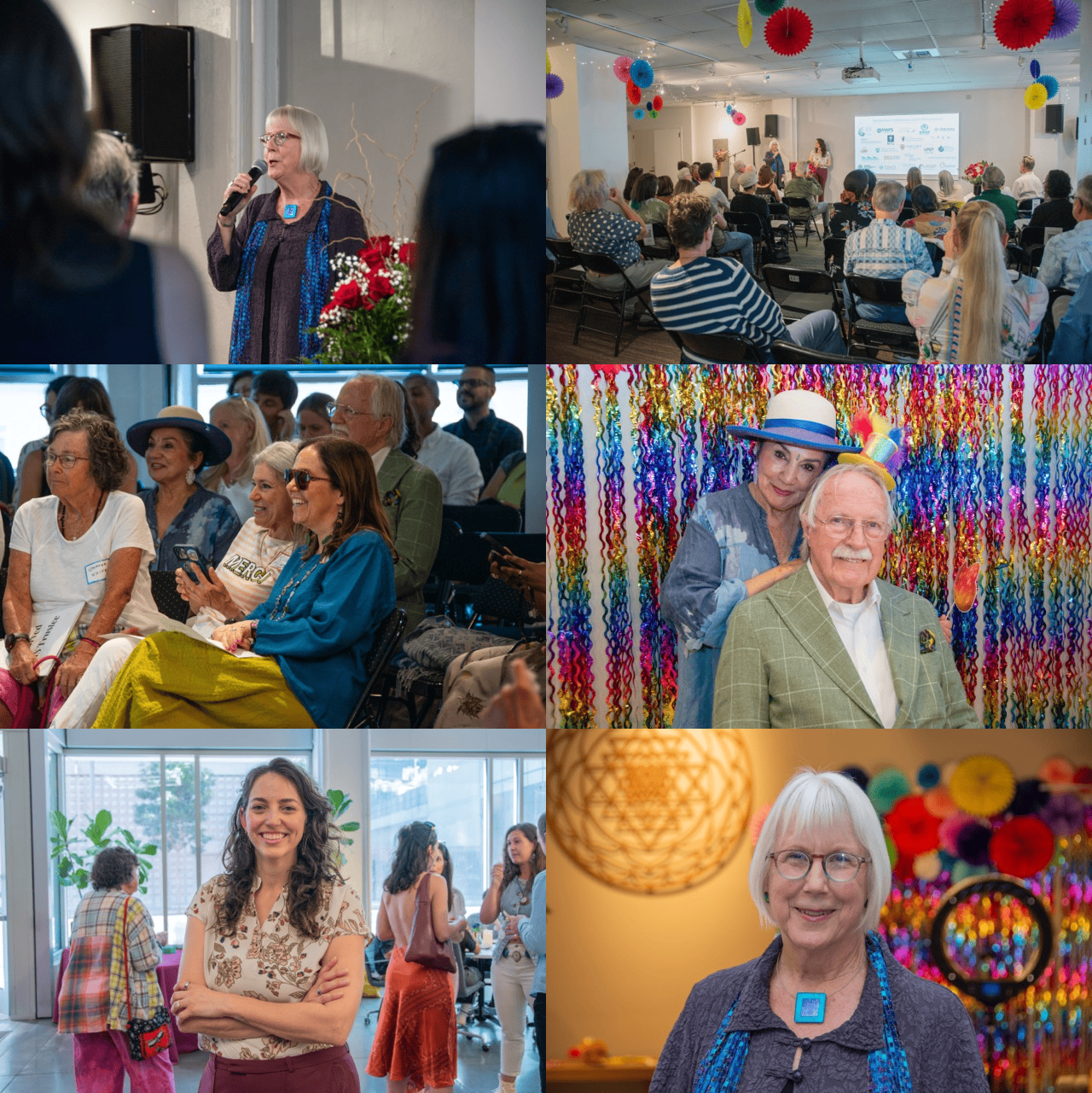
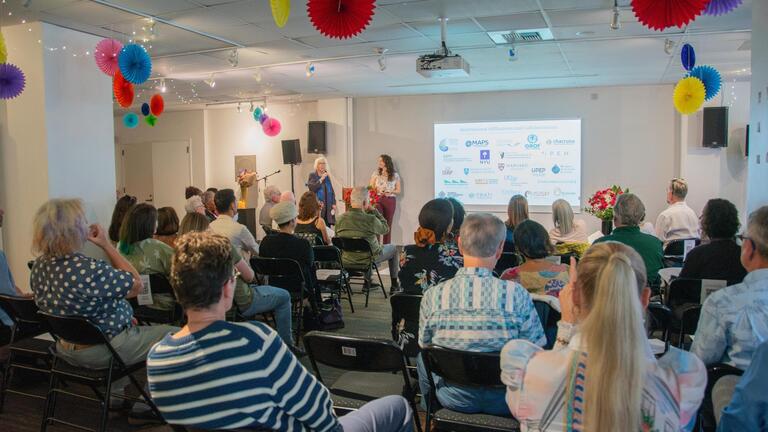
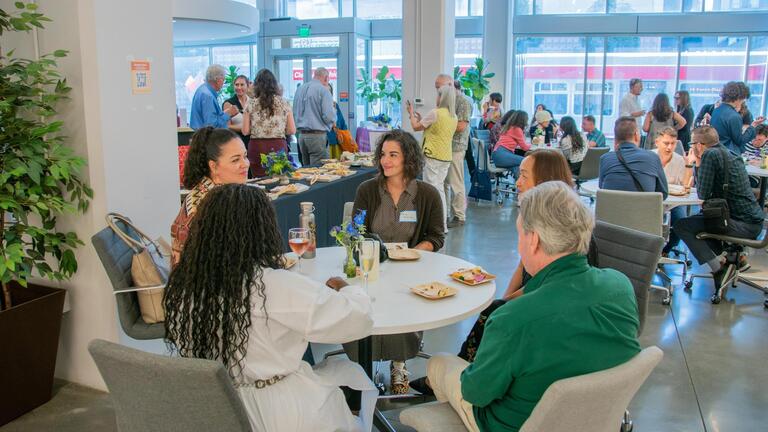
Celebrating 10 years of the Center for Psychedelic Therapies and Research at CIIS in San Francisco.
Shirley Strong, who joined in 2019 to lead Beloved Community initiatives within CPTR, received a standing ovation. Long-serving mentors Maria Mangini, Silvia Nakkach, and Susana Bustos were called to their feet. Karen Cooper, who served as mentorship program director from the early years, described building the mentoring infrastructure from scratch, "relying on the generosity of experienced colleagues such as Bill Richards, Mary Cosimano, and others."
Executive Dean Kris Brandenburger praised founding director Phelps and the operations team for a track record that defied the odds. Bill Richards of Johns Hopkins, joining online, reminded participants of the importance of their work. "This isn't only a new form of psychotherapy," he said. "This is for the betterment of well people." He invoked his mentor Karl Jaspers: the human being is fundamentally more than he or she knows, or ever can know. "And we are right on the frontiers of that at CIIS."
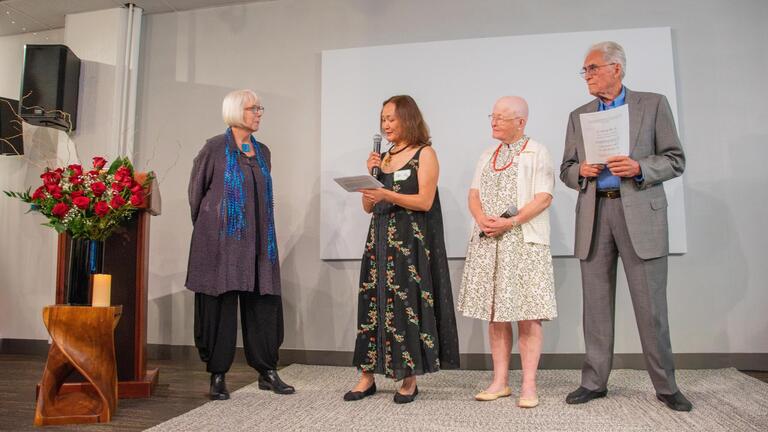
The centerpiece of the afternoon was a surprise that was several months – and a whole decade – in the making: The Dr. Janis Phelps Scholarship, a fund presented to its namesake with a grand reveal. Richard Buggs, CIIS Vice President of Advancement, read a statement from President Brock Blomberg announcing the establishment of the $100,000 endowed fund to support future CPTR students. “Janis, your legacy is reflected not only in the program you helped build, but also in every student you have mentored, every colleague you have inspired, and every life that would be touched through the work of those who follow in your footsteps. On behalf of the Board of Trustees, our faculty, staff, students, alumni, and the entire CIS community, thank you for your extraordinary leadership, your visionary spirit, and your enduring service.” The initial $45,000 came as a matching gift challenge from Bill Melton and Mei Xu. Trustees Betsy Gordon, Dana West, and Daphne Crocker White matched further, enabling the fund to endure over many, many years and many students.
"I've never had anything named after me," Phelps told the room once she regained the power of speech, having stood in humbled silence for several moments. "I will especially love to know who receives it, and talk to them, and see what they aspire to do with the certificate." When asked to reflect on the moment, Phelps continued: “It's a life of service that I'm here for. I really wanted to see more people have these medicines and have them in a safe and sound way. It's been an act of love. So thank you, everyone.”
Mei Xu, CIIS alumna, trustee, donor, and graduate of CPTR's first cohort in 2016, offered a reflection as well. The Chinese character for medicine, she noted, combines the symbols for plants and herbs with the character for music or joy. "It reminds us that true medicine requires emotional harmony between the healer and the seeker," she said. "This attunement is at the very core of what CPTR is all about."
Betsy Gordon kept her remarks short. "Why not fund something that's about consciousness if that's what you believe in?" she asked. "And that's what I believe in."
Bill Melton quoted Victor Hugo — "nothing is more powerful than an idea whose time has come" — and then expanded it beyond politics into the therapeutic. "For genuine transformation, mind and heart must come together," he said. "An idea whose time has come, living in an awakened heart, can awaken the world."
The formal program closed with a song. Grammy nominee Silvia Nakkach, a CIIS adjunct faculty member in East-West Psychology and a longtime CPTR mentor, performed a setting of a poem by the Brazilian poet Cecília Meireles. Before singing, she told the story of how she met Janis Phelps in 2000: her car broke down in the CIIS parking lot during an ayahuasca conference, and Ralph Metzner said, "Meet Janis." Phelps, she said, has been "the Minister of Transportation of Consciousness" ever since.
In her closing words, Phelps talked about consciousness, the kind available without any substance at all.
"Psychedelics aren't a panacea," she said. "They're simply a method to help someone tap into that feeling. And at times, if we're fortunate, a deep, deep, deep stillness from which renewal comes." She paused. "That particular place in consciousness is with us right now. We're in the field of that." She asked the room to notice it — not just here, but everywhere.
Mei Xu, Betsy Gordon and Bill Melton with Janis Phelps at the CIIS Certificate in Psychedelic-Assisted Therapies & Research 10 Year Anniversary Celebration.
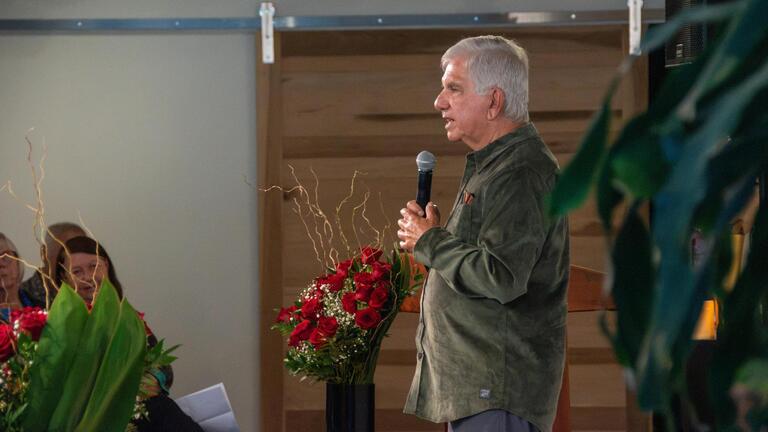
Joe Subbiondo, former CIIS president who started the Certificate in Psychedelic-Assisted Therapies & Research (CPTR), at the program's 10 Year Anniversary Celebration.
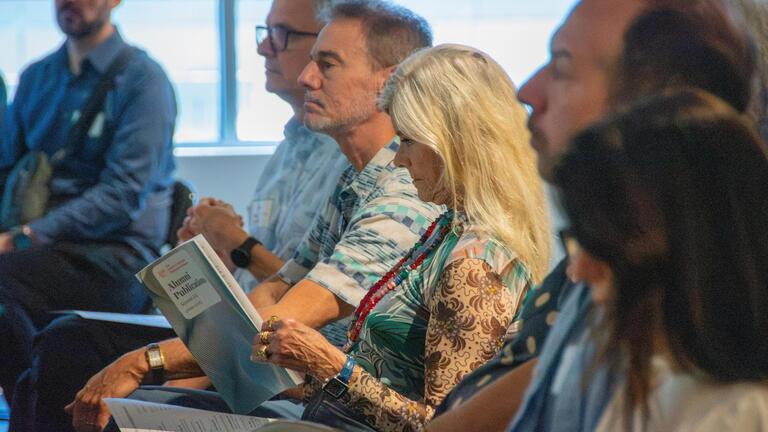
Donor Julie Brody reads from the Alumni Publication at the CIIS Certificate in Psychedelic-Assisted Therapies & Research 10 Year Anniversary Celebration.
Kris Brandenburger at the CIIS Certificate in Psychedelic-Assisted Therapies & Research 10 Year Anniversary Celebration.
Janis Phelps and Laura Pustarfi at the CIIS Certificate in Psychedelic-Assisted Therapies & Research 10 Year Anniversary Celebration.
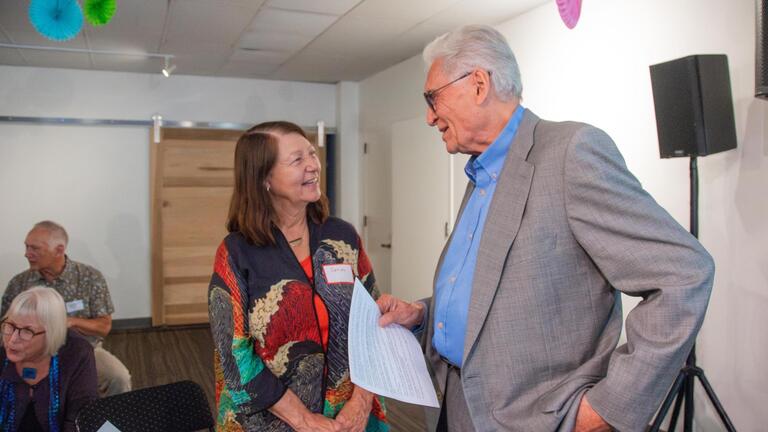
Cathy Coleman and Bill Melton at the CIIS Certificate in Psychedelic-Assisted Therapies & Research 10 Year Anniversary Celebration.
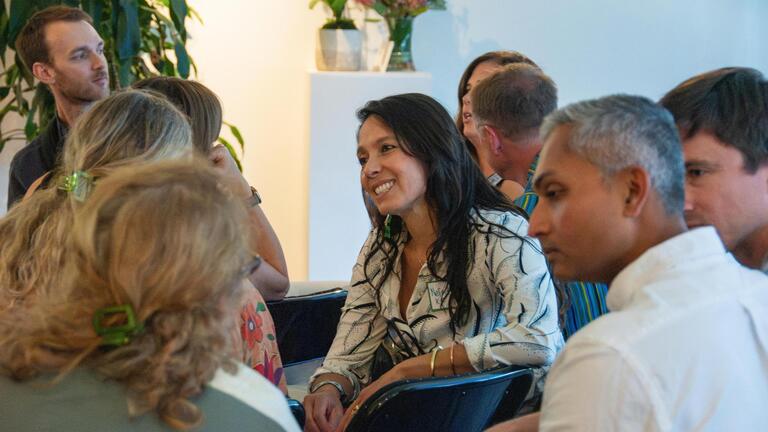
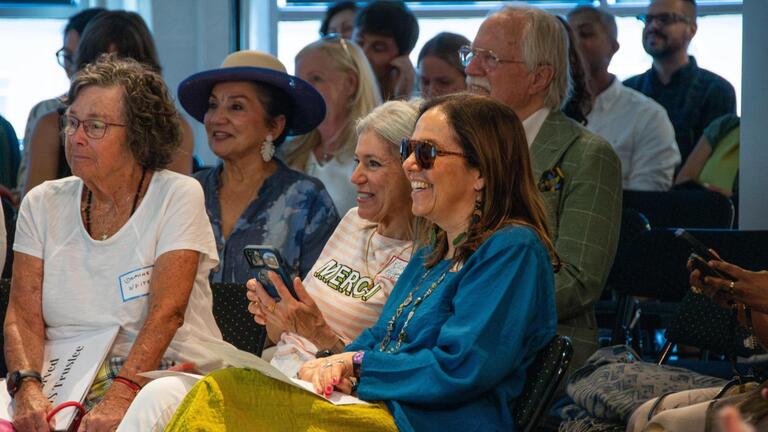
Attendees at the CIIS Certificate in Psychedelic-Assisted Therapies & Research 10 Year Anniversary Celebration.
Board members at the CIIS Certificate in Psychedelic-Assisted Therapies & Research 10 Year Anniversary Celebration.
CIIS Certificate in Psychedelic-Assisted Therapies & Research 10 Year Anniversary Celebration.
Vaishali Chadha, Mei Xu and Betsy Gordon at the CIIS Certificate in Psychedelic-Assisted Therapies & Research 10 Year Anniversary Celebration.
Laura Pustarfi at the CIIS Certificate in Psychedelic-Assisted Therapies & Research 10 Year Anniversary Celebration.
CPTR graduates sitting in the CIIS lobby for the CIIS Certificate in Psychedelic-Assisted Therapies & Research 10 Year Anniversary Celebration.
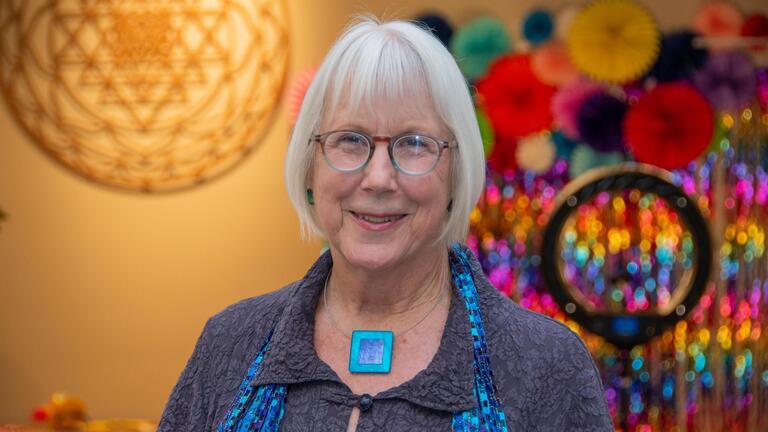
Janis Phelps at the CIIS Certificate in Psychedelic-Assisted Therapies & Research 10 Year Anniversary Celebration.
Certificate in Psychedelic-Assisted Therapies and Research