
Sep29
Online with Michelle Domingo. Focus programs: Bachelor of Arts in Interdisciplinary Studies, Bachelor of Science in Psychedelic Studies, Bachelor of Science in Psychology, Bachelor’s to Graduate Accelerated Pathways
What are you looking for?
Applicants to the dual programs must apply to both the East-West Psychology program and the MFA. Those interested in the Creative Dissertation Pathway should apply to only the East-West Psychology program. Applicants to any of these programs must submit a portfolio of writing or artwork as part of the admissions process. Their work will be reviewed by East-West Psychology and MFA program chairs and faculty.
Academic Writing Sample: A writing sample of eight-to-ten pages (typed, double-spaced) that demonstrates your capacity to think critically and reflectively and demonstrates graduate level writing abilities. A sample that uses outside sources must include proper citations. You may submit copies of previous work, such as a recent academic paper, article, or report that reflects scholarly abilities.
Art Sample: For writers, 15 to 30 pages of poetry, prose, script, or mixed genre work. For visual, performing, sound or interdisciplinary artists: please provide links or URLs (or you may submit CDs or DVDs). Artists working in more than one form may submit samples in multiple forms.
Admissions Essay: A one-page statement speaking to the following:
Working across multiple departments means even more topics to discover and explore.
This course is grounded in the belief that curiosity about one's work and world are valuable and related to each other--and it provides you the chance to engage inquiry as a discrete act (a way to ask specific questions) and a way to probe larger contexts. Through readings, class visits with guest artists, interdisciplinary exercises, and/or arts activities, we'll ask: What environments allow a question to thrive and become the working matrix for your art? Which questions arise for you in the context of what art or arts practices? In what ways do your questions, art and world correspond with each other and how can you be responsive to, articulate about, and assessing of that correspondence?
What do I make and why? What is my relationship to art and art-making? How do I name myself as artist and why? In this course, you'll learn to articulate your artistic heritages and the social, cultural, political, historical, spiritual, psychological, and/or contemporary influences on your work. You'll learn to talk about yourself as art maker and place yourself within an art lineage and current generation of artists. You'll also seek out potential new influences that will initiate the future of your work. Through reading, discussion, art-making, inquiry, and research, you'll create and present the context that holds your work.
The word research has origins in the Middle French verb recercher, meaning to "seek out, search closely." In this class, we'll seek out imaginative, intellectual, sensory/sensual, and methodological habits and processes that artists engage, searching them closely for the ways they allow us to acquire and integrate new knowledge and contribute generously to the world through art practice. Applying learning from Creative Inquiry for Interdisciplinary Arts and Arts in Context, students will engage as participants and observers of their artmaking. As preparation for their art practice dissertations, they'll (1) work on an art project, (2) keep an exegetical or research journal of their art-making process, and (3) prepare an integrative reflection.
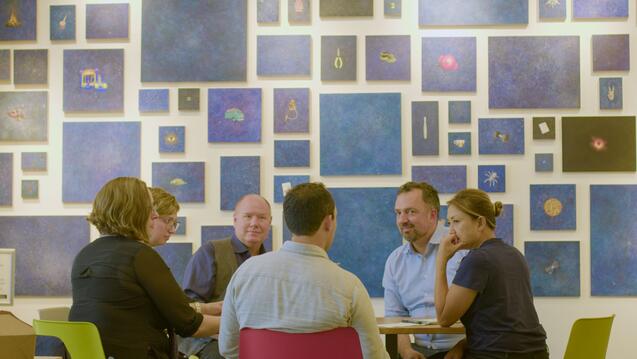
Your art and scholarship will be mutually enriching as you work toward exceptional academic achievement. Complete your Ph.D. coursework and then a one-year MFA, and earn a doctorate enriched by creative insight.
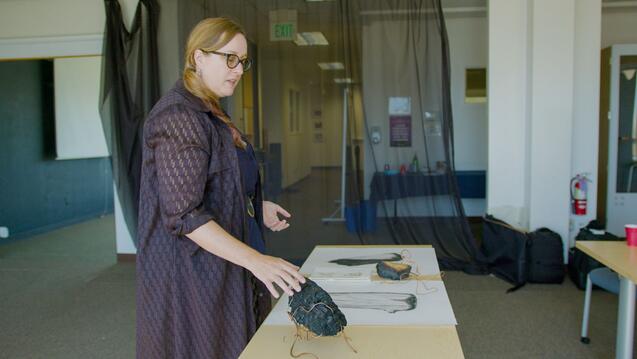
Earn your doctorate by producing original work based on your art practice. Spend equal time in your East-West Psychology and MFA coursework and then complete a dissertation of original work based on your art practice.
Online with Michelle Domingo. Focus programs: Bachelor of Arts in Interdisciplinary Studies, Bachelor of Science in Psychedelic Studies, Bachelor of Science in Psychology, Bachelor’s to Graduate Accelerated Pathways

Take an in-person tour of CIIS' campus in San Francisco

Online with Kelson Pamarang. Focus programs: Blue Sky Leaders, Climate Psychology Certificate, Psychedelic-Assisted Therapies and Research Certificate, Sex Therapy Certificate