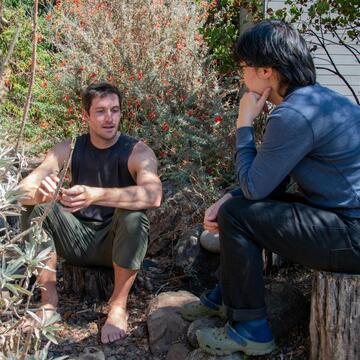
Rhaina Cohen: On the Power of Friendships
Why do we assume romantic relationships are more important than friendships?
In this episode, clinical psychologist Margaret Boucher — Assistant Professor in the Clinical Psychology Psy.D. program —has an illuminating conversation with NPR journalist Rhaina Cohen on the power of platonic partnerships and how the thrill, intimacy, and commitment we seek is often found through meaningful friendship. Sharing insights from her years of original reporting and social science research, Rhaina argues that we undermine romantic relationships by expecting too much of them and diminish friendships by expecting too little of them. At a time when many Americans are spending large stretches of their lives single, widowed, divorced, or feeling the effects of the "loneliness epidemic," Rhaina challenges us to ask what we want from our relationships—not just what we’re supposed to want—and helps us to examine how we define a fulfilling life.
This episode was recorded during an live online event at California Institute of Integral Studies on July 31st, 2025. A transcript is available below.
You can watch a recording of this episode and many more episodes on the CIIS Public Programs YouTube Channel.
Tags:
Transcript
Click to Show/Hide
Our transcripts are generated using a combination of speech recognition software and human editors. We do our best to achieve accuracy, but they may contain errors. If it is an option for you, we strongly encourage you to listen to the podcast audio, which includes additional emotion and emphasis not conveyed through transcription.
Margaret Boucher: I'm so excited to speak to you today and for our audience to get to hear about your book and your thinking and to just really engage together about this topic, about Other Significant Others. I have to say that your book was first recommended even before this by a dear friend of mine who I've been in sort of deep conversation with about friendship. And so as I read it, I was thinking very much on a personal level, but also professionally as a therapist, as a professor, about how we can think about expanding, you know, sort of our notion of intimacy. And so, yeah, I'm just really excited and hope we can kind of cover a lot of ground and just see where it takes us today.
Rhaina Cohen: Well, as I gave you a preview of before, I just, I guess, personally, intellectually, I'm very interested in psychology, in clinical psychology. My house currently has a few photos of Orna Perelnuk on our fridge, which was put up actually by my housemates. But we have a shared love in this household of the show Couples Therapy, but in general, certainly, really thinking about our inner lives. So I'm excited to talk to this audience in particular.
Margaret: Wonderful. Wonderful. I love that. I think there's so much actually overlap of the work that we do about being deeply interested in people and how they relate. So, excited about that. You know, I've, of course, read your book, but folks who are listening might not have. And so maybe you can just tell us a little overview about, like, who are the other significant others and sort of why is this topic of exploration sort of important to you?
Rhaina: So the other significant others that I'm writing about, are people who are friends that go beyond really what our standard definition of friends is. And specifically, there's a level of commitment that you typically would think of as romantic partners. So I call these people platonic partners and some examples of the kinds of ways they show that commitment are taking care of each other through old age, through chronic illness. There are friends who have raised children together, who have gotten legal recognition as co-parents or gotten legal recognition for their, to sort of have financial and medical, rights to make financial, medical decisions for the friend. I mean, there's sort of the whole gamut of ways that maybe we expect romantic partners to be intertwined. A lot of these friends are. And I think it's really valuable to look at people who take our ideas of friendship out to the edge, because for one thing, they show us that there is much more room for us to ask more of the friendships in our lives and give more to them than many of us maybe realize. But it also, you know, inevitably ends up helping us see in a new way romantic relationships and familial ones. I mean, I thought I was writing a book about friendship, but you can't really write that about, right, just about friendship because they're so bound up with what are our expectations of romantic relationships and how much room does that leave for the other kinds of relationships in our lives? And who do we think it is OK to make major life decisions around? So I think through looking at these people who challenge these very discrete categories of friendship, partnership, romance, we get to really examine all of those anew and really, I think, think about what does it mean to have a fulfilling life? And maybe has our societal definition been a little bit too narrow?
Margaret: Sure. Yeah, I really appreciate you saying that and kind of the narrowness and I definitely want to be able to kind of dive into like, oh, wow, how can we expand what's wanting to kind of be expanded now? And I wonder, maybe we can sort of start a little bit with talking about sort of the history, like how, what's sort of the kind of normative way we think about relationship now, you talk in your book about sort of the history and that it's changed over time and sort of how we got to this modern day, at least in this country, modern day, you know sort of idea about relationships and friendships.
Rhaina: Yeah, I mean, the the kind of astounding thing is to realize that the way that we in 21st century America think about friendship in general, sort of the dominant culture is really an aberration historically and across parts of, you know, different parts of the world. If you went back centuries ago, in many different parts of the world, there were ceremonies to that would take place in churches, in many cases, where you would have male friends who would swear themselves to one another with a priest to doing blessings over them and turning them into brothers for life. This is called sworn brotherhood. And, you know, you can see different kinds of versions of this in, in, in England, in different parts of Western Europe, the Mediterranean, in China, in Turkey. And that, you know, gives you an idea of the, that there was a kind of cultural recognition of friendship, not just as a private relationship that can happen between a couple of people, but as something that that earned, you know, deserves a ceremony around it, and that it would land you, you know, this the commitment would last for the rest of your life. And in some cases, these friends are buried together. So that's just sort of one example of how that that gives you a sense of the gulf between what, what friendship can be, has been in the past and what it is now. I mean, I actually ended up interviewing a couple of women who are now, I think they're like 60s or 70s, and ended up undergoing one of this this ancient ritual in a Syriac church in in Jerusalem. And it was very powerful to them. So there are ways that we can, you know, tap into that past, but it is it's, it's bizarre, because now most people would think of in a place like the US, that friendship is a, you know, it's a voluntary relationship, that's that it's by definition, but that also it might be an ephemeral one, it is not the kind of relationship that you make major decisions around. I was talking, you know, somebody was doing an event the other day, and somebody said that she realized that she had offered to her boyfriend to move away from the city that they were in, even though she absolutely loves where she is, but she had never considered moving her, moving cities for her absolute best friend. And, you know, so those are, those are some of the distinguishing qualities. And then, you know, on the flip side, romantic relationships are, are just considered the absolute top of the hierarchy where you're supposed to get so many of your needs met, including emotional intimacy, which certainly was not the case a few centuries ago, you know, in heterosexual marriage, and a case, you know, the scenario where women were property of their husbands, you're there's such inequality that it's pretty understandable that you wouldn't get kind of emotional, or, or intellectual deep connection as something that's a given. So there are, yeah, quite a quite a big, quite big differences between both how romantic relationships operate today and and friendships.
Margaret: Yeah, it's so interesting, you know, sort of as equality, you know, sort of gender equality has improved, and the marital relationship has improved in terms of what, you know, sort of women can expect within, it feels like that's also been alongside of that sort of friendship relationships have decreased. And I don't know if that is totally correlated. But it, you know, kind of as I was reading your book, I could really feel like, oh, my gosh, like, when the romantic relation, you know, when I when I wasn't getting all of that sort of intellectual and love from my husband, I was getting it from, like the women in my life. And just like, wow, what, like, what an interesting trade off in some way.
Rhaina: It is a, you know, a bit of a, like a tricky thing to, to think about and figure out what you make of it. But you know, you look at the ancient Greeks and Romans, and men thought that only, you know, and you can even hundreds of years later in France, like men talking about like Montaigne, that only men were capable of true friendship. So the when you again, when you don't have people who you see as equals to you have a different gender, that kind of intimacy is more likely to come from same sex friendships. And certainly, this is still the case in countries, or cultures where there's a lot of gender segregation. And, you know, it's not sort of deemed appropriate for men and women to spend time together unless they are part of the same family. And you do see this kind of closeness. You know, it's not my suggestion that we go back to a time where you have that kind of vast, vast inequality. But I do think it's worth recognizing that maybe there is, there's something to learn from a period of time, or different periods of time where friendship was understood to, to play a bigger role in our lives. And that maybe we have required romantic relationships to do more than they really need to do. We don't, you know, they don't need to be totally pragmatic as, as marriage has been in the past. You don't, you know, the vast inequality we've already talked about. But there is maybe more room for real intimacy that I think for some people, they don't even realize is possible within friendship, and they stop too short to attempt to get there.
Margaret: Yeah, I was thinking, as you were saying that I was thinking about how often when I think about friendships and society of, of like, close friendships in high school, sort of adolescence, and that somehow there's this idea of then transitioning into, you know, and I think this is even within our psychological theories about, you know, sort of normative development is to move, you know, out of this kind of friendship and exploring one's identity to sort of marriage, and then having children and how embedded that is in our consciousness. And then of course comes out, you know, in our psychological theories and how we consider what's normative and the pressure that really places on people. Yeah.
Rhaina: Yeah, I mean, I don't know that when, well, I don't have the same kind of psychological training as the people who are listening here, but certainly in the kinds of ideas of adult development that I've encountered, making really close friends past, you know, adolescence was, is not something that I've, I've heard in a kind of formal way. And certainly it's not reinforced by society. The idea that we see reflected in movies and TV shows, even shows like Friends, that the series ends with Friends moving, you know, Monica and Chandler. What, before that, they like basically kick out Rachel so that the two of them can live together. And then I think Chandler and Monica move to the suburbs. So, you know, even in our, the sort of most iconic cultural images that we have of friendship, there is a sense that you grow up and you enter into a romantic partnership and you leave the people who, who you had so much fun with or you connected with when you were younger behind.
Margaret: Yeah. Yeah. Yeah, it's interesting how narrow then sort of like, I keep, as I was reading your book and thinking about just how narrow our views of intimacy are, like, what is possible, not just sort of pragmatically, but in sort of a loving relationship. And I know you, you talk a bit and maybe you can share with our listeners a bit about your relationship with M and sort of, you know, how that sort of started you on this journey and, and changed your thinking about, yeah, romantic care or, or that platonic relationships can be romantic. And yeah, I know, kind of a blur of stuff that I just said. Yeah.
Rhaina: And, and I mean, it is all kind of hazy and it can sound like an oxymoron, but what ended up setting me on the course to write this book, was falling into a, an extremely close friendship with my friend who's, who I call M in the book. And we spent, you know, four, we would see each other four or five times a week. We lived a five minute walk from each other. So we, it was just really easy to be casually involved in day-to-day life with each other. And, but it wasn't just about convenience. I mean, we were, we just like, even when we weren't in the same place, we were exchanging long voice memos and really just wanted, you know, to understand what was going on in each other's minds. We wanted to learn from each other. And I found that there, that I had a hard time really articulating what the nature of the friendship was to other people. And I also saw that there were real parallels between the ways that I had, I felt with M and the ways that I felt falling in love with my now husband. And I, and I didn't feel like it came down to like, oh, I want to be in a romantic, like a kind of conventional romantic relationship with M. Both of us, both of us are queer. Like we didn't have the sexual attraction piece, but we did have a lot of these, the sort of characteristics of romance, like the, you know, infatuation, certainly in the early stages. And there was just a kind of like sweet, affectionate quality to our friendship that remains to this day. And I became, you know, I had a memory of reading about what were called romantic friendships historically, in like the 17th through 19th centuries, you see these, there's a lot of writing about them in Europe and in the U.S., of these very intense emotional, same sex emotional connections. There's a whole like sidebar thing I can do there about how exactly you would, you interpret these friendships, but, or these relationships. But it seems like many of these were, there's, you know, we've no reason to believe that they were sexual. And it gave me this, something to latch onto that, oh, okay, M and I are not these bizarros. Like this has been done before and it's actually a kind of lost concept. And, you know, in today's day and age to say that a platonic relationship can be romantic or you can have a relationship that is romantic, but it doesn't have sex attached to it. It just really scrambled so much of, I think, the concepts that we tend to collapse together that have to do with attraction and intimacy. And I really found that there is, I could have this really deep emotional connection that felt really parallel to the closest romantic relationship.
Margaret: I have to say, when I was reading about your relationship with M, it so resonated, like I deeply fell in love in college with a good friend of mine. And I mean, I would leave her notes and chocolate, you know, I mean, it would, like there was a pursuing and it was just like this excitement, we could sit around in our pajamas and talk all night and she's still very dear to me. And so, as I was reading, I'm like, oh my gosh, no one had, you know, certainly people would be like, oh, are you, are you lesbians? And I'm like, no. And of course I'm bisexual. And so there's part of me that's like, should, am I repressing my love? You know, like it was something even I couldn't quite grapple with in some way. And when I read, like there was such a, like a resonance with your story and I appreciated, yeah, you're giving a voice.
Rhaina: Yeah. I mean, in many ways it's just easy. It would be easier to be like, yeah, we're, we are in this really legible kind of, we have this type of relationship that people will get. And it was, it's, yeah, more perplexing to people to say that it's, it's not quite the thing you expect, but it is, it has the intensity that you might not associate with a friendship.
Margaret: Yeah, absolutely. You know, I'm curious as we're kind of like thinking about this idea of broadening intimacy and I'm curious, like what consequences are of like this narrow view sort of, I don't know, emotionally, socially, even spiritually of like having such this narrow view for us. And yeah, this kind of compulsorily coupled them. Yeah.
Rhaina: Mm-hmm. I mean, I think of there being these different types of harms, like very, you know, concrete or practical harms. I think there were harms to the relationship and emotional ones that I can, I'll talk about all of them. On the practical level, there are people who end up getting denied rights to one another. So a couple of the women I write about in the book are, have been best friends for 50 years. They have lived together for 25 of those years, now in their 80s. And I was talking to them at one point and during COVID, one, her name is Inez, ended up having to get an ambulance to the hospital. It was an emergency. And her friend, who she has lived with, was not allowed in the ambulance with her. It seemed like maybe she wasn't allowed in because she wasn’t a family member. And then they get to the hospital or Barb follows the ambulance. So she goes to the hospital anyway, even though she's not allowed into the ambulance and told she probably won't be let into the hospital. It's dead of winter in St. Louis, so it's freezing and she's literally waiting out in the cold while her friend is in the emergency room and she has no idea what's happening because the nurse had said that she wasn't allowed in after asking, like, are you family? A half hour later, you know, Barb went back to the nurse and the folks there were looking for the person that had medical power of attorney rights, which Barb had, as well as legal power of attorney rights, and then they let her in. So there is in some way a, you know, it's like a mixed ending. Barb was allowed in. But, you know, what it showed is that there is not a status that was recognized. I mean, they had done the legal paperwork, but your relationship needs to make sense to the powers that be. And I often found that the consequences were most stark at the very moments where the stakes were highest, like somebody being sick, you know, end of life decision making that was really, you know, just there. Well, there's certainly emotional harms that come with that, but those are very practical ones. In addition to, you know, people I spoke to who took care of their friends for somebody I spoke to took care of her friend for six years who had ovarian cancer, was not entitled to family medical leave or bereavement leave during any of that time. So that, those are, you know, some of the ways that people don't get the kinds of benefits or recognition that you would expect of someone with that level of commitment. You know, there are emotional harms that happen when you feel like maybe there's something wrong with you or other people, you know, when you're basically your relationship is invisible. I've heard of the kind of gossiping that can happen about people who have these friendships. A couple of the men that I write about were working together and their boss was basically like asking their co-workers if the two of them were in a romantic relationship. And people who have these friendships are often, you know, put in the position of having to defend their happiness. And I, you know, one thing that I had thought of while working on this book is, there's a line from this novel called Convenience Store Woman and the, you know, this narrator is reflecting on this kind of unconventional character and how the character's sister would rather her be normal and unhappy than abnormal and happy. And I sort of see that happen to people who have these kinds of friendships. And then sort of the last category would be, what are the consequences for their relationship. There's a growing number of books that are about, you know, how to navigate friendship, but they really pale in comparison to what we have for romantic relationships. And the same thing for therapists, for people whose work is to help people navigate relationships. I, you know, had worked on Invisibilia at NPR years ago and we wanted to do an episode on friend therapy and the, like, people on the team could not find a single person who specialized in this because there wasn't really a specialization. And I have found people who have gone to couples therapy with their friend and sometimes have been a little bit self-deprecating about it, but, you know, or have gone to premarital counseling with their friend, like, using these tools that have been built for romantic relationships and retrofitting them. But, you know, those are people who are who are maybe, like, brave enough or not self-conscious enough to be dissuaded. And for many people, I think you just, the friendship might suffer consequences because they can't get the kind of support that, or just feel like it's okay to have conversations that would be really normal in a romantic relationship.
Margaret: Yeah, absolutely. I mean, that was definitely one of the sort of questions I had. I was like, okay, I'm training therapists, I'm a therapist. Like, what if we were to kind of envision what we would want to be able to provide and offer folks and being able to kind of have more accessibility? Like, what would it be? You know, like, what are kind of the services, the orientation, what would the thinking be? And you, of course, spoke to some of the challenges and the impact that therapists could kind of hold in mind. But yeah, what, you know, you sort of mentioned couples therapy. But I wonder, yeah, kind of what, what would you love to see in the field?
Rhaina: I mean, I think on a fundamental level, the desire I have is for curiosity. So, and I ask that for everybody, but I think it's also true for therapists that instead of making assumptions about, you know, there are certain categories of relationships. And these are the, you know, the romantic one is important, or your relationship with your parents is important, and that needs to be mined, to maybe probe about these other kinds of relationships that can matter in people's lives and that they might not think are worth bringing up. And then, I mean, the other side of this is just, if people do bring these sorts of friendships into the conversation, not sort of coming from a place of judgment, which seems really obvious, but I've certainly talked to people who have been pathologized by their own therapists who, you know, that have been made to feel that it is kind of the training ground for the real thing, or shows something that is, you know, maybe they're repressing their sexual desire by having this closer friendship and not necessarily being open to the ways that relationships can take many different forms. And I think it's also helpful for therapists to reflect on the expectations they have about what a healthy relationship looks like, whether they're operating in the couple's relationship therapy space or doing individual therapy, because the ways that friendships come and take shape in our lives are so affected by romantic relationships. And I mean, certainly, in my personal life, I'm concerned if I am talking to people I know who don't have good friends, that that's sort of a marker of fragility in their emotional lives, if not in that exact moment that at some point, something happens, and they need other people to turn to. So, you know, I think presenting, in that case, presenting friendships as a core part of what it means to have a kind of healthy relational life, I think, is something that I haven't, you know, haven't seen quite that directly, though there are some shifts happening on this front, but I think, yeah, those are a few ideas that come to mind.
Margaret: Yeah, that's great. I love that you say that about, right, like, sort of as we're thinking about, like, what health looks like. And we do this with kids, you know, I work with kids and families, like, oh, what are their peer relationships like? Like, that is a question that is always being held in mind. And why are we not saying the same thing, right, with adults? Like, oh, what are your peer relationships like? Like, what are your relationships outside of your family like? And that can be a topic of exploration. I was also thinking about how often we think about, you know, in our field about how we call it transference, where we, you know, sort of the early relational patterning, right, we sort of transfer on to our intimate relationships and play things out and how, you know, happens in all of our intimate relationships. And I can really imagine that not like being a space of exploration in therapy that may get really missed because of what you're saying about, like, the prioritizing of, like, the romantic relationships. Someone may be saying, I'm really hurt by this experience I'm having with a friend, but they may not even bring it up as much because they're internalized. This sort of idea that that's, oh, I shouldn't be, I shouldn't be this impacted by what is happening, this conflict that I'm having with a friend or the feelings that are coming up in relationship and may not even be, you know, maybe just a little statement in therapy and make me think like, oh, how do we listen more closely for that?
Rhaina: Yeah. Well, two things come to mind from that. One is even in, you're talking about peer relationships being a major focus when you're working with children. I mean that, it's so interesting to me to look at research on friendship with kids because peer relationships is a huge focus of psychological research, like on the academic side. And then it just, you know, there's very little of it. Even friendship researchers I've talked to have said, like, there's, we're really kind of in a scrappy stage of the field. And then, you know, another example that comes to mind, which is, you know, to get personal, I guess, is one thing that I understand is that psychologists will think about romantic relationships as being a site where attachment relationships are either replayed from the earlier years or repaired. But I have certainly experienced in my life that friendships are a huge place where I have had a ton of repair happen and modeling to me of the kind of, you know, ways of understanding, like treating myself with compassion. And sometimes just like psychological education about like having different, you know, parts, some variant internal family systems therapy, like that came through the door through, through friends, but also having, you know, having people model what it looks like to have relationships where there isn't, you know, avoidance or anxiety. And it doesn't necessarily only have to come through a romantic relationship. And that for people who maybe, I've been lucky in my, you know, my relationship with my husband, but for people who maybe don't find a relationship that works well in the romantic sphere, it might be worth asking, like, well, are there other, what are the other kinds of relationships in your life? And are those places where you're getting to act out versions of yourself that you feel more at home in or that don't kind of repeat some of the patterns from the past?
Margaret: Yeah, yeah, absolutely. Right. To be able to kind of see that, like, again, that sort of pathologizing and deficit model of like, oh, I don't have a romantic relationship. Well, if you have a full relation, so many relationships, we can talk about attachment, we can talk about what it means to be soothed, to be cherished, to be delighted in, you know, kind of in those very early kind of attachment model, you know, thinking. And I think, like, you know, makes me think of, as a therapist, if we can start put words to that, then people can know that their valid, their experience is validated, and then they can see it in themselves, which I think is so powerful.
Rhaina: I think the role of a therapist is very powerful for people, because it is a place where you are getting reflected back at you, either or reflected back at you, what you think of yourself or counter narratives, you know, things that may reinforce what you're seeing in the outside world or not, so and with that one on one relationship, I think there's just a lot of opportunity to shift to maybe like crowd out some of the noise from maybe what the outside world says, or, you know, give people permission to value relationships that maybe their family or society does not say are as important.
Margaret: Absolutely. I was thinking, you know, one of the interesting things you talked about in your book is around sort of grief in relationships and close friendships ending and how, gosh, that sort of disenfranchised grief, where there's no place that, there's no mourning, there's no, you know, there's a sense of like, oh, it's just a friend, but also like a shame about the friend, maybe you can talk more about this, so the listeners kind of know what I'm talking about. Because I thought that was like, oh, that felt so real and important to think about.
Rhaina: Yeah, so, you know, I mentioned that I spoke to a woman who took care of her best friend as the friend was battling ovarian cancer for six years. And during that time, she flew out across to, with her friend to another part of the country, to get special, for the friend to get specialized treatment and stayed over with her in the hospital, spent a lot of money to help her with medical bills. And she was not, you know, she didn't get the sort of benefits, the like, tangible benefits you would. And then when her friend was sick and when she died, she didn't feel like the people around her understood, even though the two of them had been friends for so long. And it was this, it is enough to deal with loss of somebody who means the world to you. It is an unnecessary burden to also have to deal with people's dismissal of that pain. And I didn’t just hear from her, I heard from other people who had lost the light of their life, and would have people say, oh, yeah, like somebody you knew from high school died, you know, a few years ago, like it was sort of because our concept of friend is so kind of vague and capacious. People don't necessarily understand what it means to lose somebody who is a platonic partner in this case. And so there, and the shame, I think, especially comes not, not as, not as much, maybe after the death of somebody, but when there's a falling out, like a breakup, essentially in the friendship. And we have very, you know, pretty clear social scripts if somebody has had a breakup or a divorce that people get, that's devastating. People get that they need support, that they're, that's really going to rock their world for a while, that you come over with, you know, a pint of ice cream, or you do something like, that there's, that person needs care. And there are, and even, you know, taking a day off of work, because it's, because of the emotional pain, but there's not the equivalent recognition within friendship. So people don't get this. So they get the misunderstanding, they don't get the support they need. And then they might feel like, if there was a falling out, like there was something wrong with them. I remember one woman telling me that she was talking to her friends and just sort of in passing said like, Oh, someone I used to be friends with. And, and those people said, like the women she was talking to were like used to like, you know, what's wrong with you? Like, what happened? And they would not have reacted that way if she said my ex boyfriend or ex girlfriend, I mean, we, we understand that romantic relationships and their issues of compatibility and so on. But there, for a lot of people, there is this kind of sense of shame that comes with the ending of a friendship. Like there is something, kind of fundamentally wrong with me. And if you think about it, we expect there to be, you know, in a monogamous model, one romantic partner. And so to be rejected or to reject someone is to say like, we are not the right one person for each other. But with friends, if you have a falling out, it's like, you're not one of many people who I would want to hang out with. And so there's, there's, I think, an understand, the shame feels understandable because the rejection can actually cut more deep. But yeah, that's, that's, it's, but we really don't recognize that at all.
Margaret: Yeah, it's such an interesting thing to sort of not, not honor the friendship, but like have it actually cut more deeply and feel more shame when it doesn't work out. Like it's an interesting, yeah.
Rhaina: And have no roadmap for what you're supposed to do to recover. And the, you know, even in the case of like the death of a friend where there is not a sense of culpability, she had to figure out how she was going to mourn. It wasn't like there were any preset ceremonies for her to navigate. I mean, in fact, when I spoke to the psychologist who came up with the term disenfranchised grief, who's also a pastor, a Christian pastor, and he was like, can't think of anything in Christianity that, you know, where you would go through some kind of a ritual to deal with the death of a friend. It's not, it's not kind of built into liturgy, at least contemporary liturgy in the way that we get for a child, a spouse, a sibling, that that kind of loss is really hard. So people come up with their own rituals and that can be meaningful in their own ways. But it is also nice to have something that's off the rack so that at, you have a, you have something that you can hold on to.
Margaret: Yeah, sort of roadmap to be able to guide you, especially when you're sort of grieving and you can't, you know, your creativity about sort of how to grieve is really, you know, sort of compromised to be able to have that. Yeah. And it also makes me wonder if it was sort of more present in our sort of cultural consciousness, if, you know, folks would go to therapy more, you know, and I'm even thinking about sort of the shifts in relationship. You talk a bit about with M, you know, and the shift and, and, you know, like, would couples therapy have perhaps the same, you know, sort of process would undergo relationships, but the understanding, like how that resource isn't utilized because it's not available or doesn't live in our minds in the same way.
Rhaina: Yeah. And it, you know, and it is an expense and people have to maybe make a decision about literally, is this friendship worth it? But the idea around, they're very different ideas about, in our culture, how you approach romantic relationships and friendships. We have a lot of rhetoric around romantic relationships involving work. Even if you fall, you know, fall in love and you have butterflies, like there's just a lot of language around. You've got, you've got to maybe work on yourself to be a good partner. Couples therapy seems like it has been very de-stigmatized. I mean, I'm sure people have plenty of experiences of people of like clients coming in when the whole house is falling down on them instead of in a sort of prophylactic way. But there is, you know, some, I've certainly seen the ways that people use couples therapy because it's part of a way that they're trying to make sure that they are showing up well to each other. Friendship on the other hand, is supposed to be easy. You know, as one person that I interviewed said that he grew up being told, you know, if you are thinking about a friendship, you are trying too hard. And I don't, and that might be a little bit of an extreme version, but I do think that that is not so far off from the norm. And so you have to, you have to believe that a friendship is potentially worth, you know, navigating hard conversations around. And that's not to say that every friendship, you know, you need to, you need to do that, or it's the right thing. But it seems, I'm skeptical of the idea that you would never want to put in that kind of like hard, put yourself in the position of having to have hard conversations and having a facilitator, you know, a third party who is an expert who can help you figure out where things kind of get messy and how do you unhook from that rather than walk away. So yeah, I think that that's one of the impediments that we just are not told that friendship requires work.
Margaret: Yeah, absolutely. And you know, it's so interesting when you're talking about work, like then I also sort of found my mind going to the sense of like, and are we expecting, right, our romantic relationships to do too much? Like if we're more resourced in our friendships, does the romantic relationships require less work? I mean, not that they wouldn't have work, but there's a little bit more spreading, you know, if I'm getting all of my fantasies that I'm going to get all of my psychological needs, my intellectual, my financial, my co-parenting all in one person, like, well, that feels like a recipe for, you know, a lot of upset feelings and disappointment, which I think a lot of people feel in their romantic relationships.
Rhaina: And I mean, I also see sometimes imbalances in romantic relationships, especially ones between men and women where the kind of typical thing I will see is that the woman has close relationships, close friendships, and the man does not. And the man feels abandoned when the woman goes off and has her, you know, her time with her close friends. So there's, sometimes one party understands that that friendship is really important, like feels that deeply, but it's hard to get both people on the same page. And I feel for men who, you know, particularly straight men who, the pathways to the kind of emotional intimacy that is, that is very fulfilling, there are more impediments that stand in the way. But, you know, I write about people who have worked their way through it, and it certainly takes, can, takes a lot of intentionality. I feel I have, I had to train a thought and it has run off. Remind me of your question.
Margaret: I was thinking about, right, how sort of having more relationships takes the pressure off…
Rhaina: Yes.
Margaret: …the romantic as well.
Rhaina: And I've heard so many examples of this, of, you know, people saying that they are better spouses because they have these really close friendships where one man I interviewed said that he was like an emotion, there was a point in his life where he felt like an emotional yo-yo. And instead of going to his wife every single time he was going through these ups and downs, he had these weekly calls with his friend. I mean, they talked more than weekly, but they had kept religiously these weekly calls for like 15 years that they've never missed one. And he talked about his friend as a kind of laboratory where he would be able to test out, you know, what is he going to say, and his friend could help him not, you know, say something that was not going to be useful when he talked to his wife. And I've also heard the ways that the, you know, I don't want to be, to treat friendships as if they are a vehicle to make romantic relationships closer, that's, you know, very much not the point. But there is research pointing to people be more satisfied in their marriages if they have other kinds of close relationships in their life. So, but, you know, certainly anecdotally, I've just heard many cases where having more than one person to turn to, allows somebody to bring a better version of themselves into the romantic relationship, and also means that they are not disappointed because their romantic partner doesn't share every single interest of theirs or want to do all the same things. And then they end up feeling like they don't get, you know, they don't get to have company when they want to do something. They like they have somebody else for that. So it really can prevent that disappointment that people feel if they want to be doing everything with their partner.
Margaret: Absolutely. Yeah, it's interesting you had mentioned a couple minutes ago around sort of gender and I found myself thinking when I read your book, I'm like, Oh, correct me if I'm wrong. Were there any heterosexual cis male, cis female friendships, right? Like, like I found myself thinking about, you know, kind of the, the socialization around friendships, around men, specifically, and sort of how that impacts and whether you've come across that because I don't see, I didn't seem to remember kind of that.
Rhaina: As in like a cross sex friendship between a straight man and straight, yeah, straight cis.
Margaret: Yeah.
Rhaina: Yeah, I did not have an example of that. And, you know, and it is a, it is something I got a lot of people contacting me about afterwards asking, like, did I have examples of this, I think that people wanted roadmaps and wanted stories of people who have these kinds of friendships. You know, partly it was a function of the way that the book is structured, I only tell a few stories in depth. But if I could go back, like, I think that is really something that's on a lot of people's minds. It is a little wild to me that it's, I think, 30 years or so since when Harry Met Sally came out, and we're still having this kind of conversation.
Margaret: Yes.
Rhaina: But I, but I think if you, you know, look at the roots of the challenges that befall these sorts of relationships, these friendships, they are very connected to broader ideas of how, you know, what is it, what should a good romantic relationship look like? Well, it's one that is emotionally exclusive, and that includes, and that can encompass even platonic relationships that you don't want to get too close. There is an assumption of possessiveness, that you have a kind of entitlement to, you know, the other person. And the, you know, in addition to friendship is not like supposed to be that involved or serious, or you can't, you know, you can't really, if you're that close, you're not, you're more than friends. And we have this language of just friends as being this, indicating the triviality of friendship. So I think there's just this very deep suspicion that, that's wrapped up in kind of hetero monogamous ideas of romantic relationships that really undermine the possibility of connection. And when you think about it, it is pretty tragic to the idea that you're supposed to, if you are a straight person, cut off half of the population.
Margaret: Yes.
Rhaina: Like you just don't get, you get to have one person…
Margaret: That’s wild.
Rhaina: …who you're close to of that gender, and like maybe a sibling and a parent, and that's it. I mean, it's really quite surprising to me. And I think the queer community really shows that you are not inherently threatened by having close friends of people of the gender that you're attracted to. So I think the other thing's pretty specific to the heterosexual norms that really stand in the way.
Margaret: Yeah. Yeah. I was thinking about, you mentioned the queer community, I was thinking about sort of other communities that are kind of thinking about intimacy and relationship and, you know, the poly community, the AeroSpec community, folks who practice relationship anarchy, and I guess kind of like where you see kind of your work fitting in, being in dialogue with these different groups, how they inform you, how they are differentiated. Have you ever thought, for example, like, oh, maybe I'm just poly, you know, like, or has anyone sort of, yeah, wondered about that, you know? Yeah, I guess, trying those on.
Rhaina: Yeah. So yeah, as I alluded to before, I thought I was writing a book about friendship, but in fact, I was writing, like, you can't, I was writing a book about romantic relationships, but also about the nature of intimacy and attraction. And I, one of the most rewarding parts of the reporting process for me was finding all these people who I thought of as kindred spirits, like people who are in asexual community who have done so much deep thinking around, well, what is, you know, what is attraction and disaggregating sexual attraction and emotional attraction and disaggregating different forms of intimacy, which are so often collapsed into intimacy being a byword for sex. So I definitely see myself, and I mean, I'm very explicitly in dialogue with the asexual community and certainly people who are aromantic. And, you know, the idea of queer platonic relationships, you know, comes up with people who I interview in the book that they were trying to figure out, you know, what does it mean to have a committed relationship that is not a conventional romantic relationship? Also, yeah, non-monogamy is a significant part of, like, what I was learning about in this time, because the many of these, the counterpoint to this, you know, put all your eggs in one basket approach to romantic relationships, which one person I've talked to called One Stop Shopping, that that is the counter, you know, there's really interesting critiques from people who are poly and people who are non-monogamous. And I did, you know, early on, you know, I write in the book how I was talking to a friend who I actually have since ended up living with, you know, became very close friend, who had experienced polyamory. And I was describing my friendship with M and he was like, oh, you're just poly, like, you know, M is your, you know, M is your partner, and then, you know, your husband's your other partner. And that was very eye opening to me. You know, certainly at the time, and I had like a lot less exposure to non-monogamy, I didn't feel like that language was necessarily helpful for me at that moment, because it felt like, well, I would still have to explain to people that it's not, they're not too romantic, you know, conventional romantic relationships. But I have found that people who are non-monogamous are like, there, a lot of a lot of the ways that people think about relationships in the community are that there isn't this very clear hierarchy. And I know people who are like, well, I've got my, you know, romantic partner who I, like, I can think of somebody right now, you know, who has a romantic partner and lives with her platonic life partner, and will continue whatever her future living arrangement is, even if it's with a romantic partner, will have this friend be part of it as well. So there's a lot of, I think anybody who is challenging the ways that, you know, we are taught conventionally to think about romantic relationships, intimacy, sex, are in a position to think about friendship specifically and the ways that we can be more expansive about it. So I very much see this exploration of friendship as completely in dialogue with these other groups of people who are challenging us to be more imaginative.
Margaret: Do you feel like we're moving in that…? I mean, I have the sense, and perhaps it's just because I'm now deeply engaged in thinking about this, that we are moving and this way, you know, I found myself like, oh, is there a generational shift? Like, are the, you know, are the kids going to be, you know, doing this differently than I was socialized? And I'm curious sort of from your vantage point, sort of what you see from that.
Rhaina: You know, I think some early data on Gen Z indicates that people, that in younger people want more depictions of friendship in culture, that they really value their friendships, that the, you know, getting married is not the, a requirement for a good life. And there, you know, there are other kinds of stories that I've been working on, that I'm working on, that kind of point to, I think, more broadly, how people are not necessarily having this one path of a, you know, monogamous romantic relationship that you, where you create a nuclear family and you go off and have a sort of detached house from other people, including looking at the numbers of people who are co-buying homes with friends or with siblings. Just talking to a woman in the Bay Area earlier today who is in her late 30s, as is her friend, and they are about to make an offer on a house. And this was, and they're having to kind of explain to their parents why they were doing this thing, that to the parents seems risky, like, well, what if one of you, you know, what if one of you wants, like, wants to move out of the house? And it's like, well, would you ask these questions about a potential divorce with a romantic partner? So I do see some changes that are happening generationally. And, you know, certainly the numbers of people who are non-monogamous have been on the rise. I'll make a plug that I'm working on a story about how relationship experts, like therapists, or how they're thinking about what a healthy relationship is, is evolving because of the rise of non-monogamy, or if at all. So if people want to talk to me, very happy to have them reach out. But, you know, I think that also speaks to your prior question of how connected these ideas of expanding our notion of friendship are actually, you know, just part and parcel of this bigger shift in realizing that there are multiple ways that we can live fulfilling lives, that we can, you know, have our lives entangled with other people who we care about.
Margaret: Do you have, you know, I'm thinking of sort of some how-to's, like, how to help because I think people are, my guess is people will read the book and some will resonate and some will feel longing for this, you know, deeper relationships. And some suggestions for our listeners about, like, how does one go about this if we haven't been socialized to do it?
Rhaina: Well, one of the kind of comments that I, that's most stood out to me of anybody that I interviewed was this guy Art who has a very close relationship with a friend and he, you know, platonic partner, and was like, I'm not going to have a bunch more of those sorts of friendships, but I can probably have some, you know, closer friendships than I do with some other people. And he asked himself, of specific people in his life, what is the fullest version of this friendship? And he told me about this couple who he was close to where they realized, you know, if they co-worked once a week, that would give them more opportunities to spend time together and they could have a meal and he could take their baby and, you know, when they needed some time alone. And I think asking of the people who are part of your life right now, like, what is the fullest version of this friendship is a really great prompt. And it can, you know, I think the answers can be, you know, anything from, wow, this person brings out my silly, you know, my silly side or my creative side, and I want to tap into that more. And like, I think it often comes down to like, how do you get regularity and how you see each other. How do you like put time on the calendar? But I would encourage, you know, one, that question. I also encourage people to think about ways of spending time together that are not just summarizing your life over a drink or a meal, but are going out and having shared experiences. I think one of the reasons that it can be so fun to be with people you went to college with or knew when you were earlier in life is that there are ways that you lived your life alongside those people, that you are not just kind of giving them notes on what had happened when they were out of the room, but they were in the room with you. And there are ways that, that can be harder in adult life, but also there are, you know, small ways that you can make, you can live life alongside friends, which can be going on a run to Target together. And, you know, when you are out in the world, things just happen and you will remember them or you come up with jokes or any, you know, anything along those lines. And then I think another question I would encourage people to ask are, you know, what are the things that you would expect to find in a romantic partner and kind of like list those out and think about, are there people, other people in your life who you would want to do any of those things with, which could be, you know, you like, you would love to have an accountability partner for exercise. And, you know, with one of my friends, we go on a weekly run and that is our time to spend together. Or there are just certain hobbies that maybe you would want someone to share with you and it can be a friend, but it can also be as big as, well, I would want to cohabitate with them. Like I want to, you know, I want to live with another person. Well, there, you know, you can make decisions like I'm going to change cities or I'm going to move into a specific house or neighborhood because I really want to be with this friend. So I think not essentially setting artificial limits on what you can do with a friend or for a friend. And even if you are romantically partnered, that does not mean that suddenly all of those sorts of things are off the table. You know, I maybe have taken things, I'm like, I'm unconventional in this, but I've spent most of, yeah, I've spent most of my marriage living not just with my husband, but with other people. And that has been something that we have, that we've really loved and we have found makes our relationship better. So this isn't just a recommendation for people who, or a set of recommendations for people who are single, but they can continue even if you have romantic relationships.
Margaret: That's great. And I know you recently mentioned that you just moved in, like literally recently.
Rhaina: Yes.
Margaret: Anything you can share about that? Your thinking about that.
Rhaina: Yes. I'm sitting in an un-air conditioned sunroom in July in DC because I have an air conditioner arriving tomorrow at this house I moved into less than a week ago. And yeah, I mean, I was in conversation with a group of friends over the course of close to a year at this point of trying to figure out the configuration of people who wanted to live together long-term. One of the motivations for us is, several people want to have children and to do that in close proximity to other people, to not be isolated. And we ended up figuring out what the core group was and going on a housing search. And now all six of us are living here as of a few days ago. And it's just been a total delight. And I think, we had a real sense of what mattered to us. And this has been in the case in previous housing arrangements that I think is maybe more broadly applicable, like figuring out what you value so that when you have to make tradeoffs, you realize why you're making them, is something that I would highly recommend. I think we become really attuned to the downsides of things that are not conventional. And we kind of ignore the downsides to things that are conventional. So people don't necessarily, when someone moves out to a big house in the suburbs with their spouse and their dog and nobody else, maybe the people on this call are a little bit different. But I think for the most part, that is something that's celebrated, that's seen as a step up in adult life and not like, uh, how are you feeling about that? How far away are you from your friends or your family? Or are you going to be lonely there? And how do you guard against that? Whereas doing anything unconventional, I think makes people think, I mean, I certainly got this, like I was living with friends and their children. How did you sleep? And I could never do that. And I think keeping your eye on what actually matters to you and then following through on whatever that is. And that might well be, you want to live in the suburbs with your spouse and your dog and nobody else. But I think for a lot of people, they might really want the connection. They don't want to come to a house alone. And once you have those values, I think driving the decisions, it allows you to put into perspective any of the hard things that are inevitably going to come your way.
Margaret: Thank you so much. I mean, I feel like we could just go on. And just want to say how much I appreciate you, the work that you're doing, that you're bringing sort of light and voice to this conversation and helping us expand our thinking around this. I think it's so meaningful and a part of, like, a larger movement that feels really important right now. And I just appreciate this conversation and just getting to deepen around it with you. So thank you so much.
Rhaina: Well, thanks. As I said at the beginning, it really is such an encouraging thing to me to know that there are people who deal with our relationships and our inner worlds who are, who want to think deeply about how we can reframe a little bit of our thinking about relationships writ large.
Margaret: Thank you everyone and we'll end for now.
Thank you for listening to the CIIS Public Programs Podcast. Our talks and conversations are presented live in San Francisco, California. We recognize that our university’s building in San Francisco occupies traditional, unceded Ramaytush Ohlone lands. If you are interested in learning more about native lands, languages, and territories, the website native-land.ca is a helpful resource for you to learn about and acknowledge the Indigenous land where you live.
Podcast production is supervised by Kirstin Van Cleef and hosted by Alex Elliott at CIIS. Audio production is supervised by Lyle Barrere at Desired Effect. CIIS Public Programs are produced by the Office of Events at California Institute of Integral Studies. If you liked what you heard, please subscribe wherever you find podcasts and connect with us on social media @ciispubprograms.
CIIS Public Programs commits to use our in-person and online platforms to uplift the stories and teachings of Black, Indigenous, and other people of color; those in the LGBTQIA+ community; and all those whose lives emerge from the intersections of multiple identities.